Shenzhen Production HubOperated by Shenzhen Atp Intelligent Electronics Co., Ltd.
Acoustic & RF EngineeringHardware built to defeat textile acoustic attenuation
Data Privacy ShieldFull compliance with COPPA, GDPR-K & IEC 62115
End-to-End OEM/ODMHardware, sewing, firmware, and cloud bridge under one roof
Strategic Procurement Guide
How Global Buyers Navigate the Transition to Generative AI Plush Toys
Moving from traditional pre-recorded IC sound chips to real-time generative conversational toys involves navigating complex engineering trade-offs. Here is what smart toy importers, distributors, and IP brand owners need to evaluate before initiating mold design and firmware architecture.
The global retail landscape for stuffed toys is undergoing a seismic generational transition. Traditional interactive plush toys—historically dependent on fixed pre-recorded ROM sound boxes triggered by pressure switches—are experiencing margin compression and rapid consumer fatigue. Today's consumer expects personalized, adaptive, and emotionally responsive interactions. The modern generation of AI plush toys integrates embedded natural language processing (NLP), real-time large language models (LLMs), edge speech synthesis, and biomimetic actuators. However, transitioning a soft stuffed animal into a responsive edge-AI companion introduces significant design hurdles that standard toy factories cannot solve.
Shenzhen Atp Intelligent Electronics Co., Ltd. works directly with international procurement directors, product managers, and licensing executives to bridge the historic gap between textile manufacturing and advanced embedded electronics. When sourcing AI plush toys, buyers face four distinct engineering friction points: conversational latency, acoustic clarity through synthetic fur, thermal dissipation in stuffed polyfill cavities, and stringent international compliance for children's biometric data privacy.
1. Audio Latency Optimization (<1.5s Benchmark)
Human conversational flow breaks down when response delays exceed 2,000 milliseconds. In generative voice AI plush toys, the pipeline involves Automatic Speech Recognition (ASR), round-trip LLM token generation, and Text-to-Speech (TTS) audio streaming. Our engineering team utilizes WebSocket duplex communication combined with localized preliminary audio cues ("Let me think...", character-specific purring, or ear twitching) triggered in under 300ms, creating the perception of instantaneous biological presence while the cloud generates contextual dialogue.
2. Overcoming Fabric Acoustic Attenuation
Synthetic plush fur (PV fleece, minky, velboa) and internal PP cotton batting act as aggressive low-pass acoustic filters, attenuating frequencies above 2.5 kHz by up to 18 dB. Standard speaker cones placed inside a plush body sound muffled, while MEMS microphones pick up internal mechanical motor rumble. We solve this through custom-tooled ABS acoustic resonance chambers with directional waveguide ducts aligned with open-weave embroidery seams, isolating audio transducers from internal motor vibration.
3. Child Data Privacy: COPPA & GDPR-K Architecture
Connected smart toys face intense regulatory scrutiny. Inadvertent cloud recording of children's voices can trigger crippling regulatory penalties in North America and the European Union. We configure hardware with hardware-level push-to-talk buttons or physical privacy shutters that physically disconnect microphone power. Furthermore, our firmware works with client backend servers that scrub personal identifiers before transmitting tokenized prompts to large language models, ensuring total regulatory immunity.
Polyester fiberfill is an exceptional thermal insulator. A standard lithium-ion battery subjected to continuous Wi-Fi transmission, motor actuation, and charging inside a sealed stuffed animal can easily exceed safe operating temperatures. Our battery compartments feature isolated polycarbonate fire-rated shells (UL 94-V0), NTC thermistor thermal cut-offs at 45°C, and rigid battery brackets that prevent internal short-circuiting under mechanical drop and crush testing.
Recommended AI Plush Toy Platforms for OEM/ODM Programs
Engineered platforms that combine proven physical mechanics with configurable AI software layers. Ready for private labeling or complete exterior custom design.
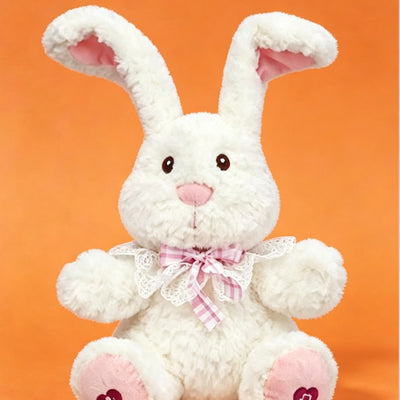
Conversational LLM Dialogue Plush
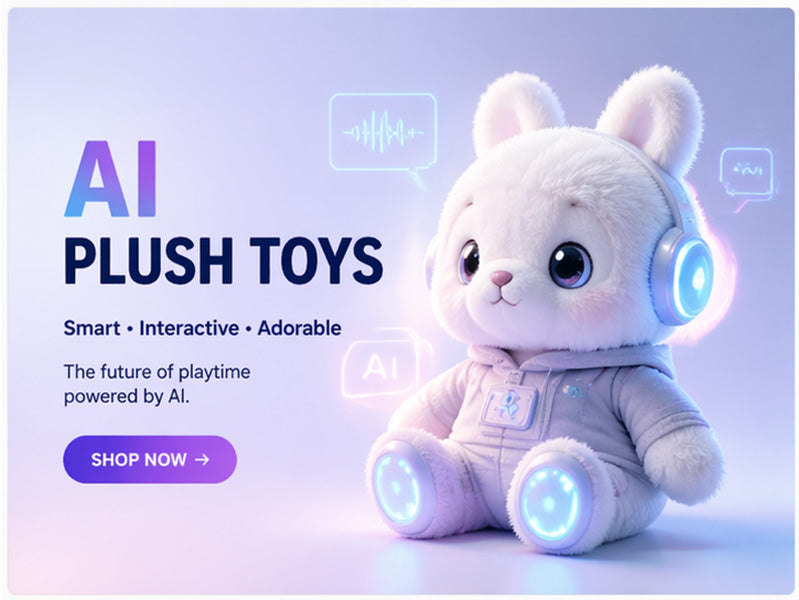
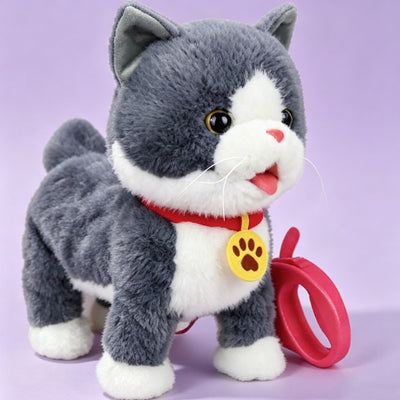
Equipped with dual-band Wi-Fi/Bluetooth, push-to-talk capacitive paws, and high-fidelity speaker chambers. Supports cloud-connected real-time roleplay, adaptive storytelling, multi-language translation, and parental companion app pairing.
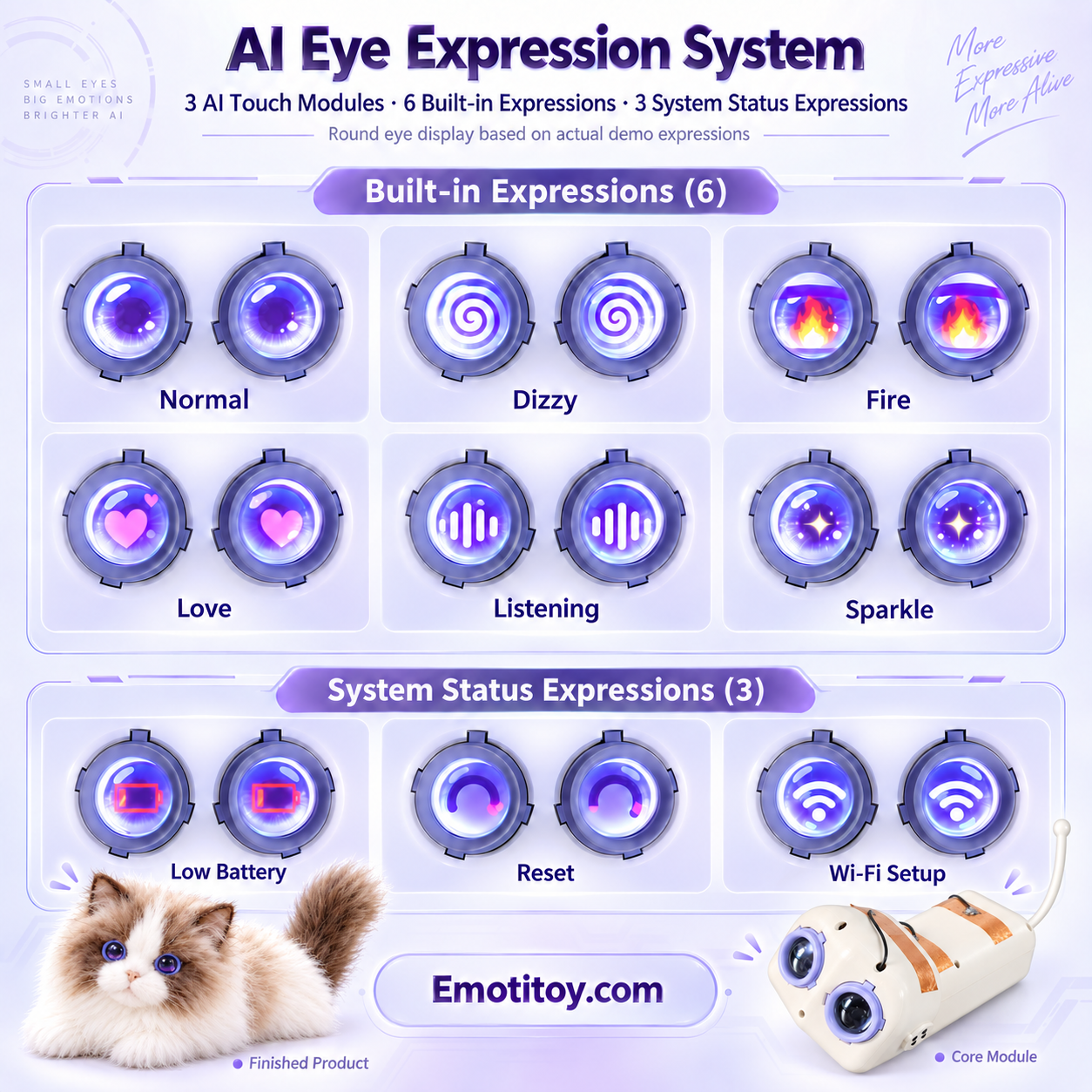
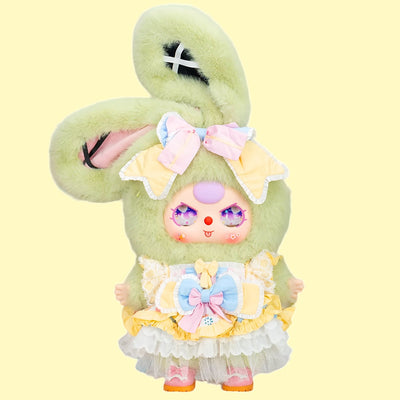
Combines soft external plush bodies with dual circular IPS/AMOLED dynamic eye screens, multi-axis head tilt servos, and capacitive touch sensors across the spine. Responds with synchronized visual expressions and realistic emotive audio.
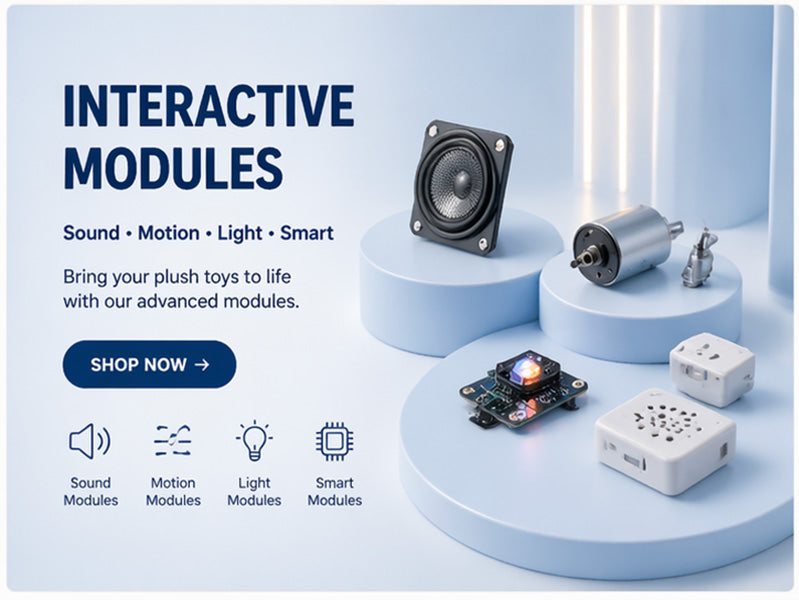
A self-contained, crash-tested internal core housing rechargeable battery, servo motor gearing, microphone array, and sound module. Enables plush toy brands to convert existing soft toy designs into smart toys without remaking tooling.
The AI Smile Face Series: Validated Commercial Bases
Save 4 to 6 months of mechanical tooling and RF certification with our standardized interactive core architectures, fully customizable with your brand skin, character voices, and software logic.
01
AI Smile Face Core
Full voice synthesis + animated dynamic display
02
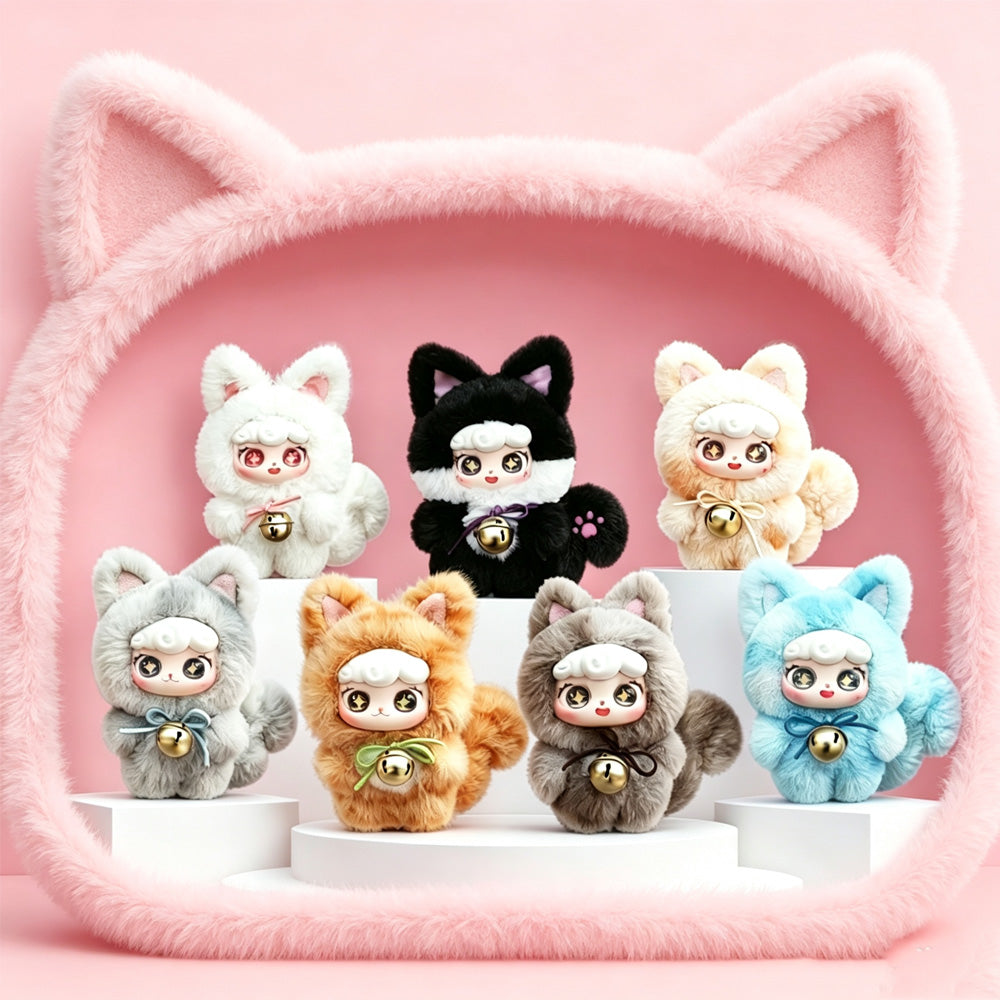
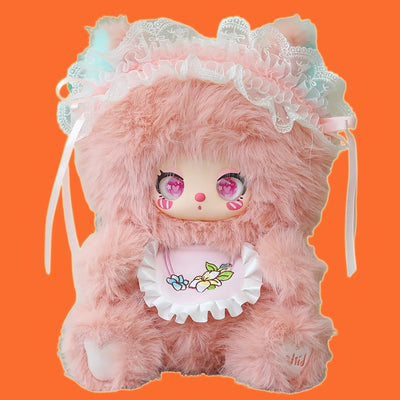
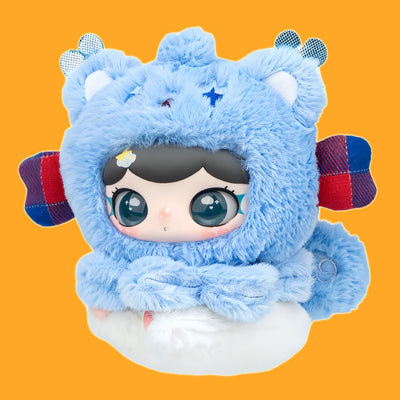
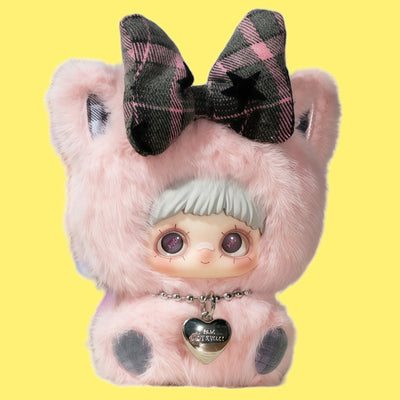
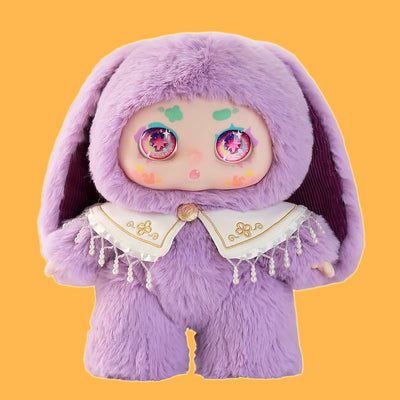
AI Smile Faces Collectibles
Standardized internal chassis for multi-SKU product lines
03
AI Smile Face K1 Compact
Lightweight form-factor for plush backpacks and bags
Global Procurement Trends in AI Plush Toys (2025–2030)
Strategic purchasing insights derived from consumer retail analytics, international safety regulatory updates, and semiconductor roadmaps.
Architecture
Hybrid Edge-Cloud Processing
Procurement is moving rapidly away from pure cloud architectures due to ongoing API server costs and offline dead-zones. Future-ready AI plush toys leverage low-power Edge NPUs for wake-words, biometric touch reactions, and basic emotive sounds offline, while seamlessly querying cloud LLMs when Wi-Fi is active. This cuts brand cloud compute overhead by up to 60%.
Sustainability
Modular Washability & Circularity
A primary consumer complaint regarding electric plush toys has been cleanability. New retail buyers prioritize internal modularity: self-contained internal electronic cores that easily slide out via concealed child-safe locking zippers, allowing the outer textile plush skin to be machine washed. This modular design also streamlines compliance with the EU Battery Directive (2023/1542).
Therapeutic AI
Emotional Wellness & Senior Care
Procurement extends beyond children's toys into the rapidly expanding "Kidult" and senior eldercare markets. Therapeutic AI plush animals incorporating simulated slow respiration (mechanical breathing), soothing purrs, and conversational empathy are commanding premium retail price points ($89–$199 USD) in specialty gift and healthcare distribution channels.
Sensory Integration
Haptic & Capacitive Touch Arrays
Rather than relying solely on voice, buyers are requesting multi-modal sensor fusion. Embedding multi-point capacitive touch ribbons beneath PV fur enables the toy to distinguish between gentle stroking, aggressive shaking, or hugging, triggering context-aware motor reactions and audio purring in real-time.
Connectivity
Direct Wi-Fi 6 & BLE Mesh
Next-generation smart plush sourcing mandates lower-power 2.4GHz Wi-Fi 6 and Bluetooth 5.3 chipsets. These reduce sleep-mode battery consumption, enabling toys to maintain connectivity for weeks on a single charge while supporting peer-to-peer toy interactions where two plush characters converse autonomously.
IP Monetization
Continuous Software Value Delivery
Brand owners are leveraging AI plush toys as recurring engagement platforms. Using over-the-air (OTA) firmware updates via client mobile apps, brands can push seasonal dialogue packs, holiday event stories, and newly licensed character personas directly to the physical toy long after initial retail sale.
Engineering Rigor
The Engineering Evolution of AI Plush Toys
How Shenzhen Atp Intelligent Electronics Co., Ltd. solves the complex physics and mechanical friction of integrating electronic intelligence into flexible soft goods.
Building an AI plush toy is fundamentally more challenging than manufacturing a rigid consumer electronic device or a traditional sewn stuffed animal. It requires cross-disciplinary mastery where textile elasticity, thermal conductivity, acoustic physics, wireless radio attenuation, and high-precision micro-mechanics intersect.
Subsystem
Traditional Interactive Plush
Next-Gen AI Plush Toys
Shenzhen Atp Engineering Solution
Voice Interaction
8-bit/16-bit pre-recorded OTP ROM audio clips (10-30s total)
Bidirectional streaming LLM dialogue with continuous conversation context
Dual MEMS beamforming mics with digital noise cancellation; hardware acoustic chamber tuning
Microcontroller
Low-cost 8-bit MCU without network connectivity
32-bit dual-core SoC with dedicated NPU coprocessor, Wi-Fi 6 & BLE 5.3
Turnkey pre-testing and certified lab submission with accredited partners (SGS, TUV, Intertek)
Turnkey Execution
OEM/ODM Development: From Concept to Container Load
Our centralized manufacturing workflow eliminates the costly miscommunication common when contracting separate plush sewing factories and electronic PCBA houses.
PHASE 01
Industrial & Acoustic Architecture
Conversion of 2D character IP into 3D plush patterns, internal mechanical chassis CAD, acoustic speaker chamber ducting, and antenna layout simulation.
Injection mold tooling for plastic housings and gearboxes, custom fabric dye runs, embroidery digitization, and final pre-production prototype validation.
PHASE 04
Mass Production & Lab Audits
Cleanroom PCBA assembly, 100% functional acoustic/motion test benches, automated metal detection, seam tensile pull checks, and international lab testing.
Preparing Your B2B Sourcing Brief
To receive an accurate engineering feasibility assessment and cost quotation within 48 hours, our project engineering team recommends detailing these core parameters:
Target character dimensions and plush exterior fabric preferences
Interaction model: Cloud LLM, Hybrid Edge-AI, or Offline Scripted
Power architecture: Rechargeable Li-Po (Type-C) or replaceable cells
Target retail territory (EU, US, Japan) and mandatory certifications
Estimated initial batch volume (MOQ) and target landed FOB unit price
Enterprise Advantage
Shenzhen Atp Intelligent Electronics Co., Ltd.
Headquartered in the epicenter of the world's consumer electronics and smart toy supply chains in Shenzhen, China, Shenzhen Atp Intelligent Electronics Co., Ltd. operates as a specialized engineering manufacturer uniting advanced hardware R&D with high-grade soft plush craftsmanship.
Most interactive toy sourcing failures stem from supplier misalignment: traditional plush factories lack electrical engineering capabilities and fail RF or battery safety audits, while electronic PCB assembly houses do not understand fabric shrinkage, needle safety, or stuffing resistance. Our unified facility eliminates this disconnect by developing the internal mechanical skeletal core, PCB hardware, and textile pattern concurrently.
Integrated engineering: PCB layout, acoustic chamber tooling, and pattern sewing in Shenzhen
Proprietary acoustic chambers and low-noise servo mounts designed specifically for plush toys
Direct access to the world's most concentrated micro-motor, chipset, and sensor supply ecosystem
Comprehensive in-house quality control: calibrated drop tests, needle detection, thermal imaging, and RF verification
Our silent planetary gearing and isolated motor mounts prevent mechanical humming from bleeding into sensitive conversational microphones.
03
Turnkey Cloud & Firmware Integration
We provide buyers with ready-to-deploy firmware that easily binds to custom private cloud LLM endpoints or proprietary branded apps.
04
Strict Quality & Contamination Controls
Every plush unit passes two consecutive 1.0mm ferrous needle detectors, full pull-force seam checks (over 70N), and complete battery burn-in cycles.
Client Archetypes
Who We Empower Worldwide
A
Toy Brands & IP Licensors
Transforming static storybook characters and intellectual properties into physical conversational AI companions with authenticated character voices.
B
Specialty Importers & Wholesalers
Distributing high-margin, innovative smart companion lines designed for consumer electronics, specialty gift, and therapeutic retail sectors.
C
Educational Tech & Edutainment Brands
Deploying interactive language-tutor plush companions capable of contextual roleplaying, vocabulary instruction, and interactive quizzing.
D
Plush Toy Factories
Sourcing standalone internal AI movement boxes, sound boxes, and sensor assemblies to drop into their own factory's plush shells.
Procurement FAQ
Frequently Asked Questions on AI Plush Toys Sourcing
Direct technical and operational answers to the most common questions international buyers and engineers present to our Shenzhen facility.
Traditional interactive plush relies on rigid microcontroller audio triggers with static recordings stored in small ROM memory. AI plush toys incorporate neural network processing, automatic speech recognition (ASR), large language models (LLMs), and dynamic text-to-speech (TTS). They understand semantic context, remember past user interactions, adapt character personalities in real-time, and generate unlimited dynamic conversational responses.
We implement Privacy-by-Design at the hardware and firmware levels. Audio input is handled via physical push-to-talk triggers to eliminate constant passive surveillance. In cloud-connected architectures, audio streams are encrypted via TLS 1.3, stripped of biometric voiceprints, and transmitted to child-safe LLM instances that do not store identifiable logs or use conversations for model training.
For Wi-Fi cloud-connected models, end-to-end latency from user speech completion to speaker audio response is optimized between 1.2 and 1.8 seconds. On our hybrid platforms, local edge processors generate immediate character responses (such as an audio chuckle, thinking chime, or ear wiggle) within 250ms while cloud streaming buffers, creating the illusion of zero lag.
Our Shenzhen acoustic engineers build rigid, sealed ABS resonance chambers that direct sound waves toward designated acoustic fabric zones or hidden mesh embroidery. Microphones are mounted in shock-absorbing silicone dampening boots to acoustically decouple them from internal mechanical servo vibrations and fabric friction.
Plush textiles must pass physical and flammability testing under EN 71-1/-2/-3 (EU) and ASTM F963 / CPSIA (US). Electronic sub-assemblies require IEC/EN 62115. Wireless Wi-Fi/Bluetooth hardware requires FCC Part 15 (US) and RED Directive (EU). Rechargeable lithium batteries require UN 38.3 transport testing and UL 1642 / IEC 62133 cell compliance. All testing is managed with accredited third-party laboratories.
Yes. Shenzhen Atp Intelligent Electronics Co., Ltd. supplies pre-certified, drop-in AI movement boxes, sound boxes, and interactive modules directly to brand manufacturing facilities across Southeast Asia, North America, and Europe, complete with wiring diagrams and assembly documentation.
For projects built on our validated ODM platforms (such as the AI Smile Face series), functional prototypes take 14 to 21 days with an initial production MOQ of 1,000 units. For fully bespoke OEM designs requiring custom injection molds and custom PCB layouts, tooling and sampling takes 35 to 45 days with an initial production MOQ of 2,000 to 3,000 units.
We mount rechargeable lithium-polymer cells inside rigid, flame-retardant (UL 94-V0) polycarbonate inner boxes. Circuits incorporate discrete protection ICs against over-voltage, deep discharge, and short-circuiting, supplemented by internal NTC thermistors that instantly shut down charging if temperatures exceed 45°C.
Accelerate Your Product Roadmap
Ready to Engineer Your Custom AI Plush Toy?
Whether you require a custom character prototype from 2D sketches or want to deploy our proven AI Smile Face platform under your brand, our Shenzhen engineering team is ready to evaluate your technical brief, BOM targets, and compliance roadmap.