0%

Choosing the best AI robot toys for kids in 2026 takes more than comparing bright screens and clever voices. A robot that answers questions at the kitchen table may feel magical, but parents also need to know what it collects, how it connects, and whether a child can use it without constant help. Small details matter: clear volume controls, sturdy joints, simple charging, and a companion app that does not turn setup into a weekend project.

This guide looks at how different robots support play, learning, creativity, and age-appropriate independence. It considers features such as voice interaction, coding activities, movement, and offline play, while noting where marketing claims may run ahead of everyday usefulness. A toy can promise personalized conversations, yet still misunderstand a child’s question or repeat itself. That happens. We’ll also consider privacy settings, parental controls, battery life, and the practical cost of subscriptions or replacement parts. These details can be easy to overlook when a demo video makes everything look effortless.

There is no single best choice for every family. A curious preschooler may prefer a friendly character with simple responses; an older child might enjoy building commands or testing sensors. The right fit depends on the child, the home, and the boundaries adults set. Even a strong pick has trade-offs. The comparisons ahead aim to make those trade-offs clearer, so families can judge which AI robot toys offer meaningful play—not just a flashy first impression.
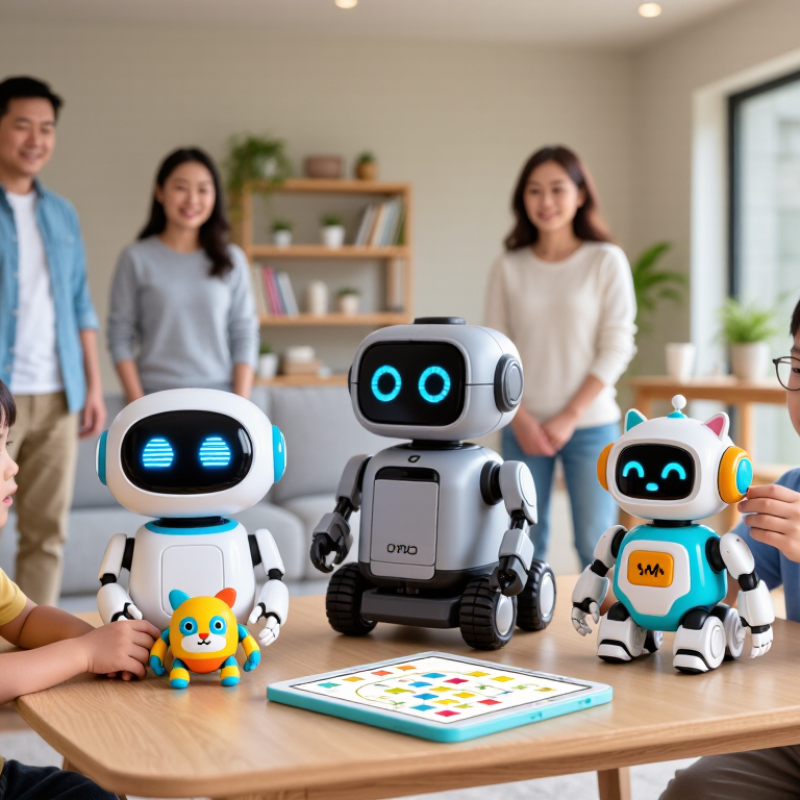
What Are the Best AI Robot Toys for Kids in 2026?

What Defines an AI Robot Toy and How Does It Work?

An AI robot toy combines sensors, software, and physical responses to interact with a child. A microphone may detect speech, while touch sensors notice a tap on its head or hand. Some models also use cameras or movement sensors, depending on their design. The robot’s processor interprets these inputs and selects a response, such as answering aloud, turning toward a voice, or lighting up.

The word “AI” covers a wide range of capabilities. A simple toy may recognize a few spoken commands and follow fixed response patterns. A more capable one may use language-processing software to respond to varied questions. Its processing may happen inside the toy or through an internet connection. Not every robot learns continuously; many remember little or rely on adult-managed settings. That distinction matters.

Imagine a child asking a robot to tell a story beside a noisy kitchen table. It might misunderstand a word, pause, or give an oddly off-topic reply. Real interaction is not always smooth. Families can check whether the toy records audio, how data is handled, and whether its microphone or camera can be switched off. Clear controls and age-appropriate conversations are practical signs of thoughtful design.

What Features Matter When Comparing AI Robot Toys?

When comparing AI robot toys, judge the interaction, not the number of advertised features. Can it answer a child’s question clearly, admit uncertainty, and recover when misunderstood? Test it in noise. A quiet-room demo says little about a busy kitchen.

UNICEF’s 2021 Policy Guidance on AI for Children emphasizes safety, privacy, transparency, fairness, and children’s best interests. Turn those principles into practical checks: can microphones or cameras be disabled, what data is stored, and are deletion controls clear? A robot that works without cloud access may offer more predictable privacy, though its replies may be less capable.

Common Sense Media’s 2021 Common Sense Census reported that U.S. children ages 8–12 averaged 5 hours and 33 minutes of entertainment screen media daily. That is not a measure of robot play, but it makes screen-heavy designs worth questioning. Check whether the toy encourages building, movement, or open-ended conversation. Inspect battery life, volume limits, washable surfaces, and repair options. Try the setup yourself. A clumsy pairing process can drain a child’s patience; mine, too.

What Features Matter When Comparing AI Robot Toys?

A practical 100-point evaluation rubric for comparing AI robot toys for kids in 2026.

Safety and privacy receive the largest share, followed by age-appropriate learning and interaction quality. These are suggested evaluation weights, not results from a market survey.

Which AI Robot Toys Stand Out for Kids in 2026?

The AI robot toys that stand out for kids in 2026 do more than answer a few questions. Look for clear, age-appropriate conversation, responsive movement, and activities that invite children to build, tell stories, or solve simple problems. A robot that follows a child’s changing interests may hold attention longer than one with a long list of flashy features. Small details matter. Can it hear a quiet voice across a table? Are its instructions easy to understand? Check whether caregivers can review privacy settings and switch off the microphone. A polished demo does not always match play at home.

Tips: Match the robot to your child’s age and patience level. Try a short activity together before leaving them to explore. Check charging needs, durability, and whether core features work without a constant internet connection. Read the privacy information, not just the feature list.

For younger children, tactile buttons, gentle sounds, and predictable responses can make play feel welcoming. Older kids may prefer basic coding challenges or open-ended projects that reward experimentation. The best choice depends on the child, not the trend. Some children will love talking to a robot; others may lose interest after a week. That is worth considering. Choose one that supports real-world play, such as building a paper city or acting out a story, rather than replacing it.

How Should You Choose a Robot Toy for a Child’s Age and Needs?

A good robot toy should fit the child, not just look impressive in a product video. For preschoolers, choose sturdy parts, large controls, and simple cause-and-effect play. A robot that follows a line or responds to a button can hold attention without demanding complicated instructions. Check the recommended age range, but also consider the child’s patience and coordination. Age labels are helpful, not a perfect measure.

For early elementary ages, look for clear challenges, such as guiding a robot through a cardboard maze or arranging basic movement commands. Can the child solve a small problem without constant adult help? That is a useful test. Older children may enjoy adjustable sensors, simple coding, or building pieces, especially when activities can grow more complex over time. Still, extra features can become clutter. More capability does not always mean more play.

Consider the room, too. A small bedroom may not suit a fast-moving robot that needs open floor space. Check whether the toy uses an app, microphone, or camera, and review its privacy settings before setup. Battery life and charging can matter during a long afternoon; a toy that stops after twenty minutes may frustrate a child. I may be giving practical details too much weight, but they often shape whether a robot gets used after the first day. Watch how the child plays, then adjust expectations.

What Are the Best AI Robot Toys for Kids in 2026? — How Should You Choose a Robot Toy for a Child’s Age and Needs?
Child’s Age Robot Toy Type Typical Features Best For What to Check Before Buying
Under 3 years Simple interactive robot Large buttons, lights, music, and a small set of predictable responses; no complex setup required. Cause-and-effect play and sensory exploration with an adult nearby. Choose age-labeled toys with no small detachable parts. Check for secure battery compartments, durable construction, and volume controls. Avoid toys that require unsupervised internet access.
3–5 years Voice-response or movement robot May respond to simple spoken commands, move in basic ways, or play songs and short games. Imaginative play, listening, turn-taking, and following simple instructions. Look for clear age guidance, simple controls, and a way to mute or limit audio. Voice recognition can be affected by background noise and may not understand every speaker.
5–7 years Programmable, screen-free robot Uses buttons, tiles, or other physical controls to arrange sequences of actions. Early sequencing, planning, and problem-solving without relying on a phone or tablet. Check whether instructions and activities match the child’s reading level. Confirm which accessories are included and whether the toy needs batteries or charging.
7–9 years Beginner coding robot May support block-based coding, sensors, or step-by-step challenges through a companion app. Children ready to experiment with loops, instructions, and simple cause-and-effect logic. Check device compatibility, app permissions, account requirements, and whether the robot works offline. Review the privacy policy and parental controls before enabling a microphone or camera.
9–12 years Expandable robotics or coding kit Can offer more complex coding tasks, sensors, building parts, or customizable behaviors. Longer projects, creative building, and children who enjoy testing and refining ideas. Check the recommended age, small-part warnings, tool requirements, replacement-part availability, and whether coding uses a visual or text-based interface.
Any age, with adult guidance Conversational AI robot May generate open-ended responses or adapt some interactions using voice or app-based features. Supervised conversation and open-ended play when the child understands that responses can be inaccurate. Find out whether audio or other data is stored, how it can be deleted, and whether a parent can disable recording. Do not treat generated answers as a substitute for adult guidance.

Age ranges are general selection guidance, not a guarantee of suitability. Follow the toy’s stated age rating and safety instructions, and consider the child’s interests, abilities, and need for supervision. “AI” features vary: some toys use simple preset responses, while others rely on an app or an internet connection.

What Safety and Privacy Factors Should Families Consider?

A child’s AI robot may look like a soft toy, but it can contain a microphone, camera, moving parts, and an internet connection. Check the age guidance and inspect the toy for loose pieces, sharp edges, or parts that could detach. Try its movements on a clear floor before letting a young child play. Keep charging cables away from play areas, and supervise younger children around moving toys. Small details matter.

Privacy deserves equal attention. Read the setup screen and privacy notice with your child nearby, so they know when the robot listens or records. Check whether voice clips, images, or chat histories are saved, who can access them, and how they can be deleted. Disable features the family does not need, such as remote access or continuous listening. A toy should not need to hear every room. If its microphone or camera cannot be clearly switched off, consider keeping it out of bedrooms and private spaces.

Use a unique account password and install updates when available, but do not assume these steps remove every risk. Review parental controls after setup; settings can be confusing, and families may overlook them. Ask children not to share names, school details, or daily routines with the robot. Then test the controls together: cover the camera, check the mute button, and see whether the toy still responds. The answer may be imperfect, but the check is useful.

FAQS

What makes a toy an AI robot?

It combines sensors, software, and physical responses. A microphone may detect speech, while touch sensors notice a tap. Some models also use cameras or movement sensors.

Do all AI robot toys learn over time?

No. Some recognize a few commands and follow fixed patterns. Others handle varied questions, but may remember little. That difference is easy to miss.

How does a robot respond to a child?

Its processor interprets inputs and selects a response. It might answer aloud, turn toward a voice, or light up. Sometimes it misunderstands.

What should caregivers check about privacy?

Check whether audio is recorded and how data is handled. Review microphone and camera controls before setup. Simple controls matter.

Which features suit younger children?

Sturdy parts, large buttons, gentle sounds, and predictable responses can help preschoolers. A simple button game may be enough. Keep it simple.

What activities may suit older children?

Older children may enjoy coding challenges, adjustable sensors, or building pieces. Try a cardboard maze with movement commands. Let the challenge grow gradually.

How can families tell if a toy fits?

Consider patience, coordination, room size, and age guidance. A fast-moving robot may need open floor space. Product videos can be misleading.

What practical details affect everyday play?

Check charging needs, durability, and internet requirements. A toy that stops after twenty minutes may frustrate a child. I might overvalue battery life, but it matters.

Can a robot replace ordinary play?

It works best alongside real-world activities, not instead of them. Build a paper city or act out a story together. Some children may lose interest quickly.

Conclusion

AI robot toys combine sensors, software, and interactive features to respond to a child’s voice, movements, or choices. Some encourage coding and problem-solving, while others focus on conversation, storytelling, or imaginative play. When comparing options in 2026, families can consider how engaging and age-appropriate the activities are, whether the robot is easy to use, how well it supports learning, and whether its design is durable. Standout choices are those that balance fun with meaningful interaction rather than relying on novelty alone.

The best fit depends on a child’s age, interests, and comfort with technology. Younger children may benefit from simple controls and clear, guided activities, while older kids may enjoy more complex challenges and customization. Before choosing, caregivers should review how the toy handles voice recordings and other data, check available privacy controls, and look for clear guidance on supervision and safe use. A thoughtful choice can make an AI robot toy an enjoyable companion for learning, creativity, and play.

Amelia

Amelia

Amelia is a professional marketer with a strong understanding of the company’s products and the needs they are designed to address. She regularly contributes expert articles to the company website, sharing clear, practical information that helps readers make informed decisions and get more value......