CE / RED
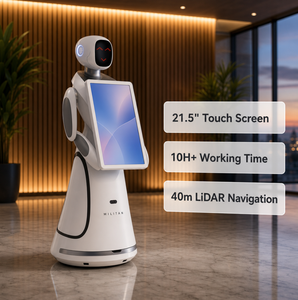
Humanoid Smart Commercial Service Robot Reception Welcome Lobby 21.5" Screen Amy
- Autonomous SLAM LiDAR Navigation
- 21.5-inch Capacitive HD Display
- 10h Runtime with Auto-Dock Charging
Direct factory configurations available for international volume distributors, tier-one retailers, and IP licensing houses. All platforms integrate pre-engineered electronic sound, gesture, vision, and mechanical breathing movement cores.
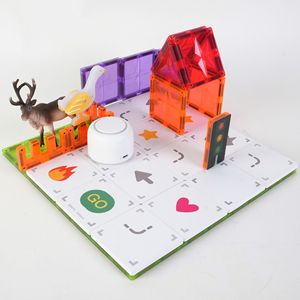
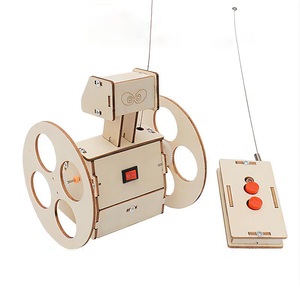
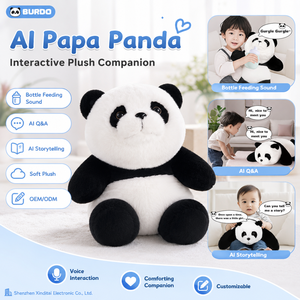
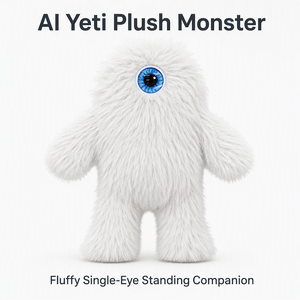
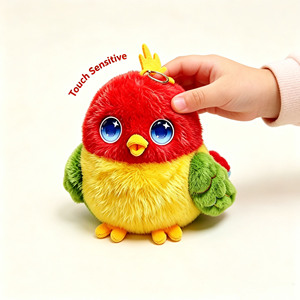
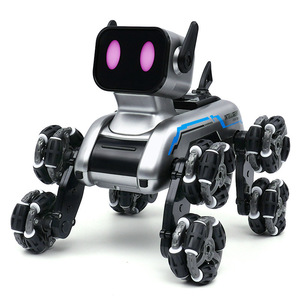
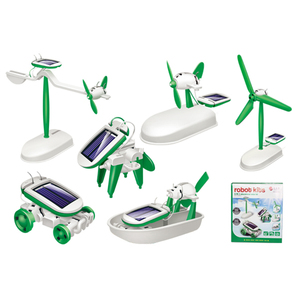
The international toy marketplace is undergoing a profound structural evolution. Traditional soft plush products—historically differentiated exclusively through aesthetic silhouette, tactile surface fabrics, and static sound playback—are rapidly converging with sophisticated edge computing, micro-mechatronics, and artificial intelligence models. As consumer expectations shift toward deeply responsive, emotionally intelligent companions, procurement directors and brand brand licensors face an entirely new set of technical hurdles. Developing a product that combines huggable tactile softness with embedded high-performance silicon, thermal regulation, battery containment, and acoustic clarity requires specialized multidisciplinary engineering.
Concurrently, international regulatory authorities have significantly raised compliance thresholds. In the European Union, an AI-enabled stuffed animal is no longer governed merely by traditional mechanical and physical toy safety standard EN 71-1. Importers and brand owners now face an overlapping web of directives: electric toy electrical safety under IEC / EN 62115, radio frequency and electromagnetic compatibility via the Radio Equipment Directive (RED 2014/53/EU), strict chemical limits under REACH and RoHS 2011/65/EU, and emerging obligations under the landmark EU Artificial Intelligence Act (Regulation EU 2024/1689). As a vertically integrated manufacturer based in Shenzhen, Shenzhen Atp Intelligent Electronics Co., Ltd. (operating AItoyplays) resolves this complex intersection by managing both textile fabrication and embedded electronics within a unified, traceable engineering framework.
Operating from Shenzhen—the global epicenter of microelectronics, sound processing silicon, micro-actuators, and precision plush tailoring—AItoyplays bridges the historical void between traditional textile assembly and high-precision consumer electronics.
Direct geographic access to tier-1 semiconductor foundries, DSP acoustic algorithm developers, injection molding toolers, and fabric mills. We achieve a rapid 14-day turnaround from initial concept sketch to fully functioning mechatronic prototype.
In-house development of our patented AI Movement Box, miniaturized servo linkages, biomimetic respiratory diaphragms, and multi-color LED emotive optical lenses. Modules drop cleanly into plush hulls without requiring destructive re-patterning.
Equipped with internal anechoic acoustic testing chambers, tensile drop testers (EN 71-1 90N seam torque tests), flammability test chambers, and battery impedance monitors. We guarantee zero rejection during accredited third-party audits (TÜV, SGS, Intertek).
Our manufacturing facility in Shenzhen operates cleanroom SMT production lines paired with high-precision textile ultrasonic cutting and clean sewing departments.
Plush synthetic fibers naturally absorb high-frequency audio, muffling standard speakers. We engineer ported bass-reflex micro chambers and tuned DSP gain curves to ensure conversational clarity across all vocal registers.
Custom flame-retardant (UL94-V0) polycarbonate enclosures isolate the battery cell from synthetic polyester filling. Dual thermal cutoffs and NTC thermistors prevent operating temperatures from exceeding EN 62115 limits under prolonged use.
Configurable for pure offline edge-AI voice inference (zero internet connection required) or encrypted Wi-Fi/BLE linking with COPPA and GDPR-K compliant cloud backends, eliminating parental data privacy concerns.
Detailed technical breakdown of internal module classes, acoustic components, power systems, and corresponding EU harmonized standards required for legal export and market distribution.
| Module Tier | Core Processing & Audio | Sensors & Actuators | Power System | Key CE / Harmonized Standards | Typical B2B Applications |
|---|---|---|---|---|---|
| Tier 1: Fixed Sound & Light | 8-bit OTP / Flash MCU, 16kHz PWM DAC, 29mm Mylar Speaker | Tactile squeeze switches, mono LED blinkers | LR44 button cells or 3x AAA safely locked casing | EN 71-1, 2, 3 RoHS | Mass retail promotional plush, baby soothing plush, sound books |
| Tier 2: Recordable & Touch | 32-bit DSP IC, High-gain electret mic, low-noise pre-amp | Capacitive touch sensors, multi-axis tilt switch | Rechargeable 3.7V Li-Po (300mAh) with PCM board | IEC 62115 EMC Directive | Personalized gifting, therapeutic emotional toys, language training |
| Tier 3: Smart Movement & Biometrics | Dual ARM Cortex-M4 MCU, dedicated motor driver bridge | Silent metal-gear micro servos, mechanical eccentric breathing cam | 500-1200mAh Li-Po, USB Type-C charge with NTC | IEC 62115 EN 71 Mechanical | Breathing sleep companion animals, lifelike responsive robotic pets |
| Tier 4: Connected Generative AI | Dual-core Wi-Fi 6 & BLE 5.3 SoC, Neural Edge Accelerator, I2S Digital Mic array | ToF proximity sensor, 6-axis IMU gyroscope, circular AMOLED eye display | 18650 / Polymer 2000mAh+, smart BMS with overvoltage cutoff | RED 2014/53/EU EU AI Act | Conversational AI storytelling companions, early STEM coding robotics |
How leading global brands and enterprise importers are recalibrating their RFQs, BOM allocations, and supply chain timelines to maintain competitive edge in the smart toy category.
Enterprise buyers are transitioning from pure cloud-dependent streaming toys to hybrid edge architectures. On-device wake-word detection and local sentiment parsing eliminate latency, cut cloud API running costs, and ensure functionality when offline.
EU packaging and eco-design mandates (ESPR) are driving procurement teams toward Global Recycled Standard (GRS) polyester plush fabrics, recycled RPET polyfill batting, and halogen-free lead-free solder circuit assemblies.
Under the enforcement of COPPA and the EU AI Act, retail buyers insist on zero persistent voice recording storage. Modern procurement specifications dictate ephemerality: voice data is processed dynamically in RAM buffer and immediately discarded.
Simple rotational motors are obsolete. Modern demand focuses on biomimetic silicone gearboxes capable of simulating slow resting heartbeats, variable rate breathing lung chambers, and micro-warmth heating pads (PTC thermistors) for therapeutic comfort.
The integration of conversational AI with physical plush forms represents more than a novel novelty gimmick; it marks the emergence of Affective Tangible Computing. Over the past three decades, interactive plush toys relied primarily on deterministic branching scripts: pressing a paw triggered sound clip A; squeezing a belly activated song B. Today, with the maturation of optimized Small Language Models (SLMs) capable of running on low-power microcontrollers (such as ARM Cortex-M55 or dedicated neural processing units), AI plush toys can sustain spontaneous, context-aware dialogues.
Three pivotal technical developments are defining next-generation product design across our Shenzhen prototyping lines:
Placing sensitive digital MEMS microphone arrays inside a stuffed animal creates severe resonance issues when internal motors or speakers operate. Our engineers develop silicone shock-mount isolators and algorithmic adaptive noise cancellation (ANC) to ensure clean voice pickup during movement.
Replacing rigid mechanical click-buttons with conductive thread embroidery directly integrated into the plush fur. Children can stroke the back, head, or paws of the animal, triggering natural touch reactions without feeling hard internal switches.
Circular AMOLED and high-contrast OLED displays embedded beneath smoked protective polycarbonate optical lenses create animated, emotive pupil reflections, transforming the facial expression of the toy dynamically to reflect emotional states.
These technological leaps directly influence bill-of-materials (BOM) management. Importers no longer select off-the-shelf catalog toys; they formulate bespoke hardware-software solutions. By choosing an OEM/ODM partner with native firmware development teams, precision SMT surface-mount lines, and dedicated plush pattern makers, brands can protect their intellectual property, mitigate field recalls, and command premium retail price points.
Authoritative, technically rigorous answers compiled by our senior compliance engineers and international trade specialists to streamline your supplier auditing process.
Unlike simple plush, an electronic AI toy requires a dual-track testing protocol. First, mechanical, flammability, and chemical safety must pass EN 71 Part 1 (mechanical drop, tension, seam torque tests), Part 2 (flammability velocity), and Part 3 (migration of 19 toxic heavy elements). Second, electrical systems must be certified under IEC / EN 62115 (evaluating heating under fault conditions, battery compartment screw retention, and circuit protection). If wireless Wi-Fi or Bluetooth connectivity is embedded, full certification under the Radio Equipment Directive (RED 2014/53/EU) is legally mandatory, encompassing EN 300 328 (spectrum utilization), EN 301 489 (EMC), and EN 62479 (human RF health exposure).
The EU Artificial Intelligence Act classifies AI systems embedded in toys as products falling under preexisting harmonized product safety legislation (Annex I). Because toys require third-party or strict conformity assessments under the Toy Safety Directive, AI companions with generative or natural dialogue capabilities are evaluated for psychological safety, age appropriateness, and vulnerability exploitation. Sourcing from AItoyplays ensures your product incorporates filtered content guardrails, hardened local wake-word processing, and zero biometric data aggregation, fully mitigating regulatory non-compliance risks under market surveillance.
For custom OEM projects starting from 2D character turnarounds or 3D CAD models, our engineering cycle requires 7 to 10 working days for first clay/foam pattern review and 14 to 18 working days for a complete functional mechatronic golden sample (including programmed firmware, functional PCB, and preliminary safety drop checks). Mass production lead times generally range between 35 and 45 calendar days following sample sign-off, contingent on the procurement cycle of specialized silicon and custom-molded tooling.
All rechargeable cells incorporated into our AI stuffed animals are equipped with hardware PCM protection modules guarding against overcharge, over-discharge, and short-circuit conditions. Each battery configuration undergoes and maintains current UN 38.3 test reports, 1.2m drop test verification, and compliant MSDS documentation. Mechanically, the battery is sealed within a reinforced inner polycarbonate housing secured with recessed safety screws, preventing direct child access as mandated by EN 71-1 and IEC 62115.
Yes. Our proprietary AI Movement Box and pre-certified sound-voice puck series were specifically engineered for this retrofit challenge. We assess your existing exterior plush pattern and specify a self-contained internal enclosure that encapsulates the motor, speaker, battery, and controller in a single shock-isolated core. This allows legacy plush brands to launch smart SKUs with minimal alteration to their external visual silhouette and zero need for expensive textile re-tooling.
We operate under strict bilateral Non-Disclosure Agreements (NDAs) prior to receiving proprietary artwork, 3D assets, or voice audio assets. Custom mold tooling, embroidery pattern program files, firmware source codes, and injection dies remain the exclusive commercial property of the client. Furthermore, our Shenzhen facility operates isolated production runs with segregated storage for proprietary licensed characters, ensuring complete protection against unauthorized market leakage.
Whether you require full-scale OEM development for a licensed retail program, ODM private labeling of our AI Smile Face robotics series, or bulk electronic movement module supply, our Shenzhen engineering team is ready to evaluate your brief.