Verified CE-Marked Robotic Dog & Intelligent Toys
Explore production-ready B2B robotic pet platforms, gesture-controlled vehicle-robot hybrids, and programmable STEM canine toys designed for wholesale importers, supermarket chains, and private-label IP owners.
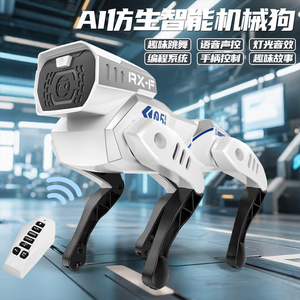
- Dual 2.4GHz RF & Somatosensory Sensor
- All-Terrain Mecanum / Climbing Chassis
- EN 71, EN 62115 & RED Certified
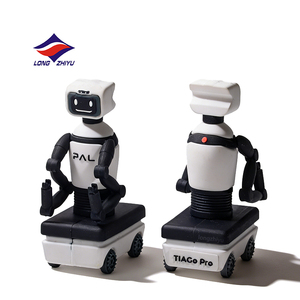
- Eco-friendly REACH & Non-Phthalate PVC
- Precision Injection & Multi-Color Tampo
- Custom IP & Collectible Character Grade
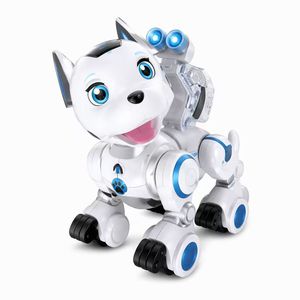
- Biomimetic Leg Kinematics & Handstand
- DIY Keypad Action Sequence Programming
- Rechargeable Lithium Cell with PCM Circuit
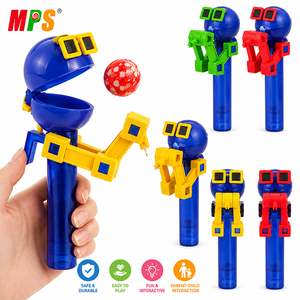
- Food-Grade Virgin PP Shell (LFGB / FDA)
- Spring-Actuated Mechanical Clamping
- Impulse Retail & Countertop Display Ready

- Low-Latency Generative Voice Dialogue
- Dual-Mic Noise Cancellation Beamforming
- COPPA / GDPR-K Privacy Compliant Cloud

- Multi-Language Conversational Assistant
- Interactive Companion App for iOS / Android
- Drop-Tested ABS Shockproof Enclosure
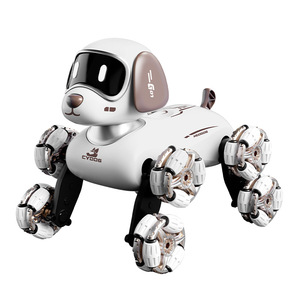
- Expressive LED Matrix Dynamic Eyes
- Roll-Over, Push-Up & Dance Routines
- CE-RED Wireless & EMC Certified
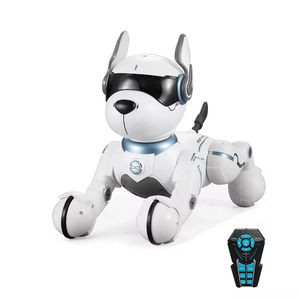
- Touch Induction & Offline Voice Commands
- Multi-Axis Dynamic Servo Linkages
- High-Impact Non-Toxic Polycarbonate
CE Certification Engineering Matrix for Robot Dog Toys
Exporting electric and robotic toys into the European Economic Area (EEA) requires strict adherence to multi-layered directives beyond basic toy safety. We dissect the necessary European Norms (EN) required for frictionless customs clearance and retail compliance.
| Directive / Standard | Test Parameters & Risk Criteria | Factory Engineering Safeguard | Audit Status |
|---|---|---|---|
| EN 71-1: Physical & Mechanical | Drop impact (850mm), seam tension (>70N), pinch points around motorized leg pivots, small parts hazard. | Reinforced ABS chassis, rounded radius edges (>1.5mm), internal torque-limiting gear clutches to eliminate finger pinch. | Fully Compliant |
| EN 71-2: Flammability | Surface flammability velocity of fabrics, plush hair, and moulded polymer shells (≤30 mm/s burn rate). | Use of flame-retardant virgin ABS/PP formulations and self-extinguishing polymer casings. | Fully Compliant |
| EN 71-3: Migration of 19 Heavy Elements | Toxicity thresholds for lead, cadmium, barium, organotin, and hexavalent chromium in paints and plastics. | Certified non-toxic raw masterbatches; ICP-MS third-party laboratory verification per resin shipment. | Fully Compliant |
| EN 62115: Electric Toys Safety | Overheating under stall conditions, moisture resistance, battery thermal runaway, short-circuit containment. | Thermal cut-off fuses (PTC), isolated lithium-ion battery bays, and flame-retardant sealed cavities. | Fully Compliant |
| RED 2014/53/EU (Radio Equipment) | 2.4GHz RF radiation limits, Bluetooth Low Energy (BLE) spectral efficiency, spurious harmonics emission. | Shielded RF modules, antenna impedance matching, CE-RED pre-tested transceiver circuit boards. | Fully Compliant |
| RoHS 2.0 (2011/65/EU) & REACH | Restriction of 10 hazardous substances (phthalates DEHP, BBP, DBP, DIBP, and RoHS heavy metals). | 100% lead-free wave soldering; audited green supply chain for screws, wiring harness, and PCB substrates. | Fully Compliant |
Crucial Compliance Insight for Importers: European customs surveillance (RAPEX notifications) routinely flags electric animal toys for non-conforming battery compartments or secondary radio interference. Our complete technical documentation includes the accredited Notified Body test reports (SGS, TÜV Rheinland, or Intertek), technical construction files (TCF), and formal Declarations of Conformity (DoC), ensuring hassle-free clearance through Rotterdam, Hamburg, and Le Havre ports.
Future Procurement Trends in the Smart Toy Sector
The transition from dumb mechanical walking dogs to autonomous, AI-driven interactive robotic companions is accelerating. B2B procurement managers must pivot their catalog strategies to capture shifting consumer expectations.
1. Convergence of Plush Softness with Robotics
Traditional rigid plastic toys suffer from short child engagement lifespans. Tier-one buyers are aggressively sourcing hybrid products: plush robot dogs built over mechatronic inner skeletons. Combining tactile warmth with mechanical breathing, head turning, and authentic tail wagging elevates perceived gift value and boosts retail margins by 35-50%.
2. On-Device TinyML & Offline Voice
Privacy regulations such as COPPA in North America and GDPR-Kids in Europe have made cloud-connected toys legally risky for retailers. Forward-looking buyers are demanding neural microcontrollers (MCU) capable of on-device voice recognition without continuous Wi-Fi. Offline wake-words and emotion chips eliminate cloud subscription overhead and privacy liabilities.
3. Sustainable Polymers & Circular Supply Chains
Large European supermarket chains (such as Carrefour, Rewe, and Sainsbury's) require post-consumer recycled (PCR) plastics and zero-plastic retail packaging. Our production lines offer bio-based PLA body housings, GRS-certified recycled PET plush fabrics, and FSC-certified unbleached kraft box packaging to meet ESG criteria.
4. STEM Programming & Scratch Integration
Educational robotic pets are overtaking purely novelty stunt toys. Educational distributors are securing procurement allocations for robot dogs featuring drag-and-drop mobile block coding (Scratch/Blockly), allowing children to program custom choreography, autonomous obstacle avoidance routines, and acoustic feedback.
5. Modular Movement Boxes
Brands with proprietary plush IPs want interactive capabilities without tooling completely new motorized skeletons. Drop-in standard movement boxes (unified voice, motorized cam shafts, and touch sensors) enable rapid conversion of static plush characters into dynamic robotic dogs with zero upfront tooling costs.
6. USB-C Universal Fast Charging & Battery Safety
EU Directive 2022/2380 mandates universal Type-C charging across electronic devices. We have phased out proprietary barrel jacks in favor of standardized USB Type-C charging ports backed by smart Battery Management System (BMS) ICs that prevent over-voltage, cell thermal runaway, and prolonged discharge degradation.
From Basic Stunt Automations to Biomimetic Quadruped AI
How robotic toy kinematics are evolving from cheap eccentric motors to precision magnetic-encoder servos and generative emotional intelligence.
Historically, the toy robot dog market relied heavily on single-motor drivetrains connected to complex plastic camshafts. While cost-effective, these mechanisms suffered from high gear wear, loud whining noise levels (>65dB), and limited kinematic flexibility. Modern commercial buyers are shifting toward multi-degree-of-freedom (DOF) architectural builds:
Biomimetic Inverse Kinematics
Our advanced 4-limb robotic quadrupeds utilize independent high-torque digital servos with metal gear trains. By calculating dynamic gait algorithms in real time via an onboard 32-bit ARM Cortex microprocessor, the robot achieves smooth trotting, sitting, rolling over, and self-righting maneuvers without mechanical jam.
Multi-Modal Sensory Array
Modern interactive toys emulate biological responses through capacitive touch sensors embedded along the skull and spine, Time-of-Flight (ToF) infrared optical sensors on the chest to prevent stair falls, and digital sound directionality sensors that pivot the robot's head toward the user's voice.
Generative Personality Engines
Working closely with leading AI research hubs, our cloud-connected and edge-AI companion units use conversational NLP pipelines. The robot dog remembers the child's name, adapts its personality based on play frequency, and responds with lifelike expressive OLED eye animations.
Through our in-house acoustic simulation chambers, we isolate motor vibration and gear noise from microphone input channels, achieving crisp 16kHz speech recognition rates even while the robot dog is actively walking or barking.
Why Tier-1 Global Importers Choose Our Shenzhen Manufacturing Base
Combining world-class mechatronics manufacturing with the agility of the Pearl River Delta electronics ecosystem.
Full-Chain In-House Manufacturing
Operated under Shenzhen Atp Intelligent Electronics Co., Ltd., we eliminate intermediate subcontractor markups. From rapid 3D prototyping and steel mould EDM tooling to surface-mount technology (SMT), ultrasonic plastic welding, cleanroom plush sewing, and automated final testing, the entire lifecycle is unified under one roof.
Unified Soft Goods + Hard Mechatronics
The failure point for 80% of smart toy concepts is the clumsy integration between rigid plastic gearboxes and soft plush skins. Our specialized team of soft-good pattern makers and mechanical engineers design the skeletal casing, wiring harnesses, speaker cavities, and external plush skins concurrently, preventing fabric pinching and muffled audio.
Rigorous In-House QA Testing Laboratory
Every batch of robot dog toys undergoes rigorous physical stress profiling before CE packaging: 10,000-cycle motor stall testing, 1.2-meter tumbling barrel drop tests, tensile pull testing on eye/limb fixtures (>90N), and thermal camera temperature profiling under intensive battery discharge cycles.
Native Multilingual Project Engineering
Communication friction is costly. Our English-fluent B2B project managers hold engineering degrees and directly interface with your industrial design and quality control teams. We provide structured DFM (Design for Manufacturing) reports within 48 hours of receiving your 3D CAD files.
IP Protection & Tooling Exclusivity
We respect client intellectual property. Custom OEM moulds, firmware source codes, and proprietary cosmetic designs are protected by stringent Bilateral Non-Disclosure Agreements (NDAs). Steel injection tooling remains your dedicated property with guaranteed maintenance over 500,000 production shots.
Shenzhen Supply Chain Velocity
Situated in the heart of Guangdong's electronic toy capital, we source bespoke micro-motors, sound synthesizers, lithium cells, and tactile switches within hours. This hyper-concentrated infrastructure allows us to compress tooling and sampling lead times by 30% compared to inland factories.
Frequently Asked Questions by Professional Toy Importers
Direct answers addressing tooling investments, minimum order quantities, testing lab protocols, and international warranty frameworks.
What is the standard Minimum Order Quantity (MOQ) for custom OEM vs. private-label robot dog toys?
For ready ODM platforms (using existing internal plastic skeletons and electronic configurations with custom brand packaging and colorways), our MOQ starts at 1,000 to 2,000 units. For fully bespoke OEM developments requiring new injection moulds, custom PCB layout, and bespoke firmware architectures, our standard tooling run MOQ is 3,000 to 5,000 units per production cycle. We support tiered pilot orders for regional market sampling upon project review.
Do you provide third-party Notified Body test reports for EU customs clearance?
Yes. Every export lot can be accompanied by comprehensive testing certificates issued by internationally accredited laboratories such as SGS, Intertek, or TÜV Rheinland. We test for EN 71 (Parts 1, 2, 3), EN 62115 (Electric Toy Safety), RED 2014/53/EU (for RF, BLE, and 2.4GHz remote control models), RoHS 2.0, REACH, and battery shipping documentation (UN 38.3, MSDS, and 1.2m drop test reports for air/ocean freight).
What is the development lead time from initial 3D sketch to pre-production golden sample?
For a full OEM project, initial industrial design and 3D CAD modeling take 7 to 10 working days. Functional 3D printed mechanical prototypes with breadboard electronics are completed within 14 days. Following customer approval, steel mould tooling fabrication requires 30 to 40 days, followed by trial shot (T1) samples. Pre-production golden samples with final packaging are usually delivered within 60 to 75 calendar days from brief sign-off.
How do you resolve gear stripping and motor burnout in stunt walking robot dogs?
Motor burnout and gear tooth failure are the primary failure points in low-grade robot toys. We mitigate this through three engineering interventions: First, our digital servos integrate slip-clutch gear assemblies that decouple during excessive external mechanical load (such as a child stepping on the extended limb). Second, we use copper or carbon-reinforced POM gears rather than cheap recycled polystyrene. Third, our motor driver PCBs feature automatic current-limiting firmware shut-offs when a motor stall exceeds 1.5 seconds.
Can you customize voice algorithms, pre-loaded languages, and wake-words?
Absolutely. Our software engineering team can flash onboard OTP (One-Time Programmable) sound ICs or reprogrammable flash microcontrollers with your localized sound files, character voices, and custom languages (English, German, French, Spanish, Italian, Japanese, Arabic, etc.). For connected voice AI toys, we configure the cloud endpoint, wake-word engine, and content safety filters to match your regional brand guidelines.
What quality inspection standards are applied during mass production?
Our facility operates under ISO 9001 certified Quality Management Systems. During mass production, we apply strict Acceptable Quality Limit (AQL) 1.5 Major / 2.5 Minor standards according to MIL-STD-105E. Quality gates include 100% Incoming Quality Control (IQC) on micro-motors and lithium cells, In-Process Quality Control (IPQC) after wave soldering, and 100% functional dynamic gait and charging testing prior to gift-box packaging.
What warranty and spare part provisions are included for overseas B2B distributors?
We back our robotic toy production runs with a 12-month factory manufacturing warranty against component failure. For container-load orders (FCL), we provide 1% to 1.5% free-of-charge (FOC) replacement spare parts—including additional remote controllers, USB charging cables, replacement digital servos, and battery packs—empowering distributors to service retail claims immediately without international return shipping.
Partner with an Audited CE-Certified Robot Dog Toy Factory
Whether you require standard container-volume wholesale pricing, custom character toolings, or modular robotic movement boxes for your plush line, our Shenzhen technical team is standing by to analyze your project brief.