AI Voice Companion
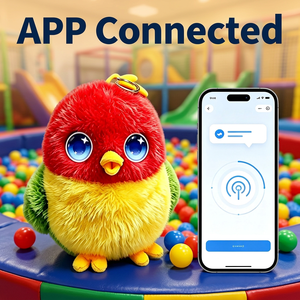
Precision-stitched plush casings integrated with customized voice interaction modules, biomimetic motor gearboxes, and edge computing PCBA assemblies ready for private-label deployment.
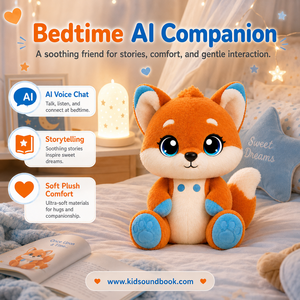
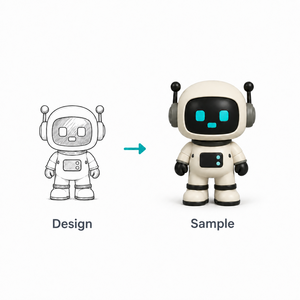

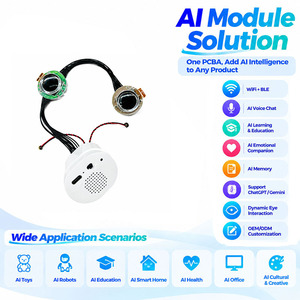
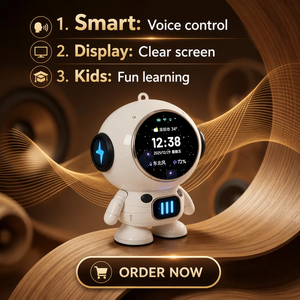
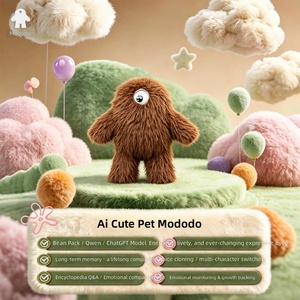
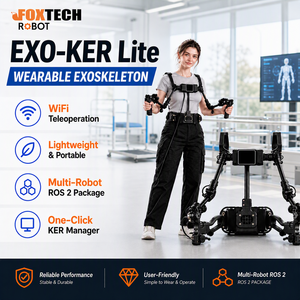
The international toy procurement landscape is undergoing an irreversible structural transition. Global department stores, mass retailers, and IP licensing conglomerates are rapidly pivoting away from static, battery-draining acoustic playthings toward CE certified intelligent connected companions. However, engineering an AI plush product requires navigating a deeply complex interdisciplinary matrix: marrying the tactile warmth, washability, and mechanical pull-strength of traditional plush with precision printed circuit board assemblies (PCBA), sensitive acoustic microphones, rechargeable lithium battery modules, and biomimetic kinematics.
As the direct manufacturing brand operated by Shenzhen Atp Intelligent Electronics Co., Ltd., AItoyplays acts as an integrated primary-tier manufacturing partner. Located in Shenzhen, the epicentre of global microelectronics and electro-acoustic innovation, our engineering operations solve the single greatest cause of failure in smart plush production: the functional disconnect between textile patternmakers and electronic hardware teams. By co-designing internal exoskeleton safety enclosures, acoustic resonance chambers, and non-toxic hypoallergenic skin envelopes from day one, we guarantee swift CE (Conformité Européenne) audit clearances and zero-recall mass production cycles for global brands.
Standard plush contract sewing factories lack the electrostatic discharge (ESD) safe rooms, RF spectrum analysers, and automated soldering machinery required to manage micro-controllers. Conversely, pure consumer electronics factories do not possess computerized seam-stitching calibrators, pull-test fixtures for 90-Newton seam tensions, or OEKO-TEX certified fabric sourcing chains. We unite these domains under a single roof through proprietary engineering workflows:
Polypropylene (PP) cotton stuffing acts as an acoustic low-pass filter, stifling microphone wake-word sensitivity and muffling output speakers. Our engineers integrate custom-molded ABS acoustic waveguides that bridge the interior module directly to the plush epidermis, maintaining crisp 16kHz speech recognition while sealing against airborne lint.
Dense polyester filling traps heat generated by charging ICs and drive motors. We construct isolated, flame-retardant (UL94-V0) polycarbonate battery capsules equipped with NTC thermistors, physical isolation air gaps, and over-current protection PCMs, ensuring temperatures stay well below the 45°C boundary set by EN 62115.
Integrating breathing movements or ear/head rotation inside flexible plush requires internal articulated skeletons. Our drop-tested polyoxymethylene (POM) gearboxes operate under 38 dBA whisper-quiet acoustics, preventing motor humming from triggering false voice inputs.
Securing genuine CE conformity for a smart, connected plush toy is substantially more demanding than certifying a passive plush animal or an off-the-shelf plastic gadget. In the European Union, an AI interactive plush toy falls simultaneously under the jurisdiction of three distinct directives: the Toy Safety Directive 2009/48/EC, the Radio Equipment Directive (RED) 2014/53/EU, and the RoHS Directive 2011/65/EU, alongside mandatory compliance with the General Data Protection Regulation (GDPR) and the emerging EU Artificial Intelligence Act.
| Directive / Standard | Test Scope & Target Risk | Technical Verification Thresholds | AItoyplays Manufacturing Controls |
|---|---|---|---|
| EN 71-1:2014+A1:2018 Mechanical & Physical |
Choking hazards, small parts detachment, seam tensile failure, sharp edges. | Seam pull tension > 90 N; drop test (5 drops at 850mm onto steel plate); impact test 1 kg. | Reinforced cross-stitch bar tacking; ultrasonic eye welding; dual-enclosure module anchoring. |
| EN 71-2:2020 Flammability |
Surface flashover rate of pile textiles and plush fabric. | Maximum rate of flame spread ≤ 30 mm/s or self-extinguishing criteria. | Flame-retardant polyester yarn; chemical-free, non-toxic heat treated fibers tested batch-by-batch. |
| EN 71-3:2019+A1:2021 Chemical Migration |
Migration of 19 toxic heavy metals (Lead, Cadmium, Organotin, Chromium VI). | ICP-MS spectrometry verification below sub-ppm thresholds (Category III scraped materials). | Exclusively virgin polymers; non-phthalate plasticizers; azo-free reactive dye compliance. |
| EN IEC 62115:2020 Electric Toy Safety |
Electrical thermal runaway, short circuits, moisture ingress, battery explosions. | Surface temp < 45°C; drop-tested battery compartments requiring screw-secured dual locks. | UL-certified PCM boards, secondary thermal fuse, isolated USB-C moisture gaskets. |
| ETSI EN 300 328 (RED Directive) |
RF emissions, Bluetooth / 2.4GHz Wi-Fi spectrum compatibility, spurious emissions. | Transmitter power ≤ 20 dBm (EIRP); receiver blocking tests; ESD contact ±4kV, air ±8kV. | Pre-certified wireless SOCs (Espressif / Realtek); tuned onboard ceramic antennas minimizing human SAR. |
| ETSI EN 303 645 IoT Cyber Security |
Voice privacy protection, brute force prevention, encrypted communications. | No universal default passwords; TLS 1.3 encrypted data pipelines; encrypted local storage. | Hardware secure elements; zero-knowledge audio stream routing; physical microphone cut-off switches. |
Our compliance documentation package includes full Technical Construction Files (TCF), Declarations of Conformity (DoC), bill of materials (BOM) chemical reports from accredited third-party laboratories (SGS, TÜV Rheinland, Intertek), and complete test certificates for UN38.3 lithium battery transport safety.
Category managers, merchandising vice presidents, and sourcing procurement executives must anticipate rapid technical evolutions over the upcoming five-year planning horizon. Sourcing decisions made today must incorporate flexible hardware foundations capable of accommodating evolving consumer protection legislation and generative AI breakthroughs.
Sole reliance on cloud-based LLMs introduces recurring monthly server latency, API cost risks, and connectivity failures during offline play. Modern procurement focuses on Hybrid Edge Chips. Small localized neural processing units (NPU) handle instant wake-words, basic command responses, and tactile emotional chirps locally with zero latency, only deferring to cloud APIs when complex creative storytelling is requested.
Children's data privacy compliance has moved from legal boilerplate to strict hardware enforcement. Tier-1 enterprise buyers now mandate physical Hardware Privacy Latches (physical mic-disconnect switches indicated via mechanical LEDs) and on-device biometric anonymization. Audio streams are scrubbed of parental voiceprints before ever transmitting upstream to LLM servers.
European retail tenders increasingly demand GRS-certified (Global Recycled Standard) recycled plush fabrics and biodegradable PLA filling fibers. Crucially, the Right to Repair and WEEE Directives require electronics to be swiftly separated from the plush body at end-of-life without shears, forcing modular "movement box" architectures over glue-bonded assemblies.
The interactive toy industry has transitioned through three distinct evolutionary eras. Understanding these technological leaps allows product innovators to calibrate feature lists accurately against production costs and retail price points:
Button-triggered OTP (One-Time Programmable) sound chips with hardcoded 8-bit audio clips (e.g., standard talking dolls). Low immersion, zero adaptability, zero network connectivity.
Bluetooth Low Energy (BLE) links relying on smartphone companion apps for processing. Vulnerable to connection dropouts, high mobile battery drain, and poor user retention after 30 days.
Direct-to-Wi-Fi architectures powered by multimodal LLMs, capacitive touch sensor arrays, kinetic motion, and dynamic round AMOLED facial expressions with zero app dependence.
Leading product developers no longer rely on single push-buttons inside the toy's paw. Our ODM engineering platforms deploy Multimodal Sensor Fusion:
Headquartered in the Bao'an high-tech manufacturing corridor of Shenzhen, Shenzhen Atp Intelligent Electronics Co., Ltd. combines comprehensive electronics engineering, SMT cleanroom surface mounting, injection tooling, and precision plush sewing under a unified quality assurance system.
We eliminate the risk of sub-supplier finger-pointing. Our plush pattern cutters sit alongside our firmware and hardware engineers. Mechanical housings are 3D modeled and rapid printed to match 1:1 tailored plush skins within 72 hours of 3D CAD approval.
Every production batch undergoes exhaustive stress testing: continuous 72-hour burn-in cycles, metal needle detector audits, tumbling drop-box tests, environmental high-temp/high-humidity chambers, salt spray anti-corrosion tests on battery springs, and tensile seam verification.
Our strategic partnerships with leading silicon chip foundries, LCD/AMOLED panel manufacturers, and textile dye-houses provide unassailable BOM cost economies of scale, protecting brand margins against sudden supply shocks.
Essential due diligence inquiries answered directly by our senior hardware and compliance engineering staff.