Export-Grade Light Up & Intelligent Robotic Product Lines
Explore our field-tested interactive robotic platforms engineered for international B2B importers, retail networks, and private-label educational toy brands.
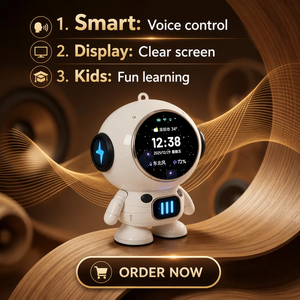
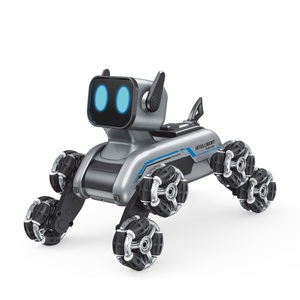

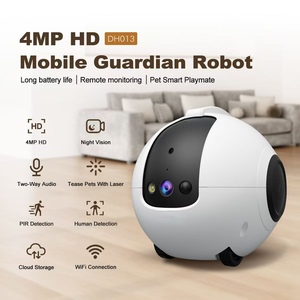
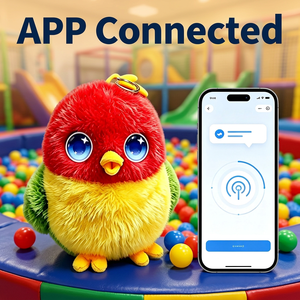
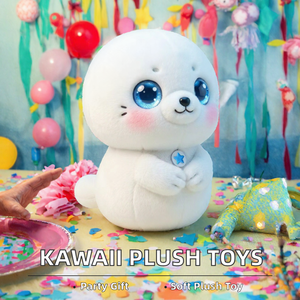
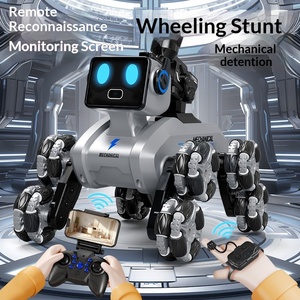
Why International Buyers Partner with Shenzhen Atp Intelligent Electronics
Operating under the dedicated B2B manufacturing division AItoyplays, our Shenzhen facilities bridge the critical technical gap between advanced electro-mechanical systems, precision optics, and soft plush enclosure engineering.
In the competitive sector of electronic and illuminated robotics, typical procurement challenges do not arise from marketing or external aesthetics—they occur at the structural and electronic interface. Standard contract factories often outsource PCB assemblies or lack the mechanical engineering required to integrate programmable illumination, high-frequency sound modules, and motor-driven kinetic movements inside soft or impact-resistant enclosures. When LEDs overheat, wiring harnesses snap during tension testing, or internal acoustic enclosures rattle under low frequencies, the distributor absorbs severe brand equity loss. As a top-tier Chinese manufacturer and exporter, our engineering protocols eliminate these vulnerabilities at the preliminary prototyping stage.
Unified Plush & Electronics Engineering
We eliminate supply chain fragmentation. By co-developing the textile cut-and-sew patterns with internal PCB layouts, battery enclosures, and LED light guides, our products achieve seamless acoustic clarity, zero harness pinch points, and verified child-safe enclosures.
Stringent Lab-Grade Quality Control
Every batch undergoes rigid torque testing, drop resistance, wire pull-force verification, drop-ball impact, and thermal dissipation inspection under continuous illumination to comply strictly with EN 71, ASTM F963, CPSIA, and IEC 62115 international standards.
Direct Pearl River Delta Supply Advantage
Headquartered in Shenzhen, Guangdong, our direct access to specialized micro-motor fabricators, high-yield optical LED suppliers, and surface-mount technology (SMT) partners drives lower bill-of-materials costs without sacrificing component grade.
The Evolution of Light Up Robot Toys: Technical & Procurement Forecast
A comprehensive analysis for global sourcing directors, retail category managers, and technology product planners navigating the 2025–2030 smart toy revolution.
The global retail landscape for illuminated and interactive robotic toys is experiencing a permanent paradigm shift. Historically regarded as novelties featuring basic flashing LEDs and repetitive mechanical loops, modern light up robot toys are rapidly evolving into sophisticated, edge-computing, multimodal interactive devices. As consumer expectations for authentic engagement increase, enterprise buyers must align their procurement cycles with next-generation architectural and regulatory frameworks.
Trend 1: Dynamic Optical Feedback & Expressive Interfaces
Static mono-color LEDs are obsolete. The procurement trajectory favors addressable RGBW micro-arrays, dynamic LED matrix panels, and integrated circular AMOLED displays capable of rendering contextual emotional responses, simulated breathing rhythms, and real-time visual statuses that synchronize with acoustic dialogue.
Trend 2: Cloud Large Language Models (LLM) Integration
The convergence of generative AI and edge computing is reshaping companion devices. Through Wi-Fi and Bluetooth Low Energy (BLE) microchips, light-up toys now leverage multi-turn conversational agents (DeepSeek, Doubao, ChatGPT APIs) for personalized learning, narrative storytelling, and adaptive dialogue.
Trend 3: Modular Architecture & Drop-in Movement Boxes
To reduce SKU turnaround times, leading retail brands are standardizing internal "AI movement boxes." These independent, pre-certified electro-mechanical cores contain lighting, voice processing, and motor gears that slide into custom soft plush skins or plastic outer chassis with minimal re-tooling costs.
Technical Specification & Architecture Sourcing Matrix
Compare electro-mechanical tiers to align target unit costs with regional compliance requirements and product longevity.
| Architecture Tier | Optical / Illumination Type | Processing & Logic Unit | Acoustic / Kinetic System | Target Regulatory Focus | Recommended Market Application |
|---|---|---|---|---|---|
| Tier 1: Basic Reactive | Discrete SMD LEDs, fixed pulse or constant light | 8-bit OTP Microcontroller | Piezo buzzer or 8-bit sound chip, basic DC motor | EN 71 Parts 1-3, ASTM F963 mechanical safety | High-volume mass retail promotions, entry-level plush toys |
| Tier 2: Interactive Sensory | Addressable RGB LEDs, capacitive breathing effects | 32-bit ARM Cortex-M0/M4 | 16-bit DAC playback, dual micro-servos for head/tail | IEC 62115 (Electric Toy Safety), RoHS, REACH | Specialty retail, gift collections, educational preschool kits |
| Tier 3: Connected AI | Circular AMOLED display or programmable eye matrix | Dual-core ESP32 / SOC with Wi-Fi & BLE | I2S digital amplifier, noise-canceling mic array, multi-axis servos | RED, FCC ID, COPPA / GDPR children's data privacy | Smart companion robots, educational STEM tech, premium IP brands |
Frequently Asked Questions: Sourcing from Chinese Robot Manufacturers
Critical considerations addressing lead times, compliance validation, tooling investments, and custom firmware integration.
Q: What is the standard MOQ and turnaround time for custom OEM light up robotic toys?
For custom ODM platforms utilizing our existing tooling and modular movement boxes, our typical Minimum Order Quantity (MOQ) starts at 1,000 to 2,000 units. For fully bespoke OEM projects requiring dedicated injection molds or proprietary electronic enclosures, initial production runs typically require 3,000 to 5,000 units. First-round electronic functional prototypes are completed in 15–20 working days, while mass injection molding and final SMT production cycle runs average 35–45 days.
Q: How do you ensure optical child safety regarding LED intensity and strobe flicker?
Optical safety in children's electronic toys is governed by strict photobiological safety standards under IEC 62471 and EN 62115. We implement constant-current LED drive circuitry to prevent high-frequency pulse-width modulation (PWM) flicker that causes ocular strain. Furthermore, our optical diffusers and frosted light-guide columns attenuate peak luminance, guaranteeing that direct ocular exposure remains fully within non-hazardous exemption limits across all viewing angles.
Q: How are wireless connected robots certified for European and North American children's privacy?
Connected smart robots incorporating Wi-Fi, BLE, and cloud voice capabilities undergo rigorous hardware-level and protocol-level testing. For North American distribution, we ensure compliance with the Children’s Online Privacy Protection Act (COPPA), incorporating physical microphone mute switches and encrypted token exchanges. For the EU market, firmware configurations meet General Data Protection Regulation (GDPR-K) standards and the European Radio Equipment Directive (RED 2014/53/EU), with all third-party testing carried out by accredited bodies (SGS, TÜV, or Intertek).
Q: Can we supply our own conversational AI platform, backend API, or character audio files?
Yes. Our engineering division in Shenzhen regularly collaborates with global tech firms and IP holders. We provide comprehensive firmware integration: you can provide pre-recorded localized sound files for embedded flash chips, or our engineers can configure the network firmware to communicate with your proprietary LLM server endpoints, custom wake words, or mobile companion apps via encrypted HTTPS/WSS protocols.
Q: How do you prevent internal mechanical motor noise from interfering with microphones in voice-activated toys?
Acoustic isolation is a fundamental engineering parameter in our dual-shell designs. We mount internal micro-gearboxes and kinetic servos on vibration-dampening silicone isolators, separate mechanical cavities from the acoustic resonance chambers, and integrate directional MEMS microphones with hardware-level noise suppression filters to ensure clean wake-word recognition even during active motor movement.
Q: What packaging and pre-shipment battery safety protocols do you maintain for air and sea freight?
All rechargeable lithium polymer or lithium-ion battery cells used in our robotic toys carry valid UN38.3 test reports, MSDS certifications, and 1.2m drop test documentation. Battery packs feature built-in Seiko or equivalent protection ICs preventing over-charge, over-discharge, and short circuits. Shipments conform strictly to IATA Dangerous Goods Regulations (DGR) for Section II lithium battery air transit and IMO provisions for ocean container safety.
Launch Your Custom Light Up Robot Toy Project
Consult with our Shenzhen electro-mechanical engineering team. Submit your CAD files, aesthetic character designs, or target functional specifications for a rapid feasibility analysis and detailed BOM estimate.