100%
Shenzhen In-House Assembly & SMT
EN71 / ASTM
IEC 62115 & CPSIA Certified
37+
Multi-Lingual AI Edge Firmware Support
< 18 Days
Rapid Prototyping to Golden Sample
Factory Line Direct
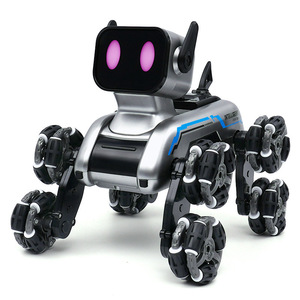
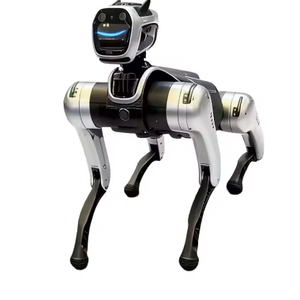
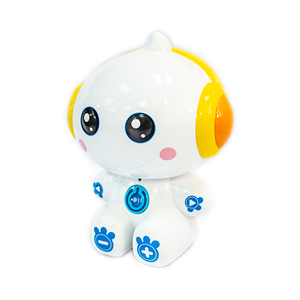
Flagship Zibby Educational & Interactive Smart Platforms
Engineered for global wholesale, scalable retail lines, educational ministries, and brand licensing projects. Select an active configuration or link your technical custom requirements.
Industry Insight Whitepaper
The Architecture of Modern Educational Robotics: Why Zibby Leads Global Sourcing
Analyzing the paradigm shift from basic pre-programmed audio playback devices to edge-computing interactive educational companions.
The global pedagogical landscape has shifted definitively from passive screen-based learning toward active sensory, tactile, and kinesthetic robotics. As schools, retail distributors, and institutional importers look to deploy high-retention STEM tools, Zibby educational robots represent the apex of this engineering convergence. Traditionally manufactured educational toys suffered from high return rates due to mechanical fragility, brittle acoustic integration, and rapid child obsolescence. Our production methodology resolves these pain points through unified mechanical-electronic co-engineering directly from Shenzhen’s core industrial cluster.
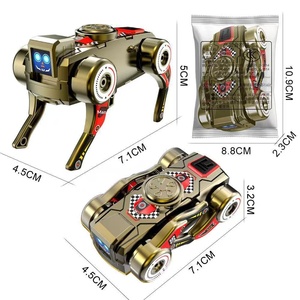
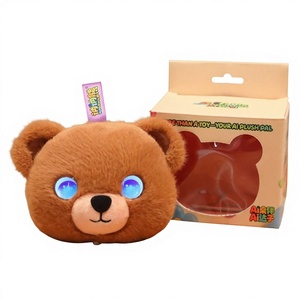
By bridging micro-actuator kinematics with low-latency Natural Language Processing (NLP) chipsets, our product lines deliver unprecedented information gain for sourcing teams. Whether engineering an 8-wheel transformable stunt chassis for physics instruction or soft-touch vinyl-face plush companions with cloud LLM integrations, our factory acts as an end-to-end technology incubator rather than a conventional assembly line.
Edge vs. Cloud Voice Pipeline
Dual-core processing enabling real-time local wake-word capture without latency, paired with multi-language cloud connectivity supporting 37+ national dialects for non-native language learners.
Child-Safe Data & Hardware Security
Engineered to comply natively with COPPA and GDPR-K guidelines. On-chip encrypted memory prevents unauthorized voice telemetry extraction while satisfying stringent European RF test protocols.
High-Torque Bionic Actuation
Drop-tested planetary and metal-gear micro servos capable of sustaining up to 15,000 continuous articulation cycles without tooth shear, preventing field service failures in active classroom environments.
2026-2030 Market Forecast
Future Procurement Trends in Educational & Interactive Robotics
How institutional and retail buyers can future-proof their product catalog against evolving consumer demands and regulatory shifts.
1. Convergence of Plush and Robotics
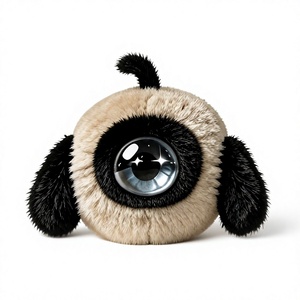
Consumers are demanding 'soft robotics'—devices that integrate internal mechanical skeletons and gesture sensors inside soft, tactile plush or vinyl casings to alleviate early childhood screen fatigue.
2. On-Device TinyML for Gesture Logic
Procurement is moving toward decentralized machine learning microcontrollers capable of analyzing infrared, capacitive, and optical gesture inputs locally with minimal power draw.
3. Modular STEM Ecosystems
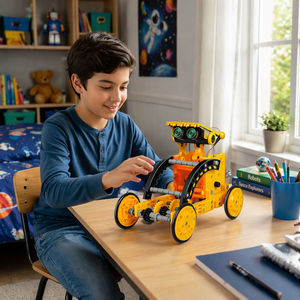
Importers are turning to convertible systems—such as our 12-in-1 solar and mechanical DIY platforms—that transition seamlessly between classroom curricula and retail unboxing experiences.
| Architecture Feature | Legacy Educational Toys | Standard Commercial Robots | Next-Gen Zibby Platform (Atp Intelligent) |
|---|---|---|---|
| Acoustic & Voice Input | Pre-recorded OTP ROM clips | Basic Bluetooth streaming speaker | Neural Voice Filter + 37 Language NLP |
| Mechanical Durability | Single-use snap plastic joints | Brushed micro-motor gearboxes | Reinforced ABS/POM High-Impact Articulation |
| Power Management | Disposable AA/AAA batteries | Unprotected Lithium-Polymer cells | NTC Dual-MOS Overcharge/Thermal Cutoff Li-ion |
| Firmware Adaptability | Hardwired masked microcontroller | Factory-only USB flashing | Secure OTA Updates via Proprietary App Modules |
Factory Execution Matrix
B2B Turnkey Engineering: From Sketch to Golden Sample
Shenzhen Atp Intelligent Electronics Co., Ltd. eliminates handoff friction between soft textile craftsmanship and complex electronics.
01
DFM & Structural Architecture
We audit initial 3D models, plush patterns, or ID concepts for moldability, drop-survival elasticity, and acoustic chamber resonance before tooling begins.
02
SMT, Chipset & PCBA Fabrication
Our electronic engineers tailor voice ICs, motor drivers, sensor arrays, and gesture logic boards into custom ultra-compact footprints.
03
Prototype & Safety Compliance
Working units undergo rigorous internal stress tests: tensile seam pulling, electromagnetic emission verification, drop tests, and thermal chamber cycling.
04
Volume Mass SMT & Assembly
Class-100,000 clean assembly lines, 100% full functional acoustic verification, optical automated inspection, and customized export-ready packaging.
E-E-A-T Enterprise Credibility
Why Partner with Shenzhen Atp Intelligent Electronics Co., Ltd.?
Combining the agile hardware speed of the Greater Bay Area with international quality management standards.
Unrivaled Supply Chain Proximity
Headquartered in Shenzhen, Guangdong, we have direct line access to premier suppliers of high-reliability micro-servos, specialized voice synthesis DSPs, precision textile spinners, and precision tooling facilities.
Plush + Electronics Under One Roof
Most failures in the smart toy sector occur at the interface between soft goods and electronics. We design the skin, mechanical frame, and PCB concurrently, eliminating sound dampening, overheating, and mechanical wire binding.
Global Certification Assurance
All platforms are pre-tested to pass EN71 (Parts 1, 2, 3), ASTM F963, CPSIA, IEC 62115 (Electric Toys), RED, FCC-ID, and RoHS requirements, ensuring frictionless customs clearance across the EU, North America, and APAC.
Procurement Guidance
Frequently Asked Questions for B2B Importers & Brands
Clear, direct answers regarding custom development, regulatory frameworks, sample times, and wholesale logistics.
What is the standard MOQ for customized OEM/ODM educational robots?
For existing catalog models with custom private labeling and packaging, our minimum order quantity starts at 1,000 units. For fully bespoke hardware (new plastic injection tooling, tailored PCBA dimensions, or custom silicone/plush skins), the baseline production MOQ is typically 3,000 units.
How do you handle firmware localization and language adaptations?
Our interactive platforms utilize versatile DSP chipsets with expandable flash memory. We can embed native vocal recordings provided by your sound designers, or license advanced cloud NLP engines configured specifically for your target geographic territories.
How is battery thermal safety managed in enclosed soft toys?
All rechargeable configurations utilize UL-certified and UN38.3-tested lithium cells enclosed in rigid flame-retardant polymer casings. Dual-layer Protection Circuit Modules (PCM) continuously monitor thermal limits, short circuits, and charge overvoltage, preventing internal overheating.
What documentation do you provide for international customs clearance?
We supply full Technical Construction Files (TCF), including complete BOM listings, material safety data sheets (MSDS), battery UN38.3 transport certificates, CE DoC (Declaration of Conformity), FCC test reports, and third-party laboratory test data (SGS/TUV/Intertek).
Can you provide standalone movement or sound boxes for our own factories?
Yes. If you operate your own cut-and-sew operations, we can deliver turnkey "AI Movement Boxes," sound boxes, and expressive robotic eye displays as drop-in modules calibrated to fit your internal structural clearances.
What is the typical lead time from prototype to mass shipment?
Initial functional 3D printed/sewn prototypes are delivered in 14 to 21 business days. Tooling development takes 30 to 45 calendar days. Mass production cycles typically require 35 to 45 days after the golden sample has received final commercial approval.