Engineering Portfolio: Flagship AI Educational Platforms
Direct from our Shenzhen electronic and plush manufacturing facilities: turn-key hardware architectures designed for multilingual NLP instruction, embodied robotic control, and multi-modal sensory feedback.
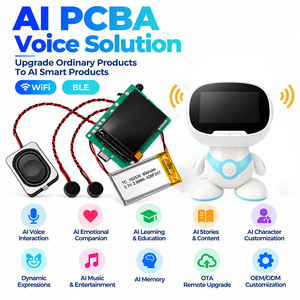
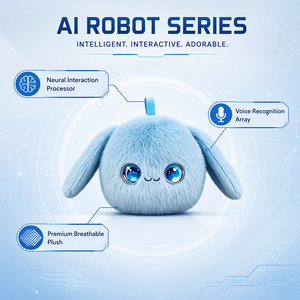
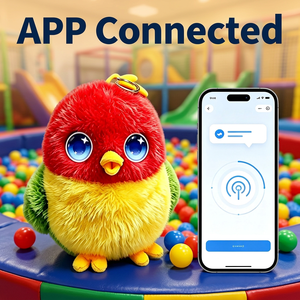
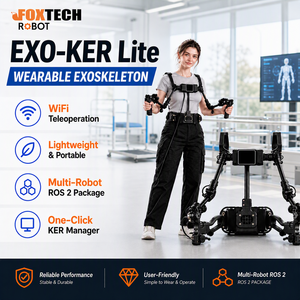
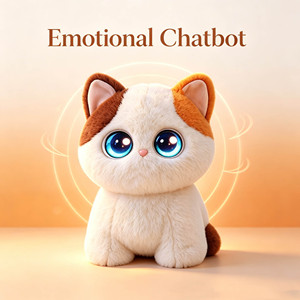
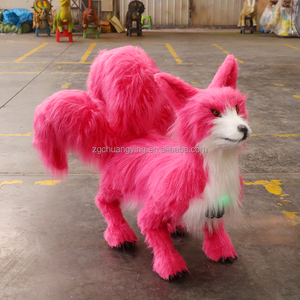
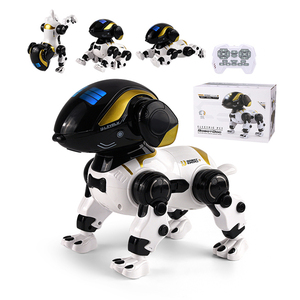
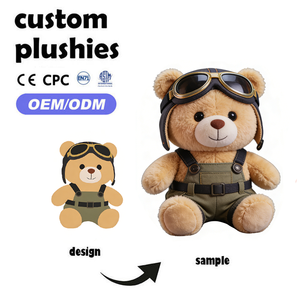
The Paradigm Shift: Architectural Evolution of AI Educational Robots
The educational robotics sector is transitioning rapidly away from scripted, closed-loop soundboard playthings toward multimodal generative learning companions. As global educational curricula emphasize adaptive pedagogical feedback, standard interactive toys can no longer sustain extended user retention. Contemporary supply chain engineering focuses on integrating real-time neural processing units (NPUs), ultra-low-power microcontrollers (such as ESP32-S3 or specialized ARM Cortex-M architecture), and deterministic motor actuators directly into soft-touch housings.
From an engineering perspective, modern AI educational robotics manufacturers face the critical friction point between elastic mechanical skins and precision electronic enclosures. A primary manufacturing bottleneck has historically been thermal throttling inside sealed plush or synthetic chassis, acoustic dampening of boundary microphones due to high-density polyester fillings, and mechanical fatigue across multi-channel servo linkages. To resolve these challenges, our factory in Shenzhen integrates unified computational blocks—such as the AI Movement Box and modular voice matrices—that incorporate dedicated acoustic baffles, passive heat dispersion routing, and shock-resistant ABS-polycarbonate inner shells.
Edge-LLM Hybrid Routing
Local keyword spotting (KWS) combined with secure Wi-Fi and BLE cloud routing guarantees responsive speech interaction while complying strictly with child privacy laws.
Biomorphic Kinematics
Brushless and coreless servo arrays configured with current-limiting safety cutoffs prevent pinch injuries and gear stripping under direct physical load by children.
Multi-Tier Compliance
Dual-track certification pipeline covering physical mechanical safety (EN71, ASTM F963) alongside electronic radio standards (FCC-ID, CE-RED) and children's data safety.
Global B2B Procurement Forecast & Sourcing Trajectory
Enterprise buyers, retail brands, and government STEM education contractors are revising their procurement metrics. Procurement strategies no longer revolve strictly around the lowest Bill of Materials (BOM) cost; instead, purchasing departments prioritize software lifecycle resilience, firmware upgradability (OTA), and verified cyber-physical safety.
| Evaluation Parameter | Legacy Electronic Toys (2018–2022) | Next-Gen AI Educational Robots (Current–2030) | Impact on Procurement & Sourcing |
|---|---|---|---|
| Dialogue Engine | Pre-recorded microchip speech ROM (Fixed) | Dynamic Contextual Dialogue via On-Device / Cloud LLM | Extended product lifespan; requires secure cloud API agreements |
| Sensory Array | Single-point binary mechanical switches | Capacitive tactile zones, IMU motion, optical camera inputs | Higher sensor tolerance requirements; requires calibrated chassis |
| Battery Architecture | Alkaline dry cells or unshielded Li-ion packs | USB-C Smart BMS with thermal sensors & NTC isolation | Mandatory UN38.3, UL1642, and IEC 62133 air-freight compliance |
| Regulatory Scope | Pure mechanical & heavy metal safety tests | COPPA, GDPR-K, Cyber Resilience Act (CRA) + EN71 / ASTM | Requires signed data-privacy auditing and encrypted flash memory |
B2B buyers sourcing from China must recognize that component-level integration demands comprehensive testing during the early injection-molding and pattern-drafting phases. As shown by our proprietary development pipelines, modularizing the electronic framework (the "AI core") distinct from the soft exterior allows distributors to achieve SKU variety across multiple character designs with unified software support and streamlined global regulatory certification.
Why Global Brands Select Shenzhen Atp Intelligent Electronics Co., Ltd.
Operating in Shenzhen—the undisputed epicenter of the global hardware innovation ecosystem—AItoyplays bridges the historical divide between high-precision consumer electronics fabrication and artisanal soft-toy tailoring. Our interdisciplinary engineering team includes mechanical robotics specialists, embedded firmware developers, and experienced plush pattern creators.
Integrated Soft-to-Hard Engineering
We eliminate assembly misalignment by co-designing internal module anchor points, speaker acoustic chambers, and fabric stretch allowances simultaneously during 3D CAD modeling.
Zero-Defect Quality Control
Every unit undergoes multi-step automated functional validation, including audio frequency sweep checks, continuous 72-hour burn-in stress testing, and metal-detection fabric screening.
Modular Drop-in Ecosystems
Our proprietary line of AI Movement Boxes and sound-light sub-assemblies permits swift ODM private-label customizations, shortening time-to-market by up to 60% compared to ground-up engineering.
Procurement FAQ: Engineering, Compliance & Order Operations
Straightforward technical answers to the most common queries raised by international procurement managers, hardware buyers, and corporate brand licensors.
How do you safeguard child privacy in AI-connected robots?
We implement privacy-by-design principles: hardware microphone cutoff switches, encrypted TLS 1.3 data transfer, and zero local persistence of raw voice logs. Backend endpoints are architected to adhere to COPPA (USA) and GDPR-K (EU), with opt-in parental authorization portals.
What is the typical timeline from custom industrial sketch to golden sample?
Initial rapid functional 3D prototypes and hand-sewn plush iterations are completed within 14–21 business days. Tooling, plastic injection molds, and full PCB layout validation require an additional 30 to 45 days, followed by testing sample delivery.
Can we purchase standalone electronic modules without the plush housing?
Yes. We provide our proprietary AI Movement Boxes, voice-interactive sound boards, LCD expression subsystems, and motor drivers as standalone, pre-certified OEM assemblies directly to partner factories worldwide.
Which safety certifications do you routinely fulfill for export markets?
Our manufacturing protocols guarantee compliance with EN71 (Parts 1, 2, 3), ASTM F963, CPSIA, IEC 62115 (Electric Toy Safety), CE-RED, FCC-ID, RoHS, REACH, and battery shipping documentation (UN38.3 and MSDS).
Accelerate Your Educational Robotics Roadmap
Initiate direct communication with our senior hardware solutions engineers in Shenzhen. From character concept sketching to turnkey mass production, we bring your intelligent toy ideas to life with institutional rigor.
Contact Us