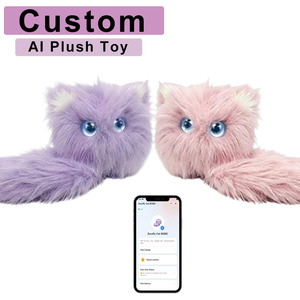
Emotional AI
Custom AI Voice Interactive Plush Toy Smart Emotional Companion Robot
Dual-array MEMS beamforming, adaptive LLM emotional feedback engine, child-grade ultra-soft hygiene fabrics.
As pedagogical models accelerate toward experiential STEM learning and adaptive tutoring, educational institutions and international toy brands require more than traditional electronic toys. Procurement professionals demand complete hardware-software architectures capable of edge vision, safe multi-degree-of-freedom actuation, natural voice synthesis, and absolute consumer data confidentiality.
The global paradigm in intelligent tutoring devices has decisively transitioned from static playback devices to multimodal, context-aware interactive platforms. As China's premier manufacturer and engineering exporter of commercial AI learning robots, our Shenzhen development ecosystem directly solves the long-standing fracture between high-performance computing hardware and the precision craftsmanship required for child-safe, durable educational equipment.
Modern educational hardware buyers encounter persistent supply-chain bottlenecks: misaligned acoustic performance caused by plush stuffing dampening MEMS microphones, unstable radio modules failing CE-RED telecommunication protocols, and cloud dependencies introducing unacceptable latency into cognitive tutoring dialogues. Through holistic design and manufacturing control, we bridge edge-silicon processing, servo kinematics, vision-based machine learning, and certified compliance directly into container-scale turnkey production.
Whether deploying open-source ROS-enabled robotic arms for university-level computer science curricula or developing emotional biped companions designed to accelerate language acquisition in early childhood programs, our turnkey OEM/ODM pathways eliminate engineering fragmentation while accelerating global time-to-market.
Verified B2B catalog items ready for OEM brand adaptation, localized firmware flashing, or custom structural engineering.
Dual-array MEMS beamforming, adaptive LLM emotional feedback engine, child-grade ultra-soft hygiene fabrics.
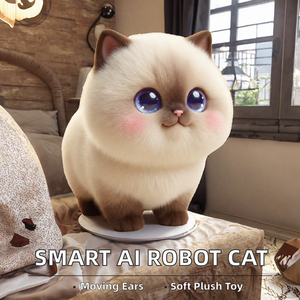
Precision micro-servo articulation, tactile touch-capacitive zoning, app-connected modular learning sequences.
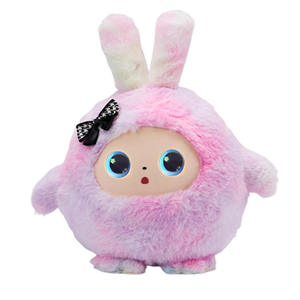
Multi-language offline speech synthesis, interactive curriculum playback, shock-isolated sound cavities.
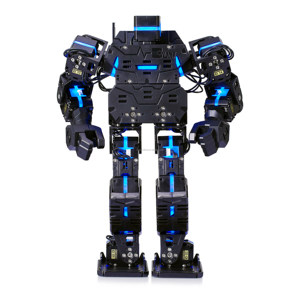
Onboard OpenCV edge processing, closed-loop bus servos, dynamic gait stabilization algorithm.
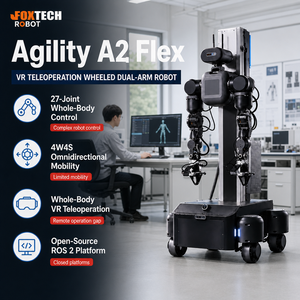
VR teleoperation framework, 27 degrees-of-freedom, high-torque industrial actuators for research labs.
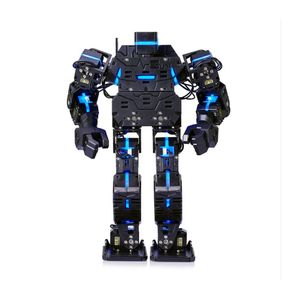
Scratch & Python programmable, modular structural snap-locking, multi-sensor algorithmic obstacle routing.
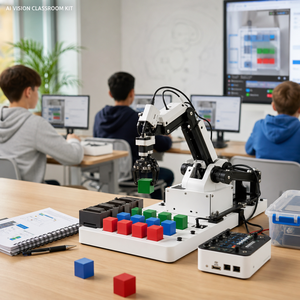
Integrated suction manipulation, safety anti-pinch current sensors, visual shape & color classification algorithms.
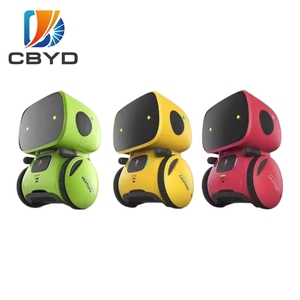
Android 14 OS environment, 1080p biometric eye tracking, two-way interactive video tutoring, safe Li-ion circuitry.
Empirical insights for category managers, toy importers, and educational procurement departments navigating the 2026–2030 technological transitions.
High API recurring tokens and latency bottlenecks are driving enterprise brands toward on-device Small Language Models (SLM) executing on 2TOPS–4TOPS neural processing microchips. Procurement teams now prioritize offline fallback capabilities to guarantee real-time tutoring even in air-gapped classroom setups.
Purely conversational toys without physical agency face rapid engagement drops. Modern tender requirements mandate closed-loop spatial interactions: integrating pan-tilt facial tracking, mechanical gesture alignment, and dual-arm manipulation platforms with visual feedback loops for physical-digital STEM learning.
Regulatory scrutiny (FTC COPPA 2.0, EU AI Act, GDPR-K) is shifting hardware evaluation. Major European and North American distributors now reject toys with persistent cloud audio streaming. Procurement is converging on localized eprom storage, hardware kill-switches, and edge wake-word authentication.
Comparative engineering metrics based on 10,000+ unit OEM/ODM production runs in Shenzhen.
| Robot Architecture Tier | Processor / Compute Base | Acoustic & Vision Sensing | BOM Cost Impact | Typical Lead Time | Target Market Application |
|---|---|---|---|---|---|
| Interactive Soft Companion Hybrid IoT / Edge |
Dual-Core ESP32-S3 + Custom DSP Voice Co-processor | Dual MEMS Mics, I2S DAC, Capacitive Touch Arrays | Standard Base | 35–45 Days | Preschool Language Immersion, Private Label Gifting, IP Merchandise |
| Institutional STEM Biped / Arm Pure Edge Processing |
Quad-Core Cortex-A53 / ARM + RTOS Servo Controller | Monocular 1080p Camera, Ultrasonic, Gyroscope IMU | Medium-High | 45–55 Days | Primary/Secondary Schools, Robotics Competitions, Scratch Coding |
| Embodied Multi-DOF System Embodied Research |
Embedded NPU (Rockchip RK3588 / Jetson Orin Nano) | Depth Camera, Current Feedback Bus Servos, Dual Mics | Premium Tier | 60–75 Days | University CS Labs, Advanced Mechatronic R&D, Embodied AI Exploration |
The intersection of precision electronic manufacturing, acoustic engineering, and advanced materials science.
Historically, smart plush suffered from muffled voice recognition and high harmonic distortion because electronic housings were dropped indiscriminately into fiberfill. Our R&D solves this via custom-molded ABS acoustic baffles that decouple the speaker's back-wave from the chassis while routing high-sensitivity MEMS microphones through isolated silicone sound-tubes. This yields ultra-high wake-word accuracy (>97% in 65dB noise environments) without compromising plush softness.
Conventional PWM servos generate tangled wire harnesses that degrade quickly under classroom stress. Our modern STEM bipedal platforms utilize daisy-chained, full-metal-gear serial bus servos with embedded magnetic encoders. Integrated firmware continuously samples internal motor temperature and draw-current, initiating microsecond torque cut-offs if a child forcibly pinches a robotic joint, preventing mechanical gear shear and eliminating pinch hazards.
Standard static prompts are being superseded by contextual knowledge graph traversal. When paired with companion tablet applications or operating independently via integrated AMOLED touch displays, our conversational units track child comprehension metrics, progressively scaffolding vocabulary and mathematics difficulties rather than delivering repetitive, pre-scripted sound clips.
Child toy safety standards strictly limit thermal generation across battery enclosures. We engineer custom PMIC architectures featuring redundant NTC thermistors, mechanical flame-retardant battery sub-cages, and low quiescent-current standby states (<20µA). Products safely pass international transport protocols (UN38.3) while satisfying stringent IEC 62115 thermal safety requirements.
By anchoring your manufacturing in the heart of the world's most concentrated smart-hardware ecosystem, we de-risk your development lifecycle from first sketch to ocean delivery.
We eradicate finger-pointing between pure textile sewing plants and independent electronic suppliers. Pattern makers, PCB layout engineers, and acoustic specialists work side-by-side on your project brief.
Immediate access to top-tier semiconductor fabs, micro-motor tooling facilities, and certified textile dyeing mills in Guangdong allows us to iterate functional prototypes within 10–14 days.
All mechanical structures, lithium packs, RF emissions, and fabric dyes undergo rigorous DFM review against ASTM F963, EN 71 Parts 1-3, IEC 62115, FCC Part 15, and RoHS directives prior to tooling.
Clear, direct answers regarding lead times, tooling investments, custom firmware flashing, and regulatory compliance.
Partner directly with Shenzhen’s premier manufacturing engineering team. Receive detailed mechanical CAD drawings, functional sample quotes, and certified compliance roadmaps tailored to your commercial distribution territory.