Export-Grade AI Robotic Companions & Smart Modules
Manufactured by Shenzhen Atp Intelligent Electronics Co., Ltd. Discover our high-density robotic platforms, ChatGPT-integrated companion devices, and interactive electronic sub-assemblies engineered for global consumer markets.
The Paradigm Shift: From Stationary Smart Speakers to Pocket-Sized AI Agents (AIBI Form Factor)
A comprehensive examination of miniaturization, onboard edge inference, and the commercial engineering behind pocket companion robots.
Form-Factor Miniaturization
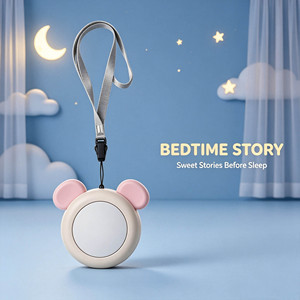
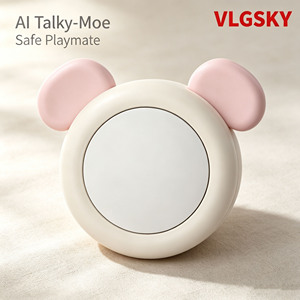
The consumer electronics market is experiencing an unprecedented structural transition. Traditional smart toys relied on bulky mechanical chassis or stationary hubs that restricted user attachment. The emergence of the AIBI pocket robot form factor—characterized by an ultra-compact footprint (under 120 grams, height under 10 centimeters)—represents an evolution toward wearable, pocket-ready, emotionally resonant computing companions.
Engineering these devices requires overcoming extreme volumetric constraints. As a Tier-1 original design manufacturer (ODM) based in Shenzhen, Shenzhen Atp Intelligent Electronics Co., Ltd. (AItoyplays) integrates multi-axis micro-gimbals, optical sensors, capacitive touch arrays, and rechargeable lithium-polymer battery modules into an ergonomic chassis small enough to clip onto clothing or fit comfortably inside a jacket pocket.
Hybrid Edge-Cloud Architecture
Operating an artificial intelligence companion at pocket scale demands a balanced computing architecture. Pure cloud dependencies introduce unacceptable latency (>1500ms), breaking emotional immersion. Pure edge execution is constrained by thermal thresholds and milliwatt power budgets.
Our export-grade pocket robots employ a two-tiered hybrid compute topology. Onboard low-power Neural Processing Units (NPUs) handle real-time wake-word verification, facial gesture detection, and voice activity tracking (VAD) within a strict 50ms window. Complex multi-turn semantic reasoning, dynamic storytelling, and personalized persona models are offloaded via secure, end-to-end encrypted Wi-Fi 6 or BLE 5.3 channels to localized Large Language Model (LLM) endpoints, bringing end-to-end vocal turnaround under 350ms.
Engineering Specifications: AIBI Pocket Robot Architecture
A transparent comparative matrix detailing standard consumer toy grades versus our industrial-grade, export-compliant pocket robot platform.
| Subsystem | Standard Low-Cost Toy Tier | Shenzhen ATP Pocket Robot Industrial Tier | Procurement & Longevity Impact |
|---|---|---|---|
| Microcontroller / SoC | 8-bit / 32-bit MCU (No dedicated NPU, 8MB Flash) | Quad-Core ARM Cortex-A35 + 1.2 TOPS NPU / Dual-Band Wi-Fi + BLE 5.3 | Enables local sensor fusion, wake-word accuracy >98%, and over-the-air (OTA) feature rollouts. |
| Display / Emotional UI | Segmented monochrome TN LCD or 8x8 LED matrix | 1.39-inch to 1.54-inch Circular AMOLED / IPS (454x454 res, 326 PPI, 60fps) | High pixel density produces micro-expressions, fluid eye-gaze tracking, and lifelike emotional resonance. |
| Acoustic & Microphone Array | Single omnidirectional electret mic with analog noise floor | Dual MEMS microphone array with built-in DSP Acoustic Echo Cancellation (AEC) & Beamforming | Cancels internal motor and servo hum; preserves wake-word detection in ambient noise environments up to 75dB. |
| Kinematic Actuation | Open-loop brushed DC toy motors with plastic gearing | Coreless micro-stepper servos with magnetic encoders and POM silent helical gears | Sub-millimeter head nodding and tilting; operating lifespan >2,000 continuous hours without mechanical drift. |
| Power Management & Safety | Basic uncertified Li-ion pouch cell with single MOS protection | High-energy-density LiPo cell (4.2V/4.35V) with dual-IC NTC thermal protection & UN38.3/IEC 62133 certification | Guarantees 4 to 6 hours active operational life; prevents thermal runaway under rapid 1C USB-C fast charging. |
| Structural Materials | Recycled ABS / PP prone to embrittlement and off-gassing | Bayer Virgin Food-Grade Polycarbonate + Soft-Touch TPU skin (EN 71-3, ASTM F963 heavy metal compliant) | Passes rigorous drop tests (1.5 meters onto concrete) and sweat/saliva resistance testing for multi-region retail. |
Strategic Procurement Trends for Pocket AI Robots (2026–2030)
What B2B brand owners, consumer electronics importers, and toy distributors must factor into their three-year sourcing roadmap.
1. Convergence of Hard Shells & Soft Materials
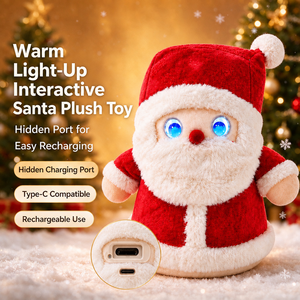
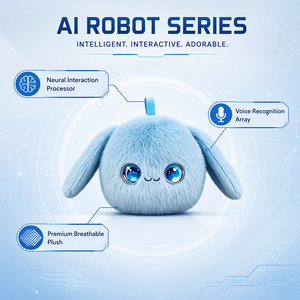
Traditional categorization kept hard plastic robotics separate from plush companions. Next-generation procurement demonstrates a rapid merger: buyers now request modular mechanical skeletons (such as our AI Movement Box) encased in premium plush textiles or silicone-coated shells. This hybrid construction enhances tactile emotional attachment while preserving precise servo articulation and display protection.
2. Zero-Retention Data Privacy Frameworks
With tightening international regulations—such as EU AI Act standards, COPPA 2.0 in the United States, and strict California consumer privacy laws—global buyers can no longer import connected toys with ambiguous data pipelines. Future procurement contracts require localized edge voice tokenization, explicit physical mic-mute switches, and zero-retention cloud LLM agreements where voice samples are never utilized for model retraining.
3. Hardware-as-a-Service (HaaS) Monitization
B2B importers are shifting away from one-off transactional sales models toward long-tail software ecosystem monetization. Export-grade pocket robots designed by our factory feature partitioned onboard storage allowing brand clients to offer recurring subscription tiers, character personality marketplace expansions, educational language packs, and seasonal voice-skin updates via iOS and Android companion apps.
Why Global Tier-1 Importers Partner with Shenzhen ATP Intelligent Electronics
Combining the world's most concentrated micro-electronics supply chain with integrated soft-goods fabrication, custom firmware engineering, and end-to-end quality assurance.
Shenzhen Supply Chain Density & Precision SMT
Situated in Shenzhen's electronics corridor, AItoyplays (Shenzhen Atp Intelligent Electronics Co., Ltd.) operates surface-mount technology (SMT) lines capable of handling 01005 passives and high-density 0.35mm pitch BGA packages. This electronic precision allows us to compress advanced DSPs, power management ICs, and high-frequency RF matching circuits into pocket-scale enclosures without sacrificing thermal integrity.
Integrated Acoustic-Mechanical Co-Engineering
The single most prevalent defect in third-party smart toys is acoustic resonance feedback: the miniature speaker vibrates the plastic casing, inadvertently tripping the internal microphone or distorting outgoing AI voice playback. Our acoustic engineering laboratory conducts laser Doppler vibrometry and full anechoic chamber testing to model chassis resonance before tooling cut, ensuring crystal-clear duplex conversation.
Turnkey OEM/ODM: From Industrial Sketch to Retail Shelf
We do not simply assemble off-the-shelf boards. We provide complete lifecycle execution: industrial styling (ID), mechanical design (MD), PCBA layout, firmware optimization, injection tooling, cleanroom assembly, ultrasonic welding, character plush integration, multi-language packaging, and freight staging. Our engineering oversight eliminates inter-vendor finger-pointing and dramatically reduces sample-to-production cycles.
Frequently Asked Questions: AIBI Pocket Robot Sourcing & Technical Validation
Authoritative guidance addressing technical, contractual, safety, and supply chain questions encountered by international product managers.
How does your factory solve acoustic feedback between internal servos and the microphone array?
In ultra-compact pocket robots, servo motors sit millimeters from the microphone capsules. We solve this challenge through a three-stage mechanical and algorithmic isolation protocol: (1) internal independent silicone floating suspension dampeners that isolate motor vibrations from the housing; (2) hardware-based beamforming directional microphone polarity; and (3) real-time spectral subtraction DSP firmware that cancels known motor frequencies during articulation.
What cloud LLM backends can your pocket robot platforms interface with?
Our modular firmware architecture is agnostic to cloud AI providers. We natively support integration with OpenAI (ChatGPT-4o / Realtime API), Microsoft Azure Cognitive Services, Claude, and open-source models deployed on private enterprise servers. For international markets, we configure regional endpoint routing to ensure compliance with localized data protection policies and sub-350ms latency benchmarks.
What international safety and RF certifications do your products carry?
All platforms developed by Shenzhen Atp Intelligent Electronics Co., Ltd. are engineered to pass comprehensive international testing. This includes EN 71 (Parts 1, 2, 3), ASTM F963, and CPSIA for mechanical safety and heavy metal toxicity; IEC 62115 for electric toy electrical safety; CE-RED and FCC ID for dual-band Wi-Fi/Bluetooth RF and SAR emissions; and UN38.3 + IEC 62133 for safe air/sea transport of lithium-polymer batteries.
What are the standard Minimum Order Quantities (MOQ) and production lead times?
For custom OEM/ODM builds requiring proprietary injection mold tooling and custom PCBA layout, initial batch MOQ typically begins at 3,000 units. For white-labeling our proven ODM platforms (such as the AI Smile Face series or pocket companion reference boards), MOQs start at 1,000 units. Functional prototypes require 15–20 business days; full mass production runs average 35–45 days post golden-sample approval.
Can we supply our own character IP, voice actor assets, and custom personality animations?
Yes. Our software engineering suite provides brand clients with a comprehensive SDK/API integration pipeline. You can provide your proprietary vector character graphics, customized UI expressions for the circular AMOLED display, wake-word synthetic models, and proprietary system prompts. We flash your localized assets at factory production level with locked security certificates.
What thermal management solutions are utilized in enclosed pocket-sized robotic bodies?
Miniature pocket robots with active displays, Wi-Fi chips, and motor drivers generate heat that can quickly accumulate within small enclosures. We employ ultra-thin graphite heat-spreading sheets paired with copper thermal vias on the internal multilayer PCB. This routes thermal dissipation toward low-touch exterior structural edges, keeping chassis temperatures below the international 43°C consumer safety limit during prolonged continuous interaction.
Initiate Your Custom Pocket Robot Engineering Project
Whether you require a custom AIBI-style miniature robotic companion, an expressive circular AMOLED interface, or a drop-in AI movement module for your plush toy line, our engineering team in Shenzhen is ready to evaluate your specifications, Bill of Materials (BOM), and compliance framework.