Children's Drawing, Service & Companion Robotics Catalog
Explore our industrial production lineup encompassing smart optical drawing machines, voice-interactive educational companions, bionic walking robotics, and custom robotic kits manufactured under strict international toy safety standards.

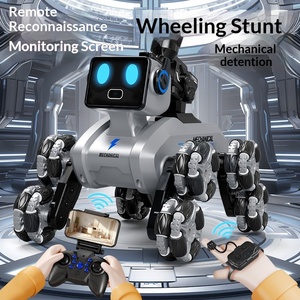
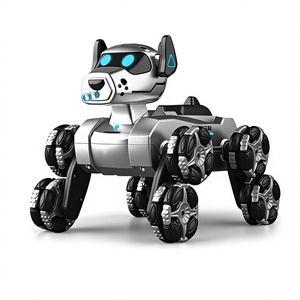

Engineering Children's Drawing Robots: Kinematic Architecture, Embedded Vision, and Early Childhood Pedagogy
The global demand for intelligent educational hardware has experienced a marked evolutionary transition. Traditional motorized consumer toys have yielded ground to sophisticated, screen-free educational platforms. Among these, the automated children's drawing robot occupies a premier tier. Operating at the confluence of mechatronics, computer vision, and cognitive fine-motor development, a children's drawing robot translates digital vector representations or optical flashcard schemas into precise analog mechanical strokes. For professional B2B toy buyers, enterprise brand licensors, and procurement directors, identifying an elite Chinese manufacturing partner requires an exhaustive understanding of mechanical backlash tolerance, motor step-angle resolution, optical card-sensor latency, and compliance across European and North American safety directives.
1. Kinematic Architectures: Cartesian Gantry vs. Polar SCARA vs. Differential Two-Wheel Locomotion
In educational robot engineering, physical path planning and stroke reproduction depend heavily on mechanical structural topology. When sourcing drawing robots from China, B2B procurement teams encounter three dominant kinetic configurations:
A. Fixed-Base SCARA & Dual-Arm Linkages: Utilizing high-torque bipolar stepper motors coupled with anti-backlash gearboxes, these stationary desktop robotic drawing companions anchor a standard dry-erase or felt marker within an articulated mechanical end-effector. The kinematic algorithm maps planar Cartesian coordinates (X, Y) into rotational joint angles (θ1, θ2) via real-time inverse kinematics computed on an onboard 32-bit ARM Cortex-M4 microcontroller. This system provides superior line accuracy (±0.08 mm), making it the gold standard for intricate alphabet tracing and geometric demonstrations.
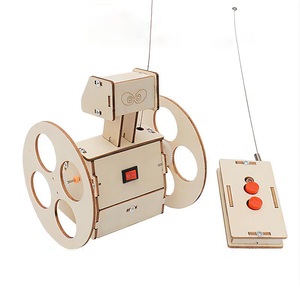
B. Mobile Differential-Drive Wheeled Robots: These self-contained spherical or animal-profile robots navigate across horizontal drawing paper by actuating two high-precision micro-stepper motors driving rubberized traction wheels, accompanied by a central solenoid-actuated pen-lift mechanism. Differential wheel velocities generate smooth planar arcs, continuous splines, and acute turns. Calibrating wheel slip friction coefficients and surface tire hardness (Shore 50A–60A) remains essential to avoid cumulative navigational drift across prolonged drawing routines.
C. Polar & Cable-Suspended Educational Plotters: Primarily geared toward older STEM student demographics, these units leverage radial distance and angular coordinates to demonstrate trigonometric transformation principles. While exhibiting slightly higher mechanical tolerances, their open architecture provides expansive exploratory value for secondary educational institutions.
2. Embedded Optical Sensing, QR Stroke Vectorization, and Voice Synthesis
The core interface defining premium children's drawing robots is the optical recognition engine. High-volume consumer models integrate an inverted CMOS optical sensor or miniature image sensor placed within the robot's lower visual aperture. When a child presents an instructional learning card (featuring an illustrated animal, vehicle, or letter), the sensor performs instant hardware-level decoding:
Rather than requiring active Wi-Fi tethering or cloud server dependency, top-tier platforms execute localized parsing of proprietary microscopic matrix codes, high-density 2D barcodes, or edge-vector sequences stored on SPI NOR flash memory. The microcontroller dynamically extracts sequential G-code-like vector primitives (linear moves, circular arcs, pen-up/pen-down transitions) and executes coordinated PWM drive signals to the motor bridge drivers. Synchronized I2S audio decoders simultaneously push localized instructional speech ("First, let's draw an oval for the head!") through a cavity-tuned 8-ohm acoustic chamber, producing a multisensory, highly interactive learning atmosphere.
| Kinematic Typology | Actuator Hardware | Stroke Precision | Optical Sensor Architecture | Primary Pedagogical Focus | Target BOM Range (OEM) |
|---|---|---|---|---|---|
| Dual-Arm SCARA Linkage | Twin 28BYJ-48 Steppers + Micro Servo | ±0.08 mm to ±0.12 mm | OV7670 CMOS / Customized Barcode Sensor | Alphabet writing, phonics, structured sketching | Mid-to-High B2B Tier |
| Mobile Differential-Drive | Encodered Micro DC Gearmotors / Steppers | ±0.25 mm (surface dependent) | Down-facing Optical Flow + Top Barcode Scanner | Floor-based spatial navigation, shape mastery | High Volume Commercial Tier |
| Direct-Drive Cartesian Gantry | Coreless Micro Motors + Timing Belts | ±0.05 mm | Top-mounted Micro Camera + Local Edge-AI | Precision art, vector scaling, custom user upload | Premium Educational STEM |
| Voice-Guided Hybrid Companion | Planar Jointed Actuators + Audio DSP | ±0.15 mm | Omnidirectional Optical Reader + I2S Mic Array | Early childhood conversational drawing therapy | Specialized B2B / Licensing |
3. Material Safety, Mechanical Reliability, and Global Toy Directives
Sourcing children's electronic hardware requires navigating stringent chemical and mechanical compliance protocols. Drawing robots operate in close physical proximity to young children, demanding uncompromising rigor across product engineering:
A. Polymer Selection & Non-Toxic Injection Molding: The primary chassis must be constructed from virgin, impact-resistant ABS or food-contact-grade Polypropylene (PP), totally free of phthalates, bisphenol A (BPA), and hazardous polycyclic aromatic hydrocarbons (PAHs). Our factories deploy high-pressure injection molding tooling with polished EDM cavity surfaces to prevent parting line flash and sharp-edge pinch hazards, compliant with EN 71-1:2014+A1:2018 and ASTM F963-17 physical safety clauses.
B. Integrated Power Management & Battery Safety: Portable drawing robots utilize rechargeable Lithium-Polymer (LiPo) cells (typically 1200 mAh to 2600 mAh) or standardized dry cell configurations. When integrating rechargeable lithium chemistries, modern OEM designs demand dedicated hardware protection ICs (OVP, OCP, OTP) that safeguard against over-charging, thermal runaway, and short-circuit conditions. Certification compliance requires UN 38.3 transport testing, IEC 62133 secondary cell safety approval, and UL 2054 electrical system listings.
C. Acoustic Volume Decibel Limits: In accordance with European EN 71-1 acoustics protocols and ASTM F963 audio standards, speaker decibel output measured at a 25 cm perimeter must not exceed 80 dB (A-weighted) for tabletop products or 70 dB for toys positioned near the ear. Firmware-level sound profiling and hardware resistor damping ensure voice synthesis remains crisp without risking early auditory harm.
Future Procurement & Technological Trends (2025–2030)
Strategic analysis of consumer sentiment, technological advances, and international supply chain changes reshaping how global buyers procure children's robotics.
Screen-Free Pedagogical Push
Pediatric associations and parent organizations are actively discouraging screen-bound educational tablets for children under age 7. Demand is moving toward tactile, physical pen-on-paper robotic guides that foster genuine fine motor kinesthetics without blue-light emission.
Edge-AI & Local TinyML Inference
Upcoming drawing robots are moving beyond static card-barcode scanning. Micro neural network inference models running on low-power Edge microcontrollers enable real-time sketch evaluation, handwriting curve recognition, and adaptive child feedback without requiring cloud server connections.
Sustainable Post-Consumer Resins
Global environmental mandates, notably the EU Circular Economy Action Plan, are driving brand requirements for Post-Consumer Recycled (PCR) plastics (30% to 75% recycled ABS), bioplastics, and completely plastic-free FSC-certified packaging solutions across all high-volume SKU exports.
Multilingual Phonics Customization
Global distributors are shifting away from monolithic single-language SKUs. Firmware platforms now accommodate plug-and-play multilingual sound sets stored on swappable SPI chips, allowing brands to launch customized German, French, Spanish, and Arabic language versions seamlessly.
Why Partner with Shenzhen Atp Intelligent Electronics Co., Ltd. (AItoyplays)
Located in the heart of Shenzhen's elite electronics and precision injection molding cluster, we bridge the gap between creative educational concept and flawless mass-production execution.
Integrated Mechatronics & Tooling Infrastructure
Many toy sourcing ventures stumble when managing fractured vendor matrices—separating mold fabrication from PCB assembly, acoustic calibration, and mechanical assembly. Shenzhen Atp Intelligent Electronics provides a unified, single-roof manufacturing operation:
- High-Speed SMT & DIP Lines: Automated Yamaha and Panasonic pick-and-place lines delivering sub-millimeter component placement and 100% Automated Optical Inspection (AOI).
- High-Precision Mold Tooling: In-house CNC, mirror EDM, and double-injection tooling shops maintaining structural mold tolerances within ±0.01 mm for gear-train assemblies.
- Acoustic & Optical Calibration Rooms: Isolated sound-damped chambers and Lux-regulated optical calibration fixtures that verify flashcard decoding reliability across varying room illuminations.
- Hybrid Soft-Goods Integration: Exclusive capability to merge electronic robotic drawing mechanisms into soft plush and tactile companion housings without motor vibration amplification.
Comprehensive Global Supply Chain & Compliance Assurance
Positioned within the Guangdong-Hong Kong-Macao Greater Bay Area, we tap directly into world-leading component ecosystems, accelerating prototyping velocity and securing resilient, cost-competitive BOM structures:
- Direct Silicon Alliances: Longstanding sourcing agreements with core MCU and DSP silicon vendors ensures price predictability, firmware stability, and zero component obsolescence risk.
- Accredited Third-Party Auditing: Regular audit compliance under ISO 9001:2015, BSCI, ICTI (IETP), and SEDEX SMETA 4-Pillar ethical manufacturing mandates.
- Exhaustive Pre-Shipment Reliability Testing: In-house environmental testing chambers, including thermal cycling (-20°C to 60°C), salt spray, carton drop tests, and 50,000-stroke pen-drive cycle endurance.
- Turnkey OEM/ODM Engineering: Complete lifecycle support from industrial design (ID), mechanical design (MD), PCB layout, firmware creation, up to retail-ready localized packaging execution.
Frequently Asked Questions for Sourcing & Procurement Teams
In-depth technical and operational answers to the most common queries raised by international buyers during initial RFQ and product development stages.
What is the typical Minimum Order Quantity (MOQ) for custom OEM drawing robots?
For custom private-label projects utilizing our standard injection tooling and electronics platforms, the standard MOQ starts at 1,000 units. For fully customized industrial design (ID) projects requiring bespoke injection molds, unique chassis tooling, and proprietary firmware development, the MOQ generally ranges between 3,000 to 5,000 units to amortize tooling and testing costs effectively.
How are international safety certifications (EN71, ASTM F963, FCC) managed?
We engineer every component for compliance from the initial prototype phase. Upon design approval, we coordinate testing with globally recognized ISO/IEC 17025 accredited laboratories such as SGS, TÜV SÜD, or Intertek. We handle full testing verification covering EN 71 (Parts 1, 2, 3), ASTM F963-17, CPSIA lead/phthalates, IEC 62115 for electrical toys, and FCC/CE-RED emissions for connected models.
Can we customize the flashcard content, illustration vectors, and voice languages?
Yes. We offer end-to-end ODM customization. Clients can provide their proprietary card artwork and step-by-step stroke guidelines. Our software engineering team converts your vector paths into embedded motor control routines and compiles audio voice files across multiple languages (English, German, French, Spanish, Japanese, etc.) directly into the robot's internal memory chips.
What is the mechanical lifespan and duty cycle of the pen-lift and motor actuators?
Our drawing robots are engineered for an operational mean time between failures (MTBF) exceeding 2,500 hours under standard learning workloads. The micro-stepping motors feature reinforced nylon/POM gearboxes with an estimated service life of over 500,000 full stroke cycles. Solenoid and servo pen-lift mechanisms undergo continuous drop-strike testing past 100,000 actuations without stroke drift.
How does the optical recognition perform under suboptimal lighting conditions?
Our optical reading apertures incorporate integrated dual white SMD LEDs that deliver consistent ambient illumination directly onto the scanning field. This completely mitigates false readings or decoding latency caused by dim classroom lights, intense overhead sunlight, or uneven shadows, ensuring consistent barcode and matrix recognition across all usage environments.
What are the lead times for prototyping, tooling fabrication, and volume delivery?
Rapid functional prototypes (3D printed SLA/SLS chassis with prototype hand-assembled PCBs) are delivered within 10 to 14 business days. Steel injection mold fabrication typically requires 30 to 45 calendar days, including initial T1 mold shots. Mass production lead time is typically 30 to 40 days following golden sample sign-off and receipt of down payment, supported by established shipping routes from Shenzhen and Hong Kong ports.
Ready to Engineer Your Next-Generation Children's Drawing Robot?
Initiate direct communication with our senior mechatronics and educational toy engineering team. Submit your project requirements, target BOM budgets, or CAD concepts for an immediate DFM review and detailed commercial proposal.