Production-Ready Platforms
High-Performance Interactive Toy Showcase
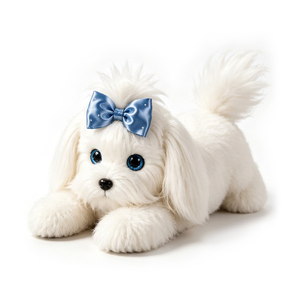
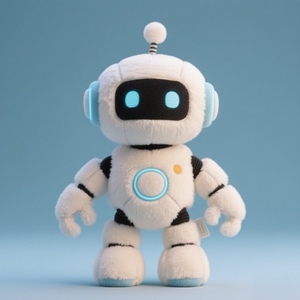
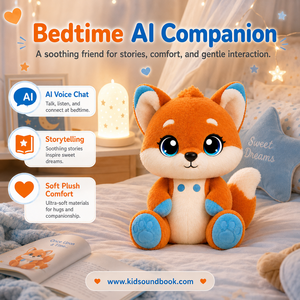
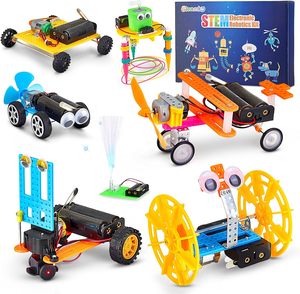
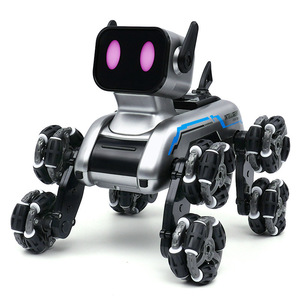
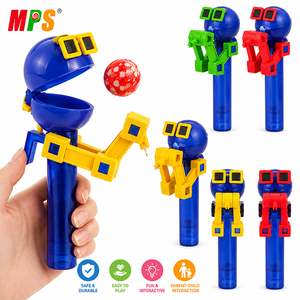
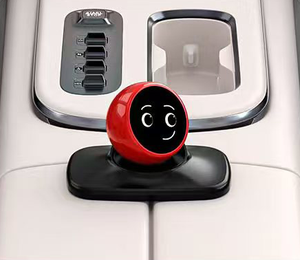
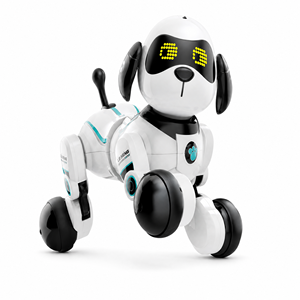
Explore our current production models and modular platforms. Each unit integrates custom micro-gearboxes, digital sound chips, and responsive motor drivers ready for private label mass production.
Mechatronic Engineering
Engineering Architecture of Custom Dancing Robots
In the commercial toy sector, a dancing robot is substantially more complex than a standard moving doll. It requires an integrated mechatronic system balancing motor torque, acoustic fidelity, thermal management, and power consumption.
Acoustic Beat-Sync MCU
Unlike basic cycle timers, our hardware executes real-time hardware-level Fast Fourier Transform (FFT) or envelope detection on incoming audio signals. Microcontroller algorithms map low-frequency bass transients directly into PWM pulses driving leg and hip servos.
DSP Audio Filtering
Zero-Lag Timing
Dynamic BPM Tracking
Reinforced Gearbox Transmission
Continuous dynamic pivoting subjects kinetic joints to heavy mechanical stress. We deploy high-grade POM (Polyoxymethylene) gears paired with internal clutch slip protections. This prevents stripped teeth when children physically arrest limb movements during dance cycles.
POM Engineered Gears
Overload Slipping Clutch
Low-Decibel Noise <48dB
Thermal & Power Architecture
Compact form factor toys experience rapid heat build-up under continuous servo oscillation. Our proprietary drive circuits utilize dual-channel H-Bridge MOSFETs with low internal resistance, integrated PTC resettable fuses, and battery thermal cut-offs ensuring extended play stability.
Overcurrent PTC Fuse
Dual H-Bridge MOSFET
Li-ion / Alkaline Adaptive
Structural Decision Matrix
Mechatronic Engineering: Plastic Shell vs. Plush Exterior
Procurement teams must choose between rigid ABS/PC robotic bodies and integrated plush robotic companions. The table below analyzes engineering constraints, acoustic handling, and regulatory considerations.
| Evaluation Parameter | Rigid Plastic Dancing Robot | Smart Plush Interactive Dancing Toy | Engineering Solution by AItoyplays |
|---|---|---|---|
| Mechanical Kinetic Freedom | Wide angle 4-6 axis pivots, omnidirectional wheel bases, or bipedal stride linkages. | Limited joint sweep angles due to skin surface tension and fabric elastic resistance. | We design tailored internal skeleton anchor cavities that prevent motor torque strain against fabric seams. |
| Acoustic Resonance & Baffling | Hard shell interior acts as an acoustic amplifier, providing sharp trebles but brittle mids. | Plush cotton interior dampens high frequencies, muffling speaker clarity without proper porting. | Rigid dedicated acoustic speaker chambers embedded inside plush bodies, tuned to maintain vocal and musical clarity. |
| Drop Test & Impact Resistance | Requires internal ribs, high-impact ABS resin, and shock-mounted motor housings. | Soft exterior stuffing absorbs drops naturally, providing superior impact resistance to joints. | Ultrasonic weld joint verification alongside impact drop tests from 1.5m heights per ASTM F963 protocol. |
| Safety & Chemical Compliance | REACH, RoHS 2.0, phthalates, sharp point/edge verification, and drop tip hazard tests. | Flammability (EN 71-2), seam tensile tension tests (>70N), and child saliva colorfastness. | Unified electrical (IEC 62115) and mechanical toy testing with accredited testing lab partnerships. |
Strategic Sourcing 2026-2030
Future Procurement Trends in Interactive Toy Manufacturing
Market requirements for robotic toys have evolved beyond simple novelty gadgets into interconnected smart entertainment devices. Key procurement trends shaping supplier selection include:
Edge-AI Voice Integration
B2B buyers are moving away from repetitive factory-loaded sound chips. Modern dancing robots incorporate offline voice recognition wake words or dual-mode Bluetooth audio streaming, allowing toys to dance to real-time music streamed from family smart devices.
Sustainable Materials & PCR Resins
Retail chains across Europe and North America demand compliance with eco-design directives. OEM orders require certified Post-Consumer Recycled (PCR) plastics for housings and GRS (Global Recycled Standard) certified rPET stuffing for electronic plush casings.
Type-C Fast Charging Migration
Disposal alkaline battery compartments are facing severe retail resistance due to cost and carbon footprint concerns. The industry standard has decisively shifted to integrated 3.7V rechargeable lithium polymer battery packs with smart Type-C charging protection.
R&D Evolution
Emerging Technology Trends in Dancing Robotics
Continuous innovation in Shenzhen's electronics ecosystem enables features once restricted to high-end industrial robotics to enter consumer toy manufacturing:
Brushless Gimbal Motor Adaptation
Micro-brushless DC motors (BLDC) combined with magnetic encoders are gradually replacing traditional brushed motors in high-tier retail robots, offering whisper-quiet rotation, precise positional steps, and a lifespan exceeding 2,000 continuous hours.
Dynamic OLED/AMOLED Eye Displays
Static LED light arrays are giving way to integrated circular AMOLED micro-screens or flexible OLED display panels. These sub-assemblies render over 100 dynamic emotional micro-expressions synchronized with robotic dance gestures.
Infrared & LiDAR Obstacle Avoidance
Dynamic movement creates fall and collision risks on home tabletops and floors. Integrating front-facing ToF (Time-of-Flight) or IR distance sensing ensures dancing robots detect drop-offs or obstacles and redirect movement autonomously.
Manufacturing Authority
Why Tier-1 Brands Partner with AItoyplays
Operated by Shenzhen Atp Intelligent Electronics Co., Ltd., AItoyplays bridges the gap between precision electronics manufacturing and soft toy construction directly in the Guangdong industrial cluster.
01
Plush & Mechatronics Integration
Most development delays happen when soft toy sewing teams and electronics suppliers blame each other for fit or sound issues. We plan internal plastic housings, speaker acoustics, and sewing seam lines under a single engineering roof.
02
Shenzhen Supply Chain Density
Headquartered in Shenzhen, China, our team maintains direct relationships with Tier-1 MCU foundries, motor winders, mold makers, and precision toolers. This proximity reduces custom prototyping turnaround from months to mere weeks.
03
Stringent Production QC
Every batch undergoes strict end-of-line verification: 100% audio frequency response testing, automated multi-hour servo burn-in cycling, fabric seam pull tests, and drop impact simulation before packaging.
04
End-to-End Compliance Engineering
We review regulatory compliance during DFM (Design for Manufacturing) rather than after tooling. Products are engineered from day one to clear EN 71, ASTM F963, IEC 62115, FCC Part 15, and CE radio certifications.
Procurement Knowledge Base
Frequently Asked Questions for OEM/ODM Buyers
Clear, direct answers regarding custom tooling, minimum order quantities (MOQ), compliance certifications, and production workflows.
What is the typical Minimum Order Quantity (MOQ) for custom OEM dancing robots?
For custom plastic housing tooling or newly tailored mechatronic chassis, standard production runs typically start at 1,000 to 2,000 units. For ODM adaptations utilizing our established internal movement mechanisms with customized exterior fabric, color, or firmware audio, MOQs can begin as low as 500 units.
How do you address gear stripping caused by aggressive child play?
We implement safety-slip clutch assemblies directly onto the main transmission drive gears. When an external force locks a leg or arm in place, the clutch mechanism slips automatically, disengaging the motor shaft from the tooth train. This prevents broken gear teeth and motor burnout.
What international safety testing must a robotic dancing toy pass?
Depending on the destination territory, testing includes physical/mechanical safety (EN 71-1, ASTM F963), flammability (EN 71-2), heavy metal migration (EN 71-3, CPSIA), electrical toy safety (IEC 62115), and electromagnetic compatibility (EMC / FCC Part 15). For models incorporating rechargeable lithium-ion cells, UN 38.3, MSDS, and IEC 62133 battery safety certifications are mandatory.
How long does the prototyping and sampling lifecycle take?
A rapid 3D-printed aesthetic and functional prototype using existing motor modules typically takes 10 to 14 working days. Full custom industrial tooling, plastic injection molds, circuit board layout (PCBA), and golden pre-production samples require approximately 35 to 45 calendar days after 3D CAD design sign-off.
Can we upload proprietary music, voice prompts, and licensed choreography?
Yes. We burn buyer-supplied high-bitrate WAV/MP3 files into factory ROM. Our firmware engineers work directly with your design team to calibrate precise motor dance steps and LED blink rhythms to match the exact tempo and mood of your licensed audio assets.
Kickstart Your Custom Robotic Toy Development Today
Consult directly with Shenzhen Atp Intelligent Electronics Co., Ltd. (AItoyplays) engineering experts. From initial sketch review and PCB schematics to final packaging, we deliver seamless OEM manufacturing support.