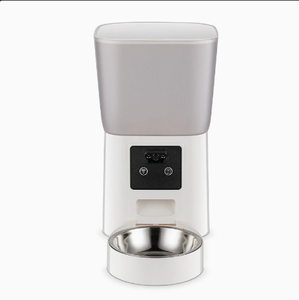
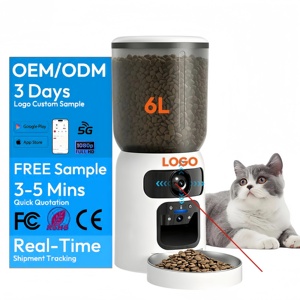
AI Visual Smart Pet Feeder, WiFi Remote Automatic Cat Dog Feeder with HD Camera
Optics: 1080P HD / Night Vision IR
Connectivity: Dual-band 2.4/5GHz Wi-Fi
Control: Anti-clog Motor / Portion Logic
Engineered by Shenzhen Atp Intelligent Electronics Co., Ltd. Each production unit reflects integrated DFM (Design for Manufacturing), calibrated acoustic cavities, custom digital servos, and compliant child/pet-safe electronics.
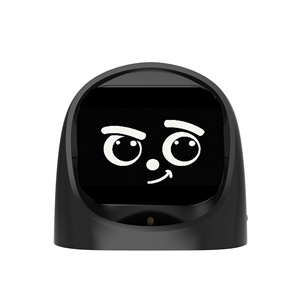
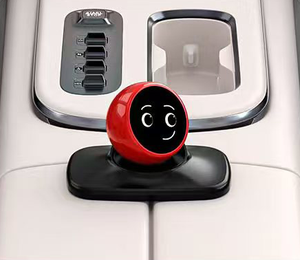
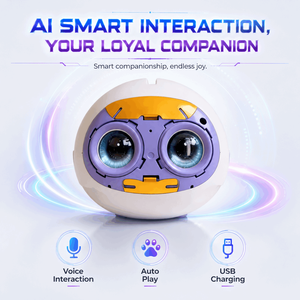
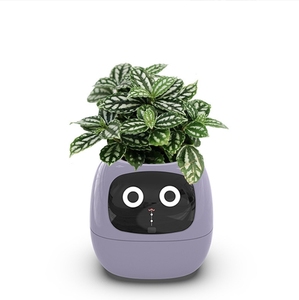
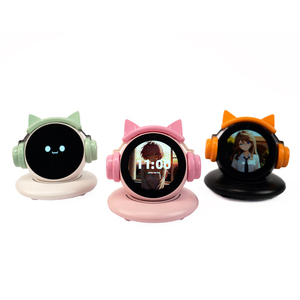
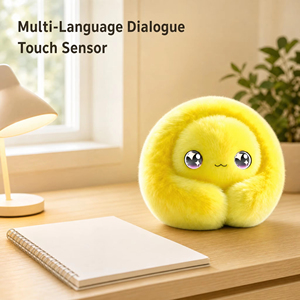
The desktop pet landscape is transitioning rapidly from scripted mechanical novelties to autonomous, LLM-integrated companion robotics. B2B buyers must navigate firmware licensing, sensory computing, and thermal constraints.
Modern enterprise importers demand hybrid architectures. Lightweight wakeword detection, sensor polling, and safety guardrails run locally on low-power ARM Cortex or RISC-V NPUs, while high-entropy dialogue streams via encrypted WebSockets to cloud LLMs (OpenAI, Claude, or client proprietary models).
By shifting to modular internal frames—such as our proprietary AI Movement Box—retailers avoid standard NRE tooling costs for every plush iteration. One certified motorized core powers multiple aesthetic character skins, compressing capital commitments and inventory exposure.
With global regulators enforcing strict mandates (COPPA in North America, GDPR-K and EU AI Act across Europe), hardware procurement requires hardware-level privacy switches, encrypted flash partitions, and zero-retention raw audio pipelines for underage demographic models.
The primary failure point of consumer electronic pets is mechanical binding and thermal choke inside plush bodies. Shenzhen Atp Intelligent Electronics bridges the gap between precision electronic engineering and textile crafts through integrated CAD/CAM development.
Independent 2.0 chamber engineering isolates the speaker diaphragm from internal mechanical vibrations and polyfill dampening, securing pristine voice clarity.
Custom micro-servos tested to >250,000 duty cycles prevent gear stripping during accidental drop impacts or child handling stress.
Vented polycarbonate skeletons dissipate heat away from the core MCU while safeguarding UN38.3 certified Lithium-Polymer cells in rigid fireproof enclosures.
| Subsystem | Standard Market Spec | ATP Intelligent Electronics Standard |
|---|---|---|
| Voice Processor | Basic 8-bit OTP Voice IC | Dual-Core 240MHz DSP with Hardware VAD |
| Display Interface | Segmented Backlit LCD | Round AMOLED / IPS with 60FPS Refresh |
| Sensory Array | Single Mechanical Switch | 4-Zone Capacitive Touch, ToF Proximity & 6-Axis IMU |
| Motor Acoustics | > 58 dBA Gear Whine | < 34 dBA Ultra-Silent Planetary Geartrain |
| Firmware Updates | Static Factory ROM | Encrypted Dual-Bank OTA Remote Updating |
Our Shenzhen-headquartered facility streamlines cross-disciplinary production under a single QA umbrella, eliminating handoff delays between electronic board houses and plush cut-and-sew workshops.
Initial design evaluation of 2D/3D character models. We generate electrical schematic design, bill of materials (BOM), battery runtime budgets, PCB routing blueprints, and injection molding draft analysis.
Rapid CNC/SLA stereolithography prototyping combined with manual plush skin sample cutting. Firmware flashed to prototype PCBA to validate voice prompt responses, motor torque, and sensory latency.
Steel injection mold manufacturing for chassis components and custom stamping dies for fabric components. Initial small-batch run (500–1,000 units) to verify production-line yields and line balancing.
Cleanroom SMT high-speed placement, ultrasonic plastic welding, pull-force seam inspections, 72-hour battery cycling, RF spectrum compliance testing, and drop-table impact verification prior to container loading.
Actionable commercial, compliance, and engineering guidance for consumer electronics brands, toy retailers, and global distributors.
For existing ODM catalog platforms (using standardized internal chassis with custom exterior branding, packaging, and audio firmware), our entry MOQ begins at 1,000 to 2,000 units. For fully bespoke OEM designs requiring custom injection molds and dedicated PCB fabrication, the baseline production order starts at 3,000 to 5,000 units depending on unit complexity.
We execute strict Bilateral Non-Disclosure Agreements (NDAs) before reviewing any client 3D models or artbooks. All injection tooling molds, unique firmware source files, and industrial pattern cut-sheets are registered exclusively under the buyer's corporate ownership, isolated across quarantined physical tooling vaults.
Our production engineering aligns with target destination standards. Products are certified through accredited laboratories (SGS, TÜV, Intertek) to meet EN 71 (Parts 1-3), ASTM F963, CPSIA, IEC 62115 (Electric Toys), FCC Part 15B/15C (RF), CE-RED, and RoHS/REACH chemical compliance. Lithium battery packs carry full MSDS and UN38.3 marine/air transit safety clearance.
Yes. Our engineering department provides open RESTful APIs and customizable SDKs for both iOS and Android. Our IoT Wi-Fi/Bluetooth modules can connect directly to your proprietary cloud endpoints, AWS IoT core, or customized ChatGPT/Claude assistants without forcing vendor lock-in to our default servers.
The standard development schedule runs approximately 14–21 business days for functional engineering samples. Tooling creation and T1 mold shots require 30–35 days. Mass manufacturing takes 35–45 days following final Golden Sample approval. Expedited development tracks are available for established product platforms.
Yes. Many global toy manufacturers procure our standalone AI Movement Box, capacitive sensor boards, animated OLED eye modules, and speech-recognition sound chips for integration within their domestic assembly facilities, supported by complete integration schematics and FAE technical backing.
Initiate direct communication with our Shenzhen engineering and procurement division. Receive detailed BOM price matrices, complete DFM technical reports, and comprehensive product specification catalogs.