Featured Educational Robotics & Electronic Hardware
Direct access to industrial-grade modular architectures, interactive electronic companions, and accredited STEM development systems configured for global deployment.
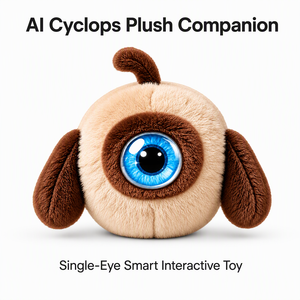
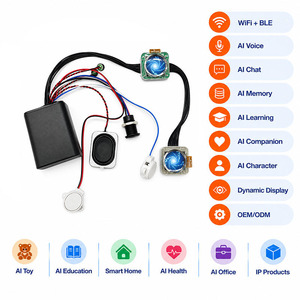
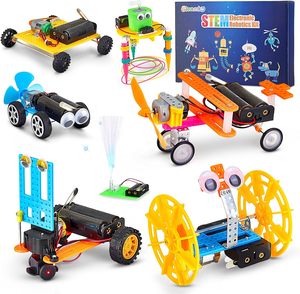
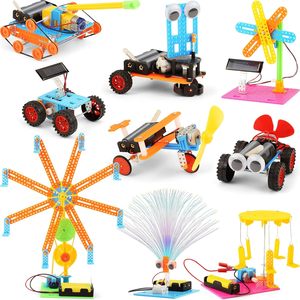
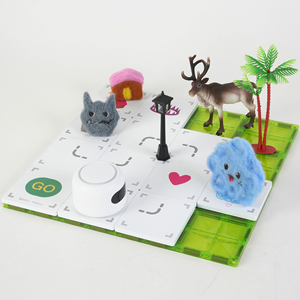
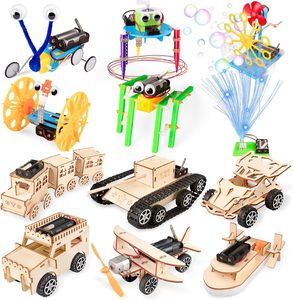
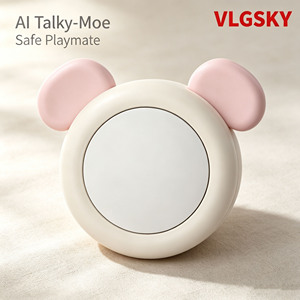

Engineering the Next Paradigm: Educational Robotics Architecture
The intersection of edge artificial intelligence, conversational large language models (LLMs), and tactile robotics has permanently elevated consumer and educational procurement standards. Sourcing teams can no longer settle for static script-playback mechanisms.
Edge-Native Conversational AI
Implementing hybrid architectures where wake-word detection and essential spatial safety algorithms reside locally on ultra-low-power microcontrollers, while open-domain dialogues route through hardened, child-safe cloud LLMs with sub-second latency.
Dynamic Kinetic Interfaces
Modern robotic companions demand high visual feedback. We integrate multi-state circular AMOLED or matrix display subsystems capable of rendering 60+ algorithmic facial moods synchronized with multi-axis precision servo articulations.
Hardware-Level Data Compliance
Complete protection against security risks through encrypted flash memory, dedicated cryptographic elements, and strict non-retention audio streaming protocols aligned with COPPA, GDPR-K, and California AB 2273 safety mandates.
Transforming Your Educational Concept into Scalable Production
Whether you require drop-in AI movement boxes for soft toys or ground-up development of multi-degree-of-freedom programmable robotic companions, our Shenzhen engineering labs bridge the gap from schematic drafting to high-volume manufacturing.
Future Procurement Trends in Educational Robotics
Global toy retailers, educational institutions, and brand licensing conglomerates are adapting to clear industry shifts. Aligning with these trends ensures sustained market traction and enhanced margin profiles across distribution channels.
OTA Subscription Ecosystems
Hardware is increasingly treated as an acquisition vehicle for subscription services. Procurement models favor hardware architectures pre-equipped with secure over-the-air firmware update capabilities to deliver recurring curriculum expansions.
Adaptive Curriculums
Educational institutions demand personalized learning loops. Future-ready robots track a student's cognitive pace, automatically tuning phonetic difficulty, math puzzles, and programming syntax according to dynamic feedback algorithms.
Bio-Circular Materials
Tier-1 retailers demand rigorous ESG audit trails. Sourcing requirements are transitioning rapidly toward PCR (Post-Consumer Recycled) polymers, bio-composites, sustainably harvested timber frames, and fully plastic-free unboxing designs.
Extended Autonomy Batteries
Buyers prioritize integrated USB-C smart charging modules featuring power path management and high-density ternary lithium cells equipped with redundant PTC thermal safety fuses over alkaline battery replacements.
| Module Subsystem | Conventional Educational Toys | Enterprise Next-Gen Robotics (Our Platform) | Sourcing Impact |
|---|---|---|---|
| Voice Recognition | Fixed voice commands via pre-recorded ROM | Neural LLM integration with adaptive semantic reasoning | Eliminates user frustration, boosts retention |
| Display Integration | Static painted plastics or simple 7-segment LEDs | AMOLED / Color IPS active graphical interface with OTA moods | Higher retail valuation and shelf-appeal |
| Connectivity Architecture | None, or basic 2.4GHz RF remote control | Dual-Band Wi-Fi, BLE 5.2, and Cloud API interfaces | Enables ecosystem app expansion & data insights |
| Mechanical Motion | Brushed DC motors with loud gear noise | Precision metal-gear micro servos with torque limiting | Significantly lowers return and RMA failure rates |
Industrial Manufacturing Advantages: Shenzhen ATP Intelligent Electronics
We eliminate the typical pain points between soft-goods textile assembly and high-density PCB engineering. Operating from the epicenter of hardware manufacturing in Shenzhen, we consolidate end-to-end design, tooling, and final pack-out.
Holistic Soft-Hard Integration
Unlike fragmented suppliers who outsource electronics or textile work, our integrated production lines design plush pattern cutting, wiring tunnels, anti-pinching mechanical armatures, and thermal dissipation chambers in parallel.
In-House SMT & Cleanroom Assembly
Direct oversight of high-speed Surface Mount Technology (SMT) lines, secondary optical inspection (AOI), cleanroom optical bonding for dynamic eye displays, and sonic welding for structural integrity under stress.
Comprehensive Quality Assurance
Every production run passes multi-stage QA: drop-impact testing from 1.5m, continuous servo endurance runs exceeding 100,000 cycles, pulling-force tests on seams, battery impedance checks, and complete RF anechoic validation.
Frequently Asked Questions for B2B Importers
Key technical and regulatory answers to simplify OEM/ODM evaluations and procurement planning.
What are the minimum order quantities (MOQs) for fully custom OEM developments?
For fully bespoke tooling—including customized plastic injection shells, custom PCB layouts, and unique plush pattern gradings—our baseline MOQ starts at 2,000 units. For white-labeling or modular integration using our pre-engineered hardware cores, we accommodate runs starting at 500 units.
How do you address safety compliance across North American and European markets?
We test our products against all primary safety frameworks: ASTM F963, CPSIA (Total Lead/Phthalates), FCC Part 15B/15C for North America, and EN71 (Parts 1, 2, 3), IEC 62115, RED Directive, and RoHS/REACH for Europe. Independent testing is conducted with accredited partners like SGS, Intertek, or TÜV Rheinland.
Can our brand integrate proprietary localized LLMs or localized character voices?
Yes. Our modular software development kit (SDK) supports direct routing to custom server endpoints, proprietary cloud LLM pipelines, and neural Text-To-Speech (TTS) voice models. We also provide secure key management to protect brand IP and conversational parameters.
What is the standard production timeline from functional prototype to port delivery?
Functional prototypes typically take 15 to 20 working days. Tooling creation and pilot verification runs require 30 to 40 days. Following golden-sample sign-off, full mass production is generally achieved within 35 to 45 calendar days, supported by complete Shenzhen supply chain logistics.
Begin Your Educational Hardware Partnership
Contact our engineering and procurement team directly. We will review your industrial design briefs, bill of materials (BOM), and firmware specifications to deliver transparent engineering assessments within 24 hours.