Featured Intelligent Bionic Robotic Pets & AI Hardware Platforms
Explore production-ready quadruped chassis, gesture-sensing companions, voice-driven interactive systems, and STEM robotic kits calibrated for international regulatory compliance.
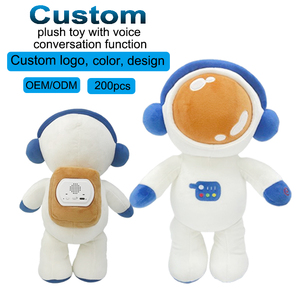
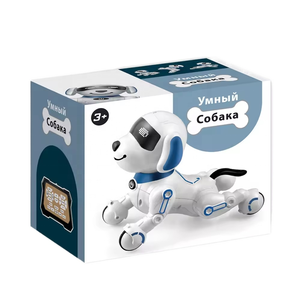
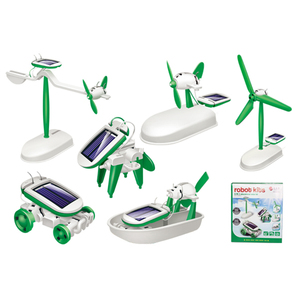

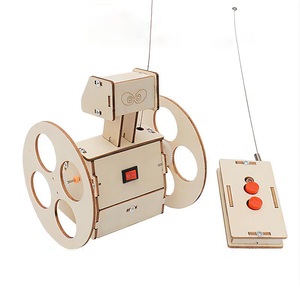
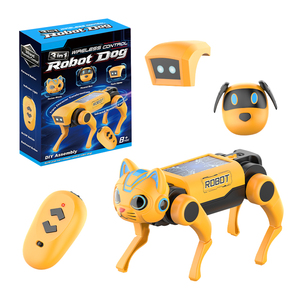

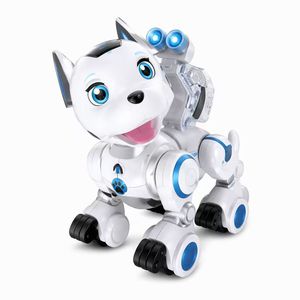
Engineering Decoupling: The Architecture Behind Loona-Class Bionic Quadruped Robots
The commercial success of high-mobility pet robotics, exemplified by consumer-grade benchmark platforms like the Loona robot dog, has ignited unprecedented transformation across the global toy, consumer electronics, and companion robotics industries. Tier-1 brand procurement directors and hardware distributors no longer view robotic dogs as mere toys with oscillating linkages and intermittent piezo sounders. Today, these systems function as sophisticated cyber-physical mechatronic entities integrating multi-axis brushless DC (BLDC) servos, sub-millimeter 3D Time-of-Flight (ToF) depth sensing, stereoscopic computer vision, and low-latency Edge Neural Processing Units (NPUs).
As a primary OEM/ODM manufacturer headquartered in Shenzhen's Bao'an and Longhua industrial electronics corridors, Shenzhen Atp Intelligent Electronics Co., Ltd. (AItoyplays) provides global engineering executives, importers, and brand innovators with turnkey access to tier-1 manufacturing capabilities. Building a competitive Loona-style autonomous robot dog requires managing mechanical stress tolerances, acoustic damping, RF board layouts, and high-frequency thermal dissipation. Below is an exhaustive breakdown of the hardware, firmware, and electromechanical topology driving modern bionic companion pets.
Kinematic Mechanics: The Wheel-Leg Hybrid Paradigm
Traditional quadrupeds rely entirely on articulated legs with 3 degrees of freedom (DoF) per leg, consuming extensive battery power while exhibiting sluggish linear velocity on flat indoor surfaces. Loona-inspired hybrid architectures employ an innovative wheel-legged kinematics configuration. By placing continuous-rotation high-torque brushless hub motors or magnetic encoder gearmotors directly at the base of articulated legs, the robot dynamically shifts between three distinct locomotion modalities: high-speed omnidirectional rolling, adaptive wheeled obstacle scaling, and biological quadruped stance gestures.
Managing inertial transfer during sudden braking or posture changes demands dynamic closed-loop torque sensing via built-in magnetic rotary encoders (12-bit to 14-bit resolution). Our proprietary sub-chassis engineering incorporates impact-resistant POM (Polyoxymethylene) gears paired with powder-metallurgy planetary reduction units. This dampens gear-backlash noise below 48 dB(A) during dynamic ambulation, protecting the sensitive dual-microphone beamforming arrays located on the head from acoustic cross-coupling.
Multimodal Sensory Perception and Edge NPU Vision Pipelines
A robotic pet’s lifelike demeanor depends on real-time environmental perception. The primary sensor package deployed across our custom OEM/ODM Loona-type configurations integrates a forward-facing wide-angle RGB camera pipeline coupled with an active Infrared 3D ToF (Time-of-Flight) sensor. This vision cluster handles real-time human skeletal tracking, 3D face recognition, 6-axis gesture tracking, and edge detection to prevent staircase drops.
Edge AI Compute Core
Multi-core ARM Cortex-A53 / A55 silicon accompanied by dedicated NPUs delivering 1.2 to 5.0 TOPS for local on-device computer vision, facial identification, and real-time obstacle avoidance without cloud latency.
Emotive Visual Dynamics
Custom 2.4-inch to 3.5-inch round, squircle, or curved AMOLED/IPS displays mounted beneath high-optical-transmittance tinted acrylic, rendering 60 FPS emotive eye animations and real-time behavioral feedback.
Far-Field Audio & Wake-Word
Dual or quad digital MEMS microphones with integrated hardware DSP acoustic echo cancellation (AEC), beamforming, and on-chip wake-word detection maintaining >94% trigger accuracy in 75dB ambient environments.
Strategic Procurement Horizons: Market & Technical Trends (2025–2030)
Procurement specialists, consumer brand merchandisers, and hardware investors operating within the smart toy and companion robotics landscape face rapidly shrinking product lifecycles and soaring consumer expectations. Sourcing low-end, open-loop plastic walking toys leads directly to shelf stagnation, high return rates, and commoditized price battles. Forward-thinking procurement teams must align their Requests for Quotation (RFQs) with key macro trends reshaping the intelligent bionic pet sector:
1. On-Device Edge SLMs (Small Language Models) vs. Cloud RAG
Historically, connected companion toys relied strictly on constant cloud round-trips for conversational capabilities, triggering two major B2B sourcing challenges: prohibitive recurring cloud API expenses (OpenAI, AWS Bedrock, or Microsoft Azure tokens) and strict consumer privacy backlash regarding children’s voices uploaded to offsite servers. The 2025–2030 procurement cycle is decisively pivoting toward hybrid edge-cloud voice computing.
At Shenzhen Atp Intelligent Electronics (AItoyplays), our R&D engineering teams implement quantized on-device Small Language Models (0.5B to 1.5B parameters running on ultra-compact 4-bit NPU architectures). These models handle immediate household commands, intimate behavioral feedback, and emotive barking/purring responses directly on the physical hardware with zero cloud latency. When connected to secure home Wi-Fi networks, the system selectively accesses cloud-based Retrieval-Augmented Generation (RAG) frameworks to support rich educational interactions and story generation.
2. Tactile Capacitive Arrays & Bio-Emulation Haptics
Early-stage robotic dogs relied heavily on simple micro-switches positioned mechanically underneath the head. Modern consumers demand tactile bio-emulation. Future-proof product specifications mandate the placement of multi-zone capacitive touch foils embedded seamlessly along the forehead, chin, spine, and rear hip joints. These multi-channel capacitive sensing matrices differentiate between gentle human stroking, erratic patting, tapping, and full-body hugging, automatically triggering organic purring, sub-chassis tail-wagging, and lean-in postural behaviors.
3. Battery Chemistries, Fast Charge Protocols, and Extended Cycle Life
Bionic companion pets containing 6 to 10 independent micro-servos, an edge NPU mainboard, cooling fans, and high-brightness displays exhibit dynamic discharge curves ranging from 500mA during sleep up to 4.5A peak during high-speed rolling and self-righting acrobatic recovery stunts. Procurement guidelines must move away from standard 1C discharge cylindrical 18650 cells toward high-drain, automotive-grade ternary lithium or LiFePO4 battery packs equipped with comprehensive Battery Management Systems (BMS).
| Evaluation Parameter | Entry-Level RC Robot Toys | Intermediate STEM Robot Pets | Loona-Class Bionic Companion Dogs |
|---|---|---|---|
| Actuator Architecture | Open-loop brushed DC motors, plastic geartrain | Standard digital servo motors, nylon/brass gears | Field-Oriented Control (FOC) BLDC & coreless servos |
| Vision & Depth Pipeline | PIR sensor or basic ultrasonic rangefinder | Single low-res VGA camera (app stream only) | 720p/1080p RGB + active 3D ToF edge perception |
| Onboard Neural Compute | None (8-bit micro-controller) | ARM Cortex-M4 (basic math / gesture decode) | Multi-Core ARM Cortex-A + dedicated 1.2–5.0 TOPS NPU |
| Audio & Voice Interaction | Pre-recorded 8-bit sound clips on OTP chip | Bluetooth audio playback / local offline voice IC | Dual-mic AEC array + edge-quantized SLM + Cloud LLM |
| Display & Facial Expressions | Monochrome LED point matrix | Segmented backlit custom monochrome LCD | High-resolution full-color 60 FPS AMOLED or IPS display |
| Power Management & BMS | Basic Li-ion with standard charging PCB | 2S Li-ion pack, micro-USB or 5V USB-C input | High-drain 2S/3S pack, PD USB-C fast charge, auto-docking |
Why Partner with AItoyplays: Shenzhen Atp Intelligent Electronics Co., Ltd.
The most common failure point in complex smart toy and companion robotics manufacturing lies at the turbulent interface between soft materials, intricate plastic tooling, and high-density electronic assemblies. Many overseas buyers contract with traditional plush or injection-molding factories that lack internal embedded firmware engineers. Others hire software-focused design firms that have never operated automated surface mount technology (SMT) production lines or designed sub-chassis drop tests.
As the industrial manufacturing engine behind the AItoyplays brand, Shenzhen Atp Intelligent Electronics Co., Ltd. completely eliminates these cross-supplier handoff defects. Located in Shenzhen—the global epicenter of precision micro-motors, sound chips, custom camera modules, and precision tooling—we provide true vertical integration under one unified ISO 9001-certified operational umbrella:
High-Speed SMT & Cleanroom Assembly
In-house high-speed Yamaha and Fuji SMT lines handling 0201 passives, micro-BGA packages, and multi-layer rigid-flex interconnects under strict cleanroom conditions, ensuring minimal solder defects and zero field dropouts.
Proprietary Servo & Motor Production
We wind, balance, and assemble our own custom micro-servos, coreless actuators, and planetary reduction gearheads. This gives our engineering teams absolute control over motor torque curves, thermal envelopes, and acoustic decibel outputs.
Full Toy & Electronics Certification
Compliance is integrated directly into preliminary PCB routing and structural CAD design. We routinely build products that comply with EN 71, ASTM F963, CPSIA, IEC 62115, RED, FCC-ID, and stringent international child safety frameworks.
International Regulatory Compliance, Safety Verification & Data Privacy
Exporting advanced consumer robotics across North America, the European Union, the United Kingdom, Australia, and Japan requires navigating a complex regulatory landscape. An advanced autonomous robot dog is not merely a toy—it is simultaneously an electric mechanical apparatus, an intentional radio frequency radiator, a battery-powered device, and an internet-connected camera/microphone.
Our comprehensive DFM (Design for Manufacturing) process ensures every OEM/ODM project systematically fulfills the following mandatory regulatory standards before high-volume tooling commences:
1. Mechanical & Flammability Safety (EN 71-1/2, ASTM F963-17, ISO 8124)
Bionic robot dogs contain articulated linkages, moving wheels, and rotating joints. Under rigorous testing regimes (such as European EN 71-1 or US ASTM F963), the mechanism must pass severe finger pinch-point and crush hazard evaluations. Our mechanical housings incorporate custom elastomeric bellows, recessed joint articulation channels, and torque-limiting clutches. If an external obstruction (such as a child’s finger or pet's paw) is caught in a leg joint, the servo controller detects an immediate current spike and automatically enters a free-wheeling back-drivable state.
2. Electronic Safety & Battery Standards (IEC/EN 62115, UN 38.3, UL 1642, UL 2054)
IEC 62115 governs the electrical safety of toys. High-draw robotic products undergo rigorous evaluation of internal wiring insulation, stall-current thermal escalation, and PCB tracking distances. Battery enclosures are built with V-0 flame-retardant PC-ABS plastic, isolated with thermal barrier pads, and fitted with hardware-level NTC thermistors. These systems shut down all charging and discharging operations if cell temperatures breach designated operating thresholds (-10°C to +55°C).
3. Wireless Spectrum & EMC (FCC Part 15B/15C, RED 2014/53/EU, IC, TELEC)
Because our companion robots feature 2.4GHz / 5.8GHz dual-band Wi-Fi and Bluetooth Low Energy 5.2 connectivity alongside high-speed camera MIPI lines and high-frequency PWM servo buses, electromagnetic interference (EMI) risks are pronounced. Our Shenzhen hardware layout engineers design multi-layer PCBs with dedicated ground planes, conformal RF shielding cans, and ferrites across high-speed bus traces. This ensures seamless pass rates at certified third-party testing labs (SGS, TÜV Rheinland, Intertek, or Bureau Veritas).
4. Connected Device Privacy (COPPA, EU GDPR-Kids, California SB-327)
Connected toys equipped with cameras and microphones operate under intensive international regulatory scrutiny regarding children's data privacy. Our firmware architectures deploy end-to-end TLS 1.3 cryptographic protocols, hardware secure enclaves for device identity keys, disabled default passwords, and opt-in camera privacy shutter mechanisms (both physical mechanical sliders and software-isolated sleep states). Video and audio processing pipelines prioritize local inference, ensuring biometric and vocal data remain local unless explicit, parental-authorized cloud integrations are engaged.
Technical Procurement & Manufacturing FAQ
Key technical, commercial, and operational questions addressed by our engineering project directors for prospective OEM and ODM clients:
For custom ODM adaptations utilizing our verified base chassis, electronics, and servo architecture with private-label branding, custom packaging, and tailored firmware boot sequences, the standard MOQ starts at 1,000 units. For fully bespoke, ground-up industrial and mechanical tooling development (requiring custom injection molds, custom gearboxes, and proprietary PCB layouts), the recommended initial production run is 3,000 to 5,000 units to amortize non-recurring engineering (NRE) tooling expenditures.
We support multiple integration models: Clients can supply their own enterprise API endpoints (e.g., custom OpenAI GPT instances, Claude, Azure Cognitive Services) with proprietary conversational rules. Alternatively, we can deploy completely turnkey, pre-configured cloud architectures managed via our secure servers, or flash fully offline local voice-recognition chipsets that require zero cloud subscriptions or ongoing maintenance overhead.
A standard OEM/ODM timeline follows a structured, milestone-driven pathway: Industrial Design (ID) and Mechanical Architecture validation takes 3 to 4 weeks; Functional engineering prototype (T0) completion takes 4 to 6 weeks; Mold tooling fabrication and rapid T1 trial sampling takes 6 to 8 weeks; Firmware debugging, pilot trial production (EVT/DVT/PVT), and international certification testing requires 4 to 6 weeks. Mass production cycles typically deliver within 35 to 45 days after Golden Sample approval.
Yes. We specialize in cross-disciplinary hybrid soft-and-hard robotics. We engineer dynamic skeletons with thermal ventilation tunnels and high-strength articulation channels specifically designed to receive high-grade plush fabric coverings, overmolded silicone elements, or magnetic snap-on cosmetic armor plates without causing servo strain or motor overheating.
We supply international distributors and brands with a standard 12-month factory manufacturing warranty on core PCBA motherboards, display modules, and servo drive units. For volume sea-freight orders, we commonly supply 1% to 2% complete FOC (Free of Charge) spare units along with critical sub-assemblies (modular wheel assemblies, replacement servos, battery packs, and wiring harnesses) for streamlined regional RMA support.
Yes. In addition to commercial companion pet firmware, we provide educational firmware variants supporting Scratch-based drag-and-drop block coding, Python API libraries, and ROS (Robot Operating System) communication nodes over Wi-Fi/Bluetooth, enabling STEM academies, universities, and commercial robotics developers to program custom locomotion and sensory tasks.
Launch Your Autonomous Companion Robot Program
Connect directly with our senior hardware engineers and international project managers in Shenzhen. Review our technical whitepapers, evaluate complete BOM costing structures, and obtain complete physical engineering samples for your brand's evaluation.