Commercial 21.5" Screen
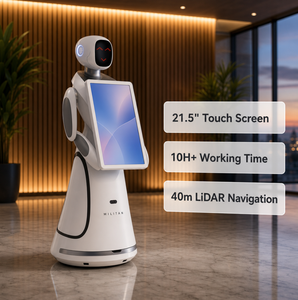
Explore our production-ready commercial humanoid service bases, bipedal dancing companions, high-torque quadruped stunt dogs, and open-source dual-arm research architectures engineered for flexible private labeling.
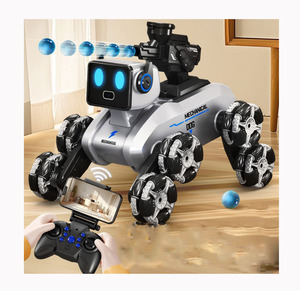
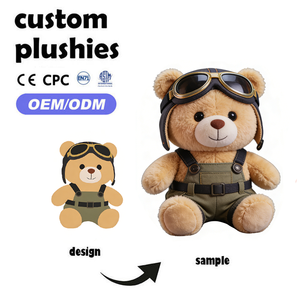
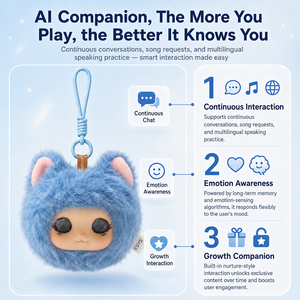
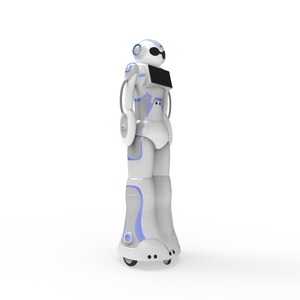

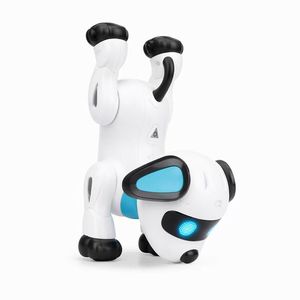
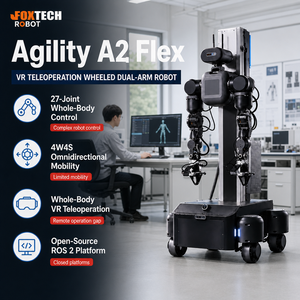
Founded and engineered in the epicenter of high-density hardware manufacturing, Shenzhen Atp Intelligent Electronics Co., Ltd. (AItoyplays) bridges the critical industry gap between structural toy fabrication, electronic microcontroller design, and complex mechatronic assembly. While standard toy factories struggle with servo calibration and electronic noise, and conventional PCB assembly houses lack soft-construction injection experience, our integrated facility executes the entire developmental pipeline under one roof.
We eliminate supply chain fragmentation by combining plastic injection tooling, high-precision micro-servo production, SMT board assembly, acoustic chamber optimization, and compliance-certified testing. For global retailers, brand licensors, and robotics distributors, this unified setup shortens OEM prototype turnarounds from months to weeks while securing strict consistency across mass-production runs.
An engineering deep-dive into multi-axis servo synchronization, inverse kinematics (IK), dynamic balance stabilization, and low-latency acoustic onset detection algorithms.
The evolution of commercial and consumer-grade smart dancing robots represents a profound transition from deterministic open-loop mechanical cams to closed-loop multi-Degree-of-Freedom (DOF) serial-bus servo kinematics. Early dancing novelty toys relied on single direct-current (DC) motors driving off-center linkages, producing erratic and non-tempo-aligned motions. In contrast, current enterprise OEM/ODM smart dancing platforms utilize distributed micro-controllers, multi-axis inertial measurement units (IMUs), and digital audio processing engines to deliver precise choreographies synchronized to live acoustic inputs.
Modern bipedal and quadrupedal dancing robots demand instantaneous angular positioning and high dynamic torque within constrained thermal envelopes. AItoyplays incorporates custom-designed magnetic-encoder bus servos offering 360-degree continuous rotation or 180-degree high-torque articulation. Unlike legacy PWM-controlled analog servos that require individual signal conduits from the central MCU, serial-bus servos utilize daisy-chained half-duplex UART or CAN interfaces. This reduces internal wire harness clutter, mitigates electromagnetic interference (EMI), and allows real-time telemetry feedback including instantaneous horn position, internal motor temperature, supply voltage, and load current.
To achieve lifelike dance choreography, our engineering team deploys analytical Inverse Kinematics (IK) solvers running on high-efficiency ARM Cortex-M4/M7 or dual-core ESP32 microcontrollers. When a rhythm shift occurs, the robot calculates joint trajectories in Cartesian coordinate space, adjusting ankle roll, knee pitch, and hip yaw to maintain the Center of Mass (CoM) inside the polygon of support. This dynamic balance loop operates at frequencies upwards of 200 Hz, eliminating tipping risks during complex sequence executions such as single-leg spins, acrobatic handstands, and rhythmic side-to-side shuffling.
| Kinematic Parameter | Entry Consumer Tier (4-6 DOF) | Advanced Interactive Tier (10-14 DOF) | Embodied AI / Research (17-27+ DOF) |
|---|---|---|---|
| Servo Actuation Architecture | Analog PWM / Plastic Gears | Digital Bus / Metal Powder Sintered | Coreless/Brushless Magnetic Encoders |
| Dynamic Torque Rating | 1.5 – 2.5 kg·cm @ 6V | 4.0 – 8.5 kg·cm @ 7.4V | 12.0 – 25.0 kg·cm @ 12V |
| Feedback Telemetry | None (Open-loop control) | Position & Thermal Cutoff Guard | Full Dynamic Current, Speed & Torque |
| Audio Sync Latency | > 250 ms (Pre-programmed) | ≤ 50 ms (Hardware DSP Envelope) | ≤ 15 ms (Edge AI Real-Time Tracking) |
| Choreography Capacity | Fixed ROM sequences (3-5 cycles) | OTA App Scripting + Bluetooth MP3 | Generative LLM Gesture Mapping via ROS 2 |
True musical interaction requires intelligent rhythmic perception. AItoyplays integrates hardware-accelerated Fast Fourier Transform (FFT) pipelines directly onto our robot development boards. The system splits incoming acoustic streams—harvested via dual MEMS microphone arrays or onboard Bluetooth 5.3 audio receivers—into discrete frequency bands (Sub-bass: 20-60 Hz, Bass: 60-250 Hz, Mid-range: 250-2000 Hz, and Highs: >2 kHz).
Through our proprietary spectral flux onset detection algorithm, the firmware filters background ambient noise while isolating rhythmic percussive beats. Each detected musical transient is tagged with a timestamp and instantaneous tempo calculation (Beats Per Minute - BPM). The choreographic state machine interpolates between predefined motion primitives, scaling velocity profiles in real time so that arm sweeps, torso tilts, and foot taps align with musical peaks within a strict phase tolerance of under 15 milliseconds.
Continuous phase-locked loop (PLL) tracking adjusts motion velocity curves dynamically, preventing accumulating drift during prolonged music playback.
Simultaneous synchronization of eye display animations (round AMOLED/TFT or dynamic LED matrix) with servo mechanical dance rhythms.
Silicone dampeners around internal gear transmissions isolate servo resonance from the onboard acoustic pickups, preventing false triggering.
Strategic market analysis for category buyers, institutional brand managers, and technology importers navigating procurement shifts over the next five years.
B2B procurement is transitioning away from static scripted routines. Future platforms integrate lightweight edge-LLM micro-models that generate novel dance steps based on verbal genre descriptions.
Combining tactile plush fabrics and liquid silicone skin over rigid internal exoskeletons (as demonstrated in our AI plush and interactive series) delivers impact protection and emotional warmth.
Commercial buyers for retail exhibitions and hospitality lobby displays now prioritize low-latency Sub-1GHz or Wi-Fi 6 Mesh protocols enabling dozens of bipedal units to dance in microsecond unison.
Strict EU EPR and ESG regulations mandate Post-Consumer Recycled (PCR) engineering plastics (rABS/rPC) and removable, unglued lithium packs meeting IEC 62133 and battery passport standards.
Procurement directors must reduce product development risk by adopting modular development boards and standardized chassis. Rather than engineering bespoke gearboxes for every SKU, modern brand programs license our field-proven mechatronic cores (such as our AISK AI Development Board and modular multi-DOF bipedal legs) and customize outer industrial injection housings, cosmetic finishes, acoustic soundboards, and mobile application interfaces. This strategy minimizes tooling capital expenditures by up to 60% and slashes time-to-shelf down to 90 days.
Authoritative operational answers addressing testing protocols, servo lifespans, firmware SDKs, supply chain lead times, and global safety standards.
How AItoyplays guarantees batch-to-batch structural integrity, servo precision, and acoustic reliability from raw resin to outgoing sea freight.
100% automated optical inspection of every resistor, capacitor, and MCU terminal, followed by in-circuit test fixtures to verify voltage rail integrity before sub-assembly.
Every micro-bus servo undergoes automated 360-degree positioning calibration, holding torque evaluation, and current draw profiling to eliminate defective gearboxes.
Assembled robot mechanisms run continuous multi-axis dance sequences for 240 minutes in temperature-controlled test chambers to stress-test gear wear and thermal dissipation.
Rigorous physical cosmetic audit, sound acoustic decibel (dB) verification, carton drop vibration testing, and complete packaging integrity sign-off prior to container loading.