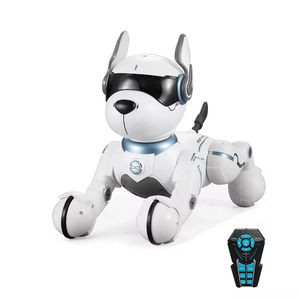
Programmable / Bio-Mimetic
Plastic Remote Control Interactive Intelligent Stunt Ladi Dog Voice Control Animal Imitate Programmable Machine Dog Electronic
Voice + 2.4G Dual Control
Inquire Now
Verified hardware platforms configured with high-torque coreless servos, dynamic balance gyros, and programmable sequence memory.
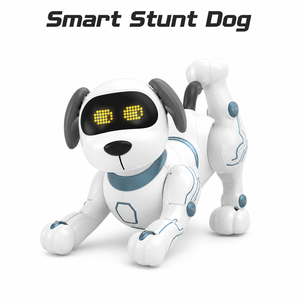
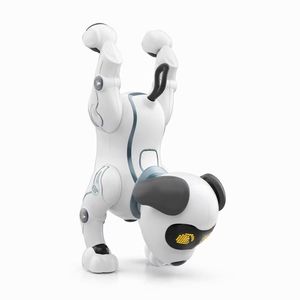
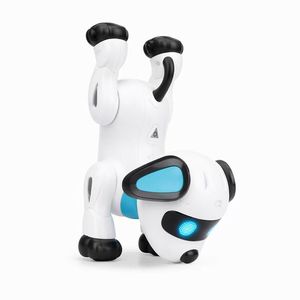
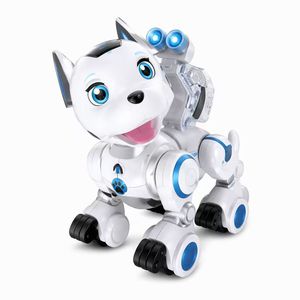
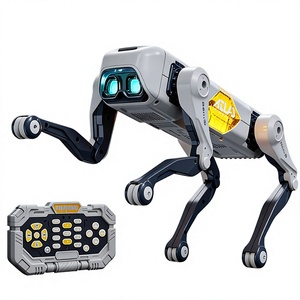
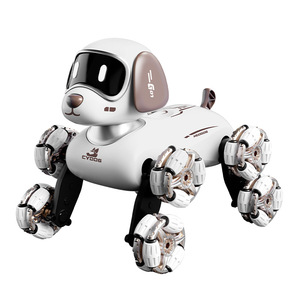
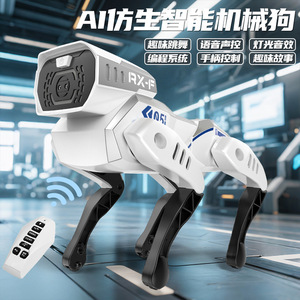
Analysis of component-level transitions, motor control lifecycles, and compliance frameworks shaping smart toy purchasing decisions through 2028.
The consumer electronics market is experiencing an architectural evolution. Entry-level stunt robotic pets have historically relied on single-axis brush motors tied to high-ratio plastic gearboxes. While cost-efficient, this assembly suffered from high warranty return rates (field fail rates exceeding 4.2%) due to gear-tooth stripping under sudden dynamic impacts (e.g., handstand stunts and backflips).
Enterprise buyers are transitioning supply contracts toward coreless motor designs with powder metallurgy or polyoxymethylene (POM) wear-resistant internal gearing. By decoupling articulation stress via integrated slip-clutches, modern OEM platforms survive drops up to 1.2 meters on concrete while providing an operational MTBF (Mean Time Between Failures) above 450 continuous hours.
COPPA (Children's Online Privacy Protection Act) in the United States and GDPR-K in the European Union have raised compliance barriers for consumer audio collection. Toys that continuously pipe voice streams to the cloud face stringent audits, carrier restrictions, and recurrent cloud server compute costs.
The forward procurement trend relies entirely on embedded edge DSPs (Digital Signal Processors) capable of recognizing 15 to 30 localized voice commands offline. Operating at low currents (<12mA idle) with zero network exposure, this edge architecture reduces project certification overhead, avoids mandatory data compliance audits, and lowers total cost of ownership (TCO) across regional market distribution networks.
Global regulatory shifts (EU Battery Directive 2023/1542 and IEC 62133-2) demand complete traceability, flame-retardant ultrasonic-welded battery enclosures, and standardized charging interfaces. Traditional barrel jacks and external screw-secured battery sleds are fading from premium OEM line items.
High-volume purchasers now require integrated Type-C interfaces supported by integrated battery management system (BMS) chips providing over-voltage, over-current, and thermal cutoff protection. This ensures uninterrupted shelf life for retailers, mitigating self-discharge issues during cross-ocean container shipping.
| Evaluation Parameter | Legacy Low-Tier Stunt Toys | Mid-Tier Retail Platforms | Next-Gen AI Stunt Companions (Shenzhen ATP Standard) |
|---|---|---|---|
| Actuator System | Unregulated DC toy motors; single linkage | Dual-motor geared linkages; plastic gears | Multi-DOF Coreless Servos + POM Impact-Absorption Gearing |
| Acoustic Logic | Sound-clap trigger or buzzer playback | Pre-recorded ROM clips; high latency | Edge-DSP Voice Recognition Array; sub-150ms command response |
| Structural Integrity | Standard virgin ABS, brittle at drops | Modified ABS without internal ribs | High-Impact Virgin ABS/PC blends with structural elastomeric shock pads |
| Battery Safety Specs | Basic uncertified Li-ion sleeves | IEC 62133 soft pack, external charging dock | Dual-MOS BMS Protection, Type-C charging, UN38.3 & MSDS certified |
| Software Extensibility | Hardcoded cyclic movement loop | Remote controller keystroke replay | Drag-and-Drop Graphical In-App Programming + Real-time Gyro Compensation |
Engineering vectors separating conventional novelty stunt toys from tomorrow's expressive robotic companions.
By pairing 6-axis IMU (Inertial Measurement Units) with proportional-integral-derivative (PID) control loops, subsequent platforms maintain equilibrium during handstands, incline climbing, and rough-terrain acrobatics without tipping or motor stalls.
Moving beyond basic LED point indicators, current designs integrate multi-color micro-OLED panels or diffused acrylic matrices capable of projecting fluid pupil kinematics, digital blinks, and responsive emotional states synchronized with audio output.
Capacitive touch nodes beneath the skull, chin, and back shells detect human petting sequences. The robotic dog differentiates between an aggressive strike and an affectionate tap, initiating corresponding purring or posture reactions.
Combining mechanical mold tooling, electronic engineering, and acoustic isolation under one unified production ecosystem in Shenzhen, Guangdong.
Equipped with high-speed CNC milling and EDM machines, our tooling department crafts complex, multi-cavity injection molds with strict tolerances (±0.02mm), ensuring flush joint fitment and eliminating pinch hazards on articulation seams.
Fully automated surface-mount lines handle compact mainboards, dual-microphone audio boards, and motor driver H-bridges. In-line Automated Optical Inspection (AOI) prevents cold solder joints and bridges prior to mechanical chassis nesting.
Every batch undergoes automated 72-hour aging tests, continuous flip-and-fall physical drop tests, and anechoic chamber decibel verification to guarantee silent gear train operation and clear speaker intelligibility.
Leveraging deep heritage in plush and electronic integration, we produce hybrid quadruped toys featuring tactile silicone paw elements, injection-molded chassis, and soft, stitched exterior skins designed for thermal dissipation.
Direct support for global testing regimes: RED (Radio Equipment Directive), EN 71 parts 1-3, ASTM F963-17, CPSIA, Prop 65, and IEC 62115 for battery-powered electrical safety. Comprehensive technical construction files prepared for swift customs clearance.
Direct answers from our engineering desk regarding lead times, customization thresholds, compliance, and warranty support.
Consult with our mechanical and electronic engineering specialists. Request comprehensive BOM breakdowns, tooling feasibility assessments, or physical evaluation samples for your upcoming procurement window.
Inquire Now