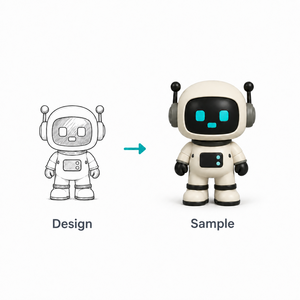
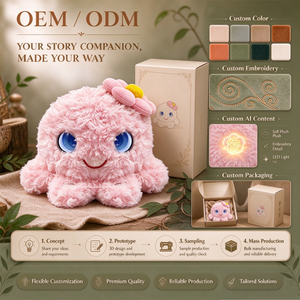
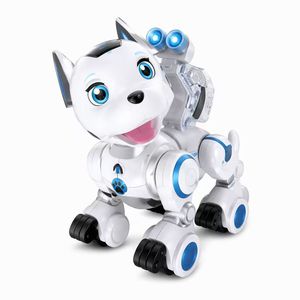
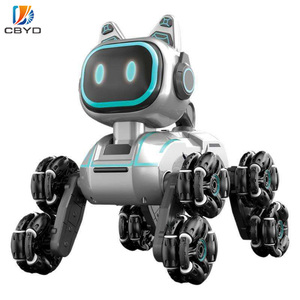
Featured Hardware Architectures
Engineered Transformation Systems & Robotics Lineup
B2B client platforms featuring mechatronic gear-trains, gesture telemetry, AI voice modules, and high-frequency RC drivetrains ready for custom branding.


100K+
Monthly Mechatronic Production Capacity
100%
Automated Torque & Acoustic Testing
< 15 Days
Rapid Prototyping & Mold Flow Analysis
EN71 / ASTM
Global Lab Direct Compliance Validation
Industry Whitepaper & Strategic Sourcing Guide
Transforming Robot Engineering: The Paradigm Shift in B2B Procurement
The global transforming robot toy sector is undergoing a major evolution. Where the market once prioritized passive manual kinematics, international category leaders now demand mechatronic hybrid transformation architectures. Modern consumers and enterprise tier-1 buyers seek units that integrate motorized morphing linkages, continuous micro-servo actuation, multi-modal sensor arrays, and generative on-device voice processing. Operating directly from our vertically integrated manufacturing complex in Shenzhen, Shenzhen Atp Intelligent Electronics Co., Ltd. (AItoyplays) engineers and mass-produces advanced robotic mechanisms designed to outperform standard toy tolerances.
Procuring transforming robotic toys at scale involves complex operational, thermal, and mechanical risks. A single morphing sequence subjects miniature gearboxes to transient stall torques up to 300% higher than regular running loads. Engineering consumer-grade toys capable of executing thousands of deformation cycles without stripped drive-teeth or misaligned joints demands high-precision tooling, specialized resin selection (such as high-impact modified polyoxymethylene POM paired with glass-filled polyamide nylon), and precise electrical layout. Our systems balance mechanical resilience, radio-frequency certification parameters, and cost-optimized supply chains.
Future Procurement Trends: Where Smart Mechanical Capital is Deploying
Global procurement teams from Europe, North America, and Japan are adjusting their supplier scorecards to reflect systemic hardware shifts. As category managers build out upcoming production programs, three critical technical vectors dictate supplier selection:
Edge-AI & Natural Voice Dialog
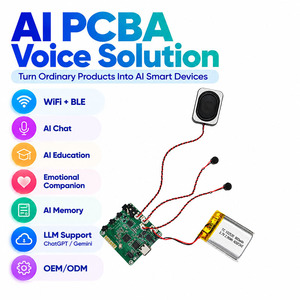
Static sound-chips are obsolete. High-margin procurement has migrated to embedded microcontrollers capable of handling localized offline Wake-Word Recognition, multi-language speech synthesizers, and Wi-Fi/BLE tethered Large Language Model (LLM) conversational streams. Transforming robots now feature situational acoustic memory, reacting contextually whether in vehicle or bipedal dynamic mode.
Hybrid Telemetry & Gesture Control
Dual-mode controllers are becoming standard. Modern transforms are driven via 2.4GHz Spread Spectrum links paired with wrist-worn Six-Axis IMU (Inertial Measurement Unit) sensors. High-speed eight-wheel drivetrains dynamically transition between omnidirectional drifting chassis and elevated mechanical beasts via single-gesture kinematics, demanding microsecond motor controller responses.
Sustainable Circular Mechanics
Stricter European Union directives (including revised ecodesign rules and supply chain accountability) require manufacturers to engineer mechanisms for modular servicing. Global brands specify modular gear assemblies, non-toxic flame-retardant PC-ABS shells, and high-density rechargeable Li-ion power cells equipped with autonomous thermal cutoff management.
Engineering Matrix: Architectural Comparison for OEM/ODM Buyers
To help supply chain managers make data-backed trade-offs during Product Requirements Definition (PRD), our systems engineering group has compiled the critical operational boundaries across our primary robotic transformation architectures:
| Transformation Platform | Kinematic Drive Method | Sensory & Control Layer | Power Density Requirements | Target Wholesale Application |
|---|---|---|---|---|
| High-Speed Stunt / 8-Wheel Transformable | Dual high-torque coreless DC motors with compound planetary reduction gearing | 2.4GHz RF, Optical floor tracking, 6-axis gesture sensing IMU | 7.4V 1200mAh 18650 Li-ion; sustained 3C discharge rate | Mass-market retail RC, action-performance stunts, extreme durability lines |
| Bipedal to Vehicular Auto-Morphing | Micro-stepper servos with overload slip clutches across primary joint axes | Obstacle avoidance ultrasound, capacitive contact pins, micro-switches | 3.7V 800mAh Lipo pack with dual-stage integrated buck-boost BMS | Character IP licenses, interactive sci-fi collector models, branded merchandise |
| Conversational Desktop AI Cyborgs | Multi-axis neck and arm linkage servos with soft harmonic damper gears | Dual MEMS far-field microphones, custom circular AMOLED, Wi-Fi 6 / BLE | 3.7V 1000mAh with Smart USB-PD charging and sleep power consumption < 20uA | Smart desktop companions, conversational educational robotics, lifestyle tech |
Critical Technical Challenges in Robotic Mechanical Transformation
In transforming hardware engineering, the primary cause of field failures is gear-tooth shear and mechanical binding caused by sudden external shocks during actuation cycles. For example, if a child forces a transforming limb mid-sequence, rigid gearboxes will strip their internal teeth. AItoyplays solves this by integrating proprietary bi-directional friction slip clutches within every critical morphing joint. If torque spikes exceed the safety limit (typically set between 1.8 to 2.5 kgf·cm depending on the chassis dimensions), the drive safely disengages without damaging teeth.
A second persistent issue lies in electromagnetic interference (EMI). High-frequency brush sparking from micro-motors during rapid gear shifts can disrupt Wi-Fi modules, BLE antennas, and audio DAC circuits, causing buzz in the speakers or lost controller signals. Our hardware teams eliminate this on the PCB level, integrating discrete LC low-pass filter arrays, ferrite chokes, and partitioned double-layer grounding planes that shield digital signal processors from dynamic motor transients.
Shenzhen Atp Intelligent Electronics (AItoyplays): Core Manufacturing Advantages
Operating at the center of the world's most concentrated consumer electronics supply chain in Shenzhen, China, Shenzhen Atp Intelligent Electronics Co., Ltd. offers global buyers unique manufacturing and engineering benefits:
Unified Mechanical & Electrical Tooling
Unlike standard assembly shops that outsource firmware, our Shenzhen technical headquarters houses industrial design, mold tooling, surface-mount technology (SMT), and mechanical kinematic testing teams under one roof. We optimize gear ratios, drive linkages, PCB layouts, and plastic flow designs concurrently.
Direct Component Sourcing Network
Our proximity to local supply chains grants us direct access to high-grade polymers, precision motors, specialized acoustic transducers, and advanced SOC chipsets. We maintain steady supply pipelines and bypass distributor margins, giving our B2B clients durable products at competitive prices.
Multi-Stage Quality Validation
Every single batch undergoes continuous stress testing: 5,000-cycle unassisted transformation testing, drop-impact structural analysis from 1.2 meters onto concrete surfaces, RF harmonic calibration, acoustic signal-to-noise verifications, and thermal imaging during accelerated battery charge-discharge runs.
B2B Procurement FAQ: Regulatory, Mechanical & Contract Dynamics
What is the typical tooling and lead time for custom OEM transformations?
For custom ODM platforms, 3D mechanical mock-ups and SLA functional hand-samples take 10 to 14 days. Tooling development for multi-cavity hardened steel molds typically requires 35 to 45 days, followed by T1 sampling, functional validation, and a 30-day mass production run for initial 5,000-to-20,000 unit shipments.
How do you guarantee global safety and RF compliance for connected toys?
Our engineering group evaluates target markets at the initial brief stage. We build physical architectures to meet mechanical safety specs (EN 71 Part 1, ASTM F963 small parts and pinch hazards). Integrated electronics are designed for IEC/EN 62115, and all RF paths undergo pre-compliance screening for FCC ID and RED (Radio Equipment Directive) protocols before formal third-party lab sign-off.
Can we license our custom mascot or brand IP onto your chassis?
Yes. We operate flexible OEM/ODM engagement models. Clients can supply character style-guides and external CAD skins, which our structural engineers will adapt to our proven internal transforming skeletons. This preserves your brand aesthetics while bypassing the substantial R&D costs and delays of developing drive systems from scratch.
What Minimum Order Quantities (MOQ) apply to OEM modifications?
Standard catalog color customizations, pad printing, and private packaging modifications begin at 1,000 units per variant. Full structural engineering alterations, customized firmware sound palettes, or tailored AI dialog integrations generally require an initial run of 3,000 units to amortize specialized SMT setups and assembly jigs.
How are battery safety and shipping regulations managed?
All integrated lithium batteries feature protective circuit modules (PCM) preventing overcharge, over-discharge, and short-circuits. We provide comprehensive documentation for international logistics, including UN38.3 test reports, 1.2-meter drop test certifications, Safety Data Sheets (MSDS), and sea/air transport compliance filings.
Accelerate Your Robotic Toy Roadmap with AItoyplays
Connect directly with our Shenzhen engineering and OEM project team to review detailed technical drawings, request reference samples, or receive a full DFM analysis for your transforming robotics line.