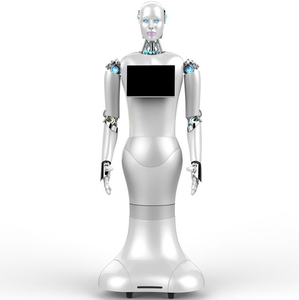
Aobo Xiaoao AI Human Interactive Service Hospital Hotel Robot
Equipped with SLAM navigation, autonomous obstacle avoidance, voice biometrics, and hotel/hospitality guest interaction systems.
Get a QuoteExplore fully deployable commercial prototypes and turnkey OEM/ODM architectural platforms—from large multimodal language models to high-torque stunt mechatronics.
Equipped with SLAM navigation, autonomous obstacle avoidance, voice biometrics, and hotel/hospitality guest interaction systems.
Get a Quote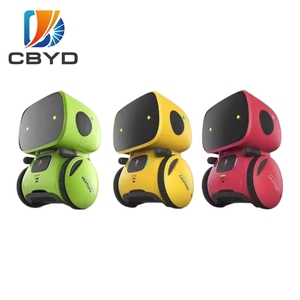
Features high-res OLED dynamic eyes, Android 14 OS, edge AI natural language tutoring, and bidirectional 1080p video streaming.
Get a Quote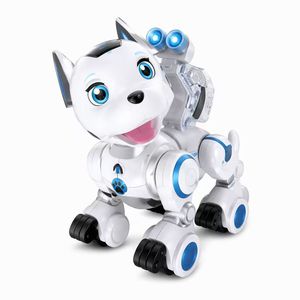
High-durability servo joints, customizable stunt choreography, graphical logic programming, and capacitive touch feedback.
Get a Quote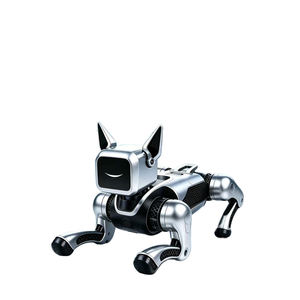
All-terrain 8-wheel articulated suspension with algorithmic self-balancing, sound triggers, and dynamic drift kinetics.
Get a Quote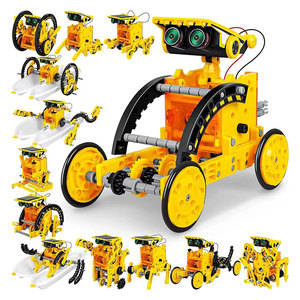
Modular photovoltaic conversion kit featuring 12-in-1 transmission kinematics, promoting sustainable engineering pedagogy.
Get a Quote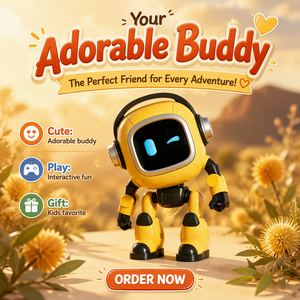
Embedded infrared gesture radar, cloud neural engine supporting 37 localized dialects, and adaptive STEM curriculum prompts.
Get a Quote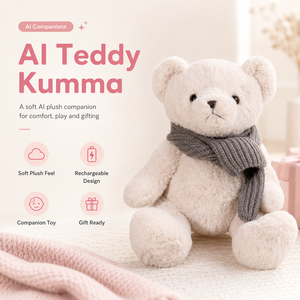
Integrated LLM conversation processor, voice synthesis, internal acoustic dampeners, and safety-compliant child-safe casing.
Get a Quote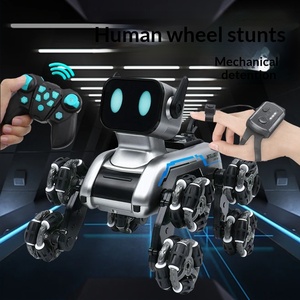
Geometric morphing chassis, dynamic RGB visual indicators, multi-axis aerobatics, and dual RF/Optical gesture control.
Get a QuoteThe global smart toy market is transitioning from basic scripted soundboards to contextual edge computing, multimodal sensory synthesis, and strict on-device data sovereignty.
While early connected toys relied entirely on high-latency cloud APIs, modern OEM platforms implement tiny edge models (TinyML) on microcontrollers. This empowers toys with instant keyword response, acoustic localization, and fail-safe offline basic routines, reserving high-order LLM generation for secured Wi-Fi tunnels.
Standard stepped motors are increasingly replaced by silent, high-torque coreless micro-servos paired with planetary gear reductions. Modern bionic pets demand life-like organic motion—tail wags, head tilts, and breathing chest motions—that operate well beneath regulatory acoustic decibel thresholds for nursery products.
With COPPA 2.0, California SB-327, and EU GDPR Article 8 compliance becoming pivotal procurement barriers, Tier-1 manufacturing facilities must engineer isolated hardware encryption modules, camera shutters, microphone cutoff relays, and strict non-identifiable conversational logging at the PCB design phase.
Detailed procurement engineering breakdown comparing conventional interactive legacy toys against current generational standards and projected next-gen smart platforms.
| Technical Dimension | Legacy Toys (2020-2023) | Current Benchmark (2024-2025) | Next-Gen Target (2026+) |
|---|---|---|---|
| Voice Processing | Fixed OTP Sound Chips (Mask ROM) | Cloud ASR + Pre-prompted LLM (ChatGPT / Claude) | On-device TinyML + Emotional Sentiment Recognition |
| Visual Feedback | Monochrome 7-Segment / Fixed LEDs | Color TFT / Round AMOLED Animated Expression Displays | Micro-OLED Interactive Holographic Optical Displays |
| Kinematics / Actuators | Brushed DC Motors + Plastic Gearboxes | PWM Metal Coreless Micro-Servos (Quiet Dynamic) | Harmonic Drive Elastic Joints & Artificial Muscle Wire |
| Sensory Array | Mechanical Leaf Switches / Single Microphones | Capacitive Touch Matrices, Dual MEMS Mics, Gyros | ToF Depth Sensors, Tactile Skin Arrays & UWB Ranging |
| Regulatory Scope | EN 71 Parts 1-3, ASTM F963 Physical Safety | IEC 62115, RED Directive, FCC Part 15, RoHS 2.0 | Mandatory AI Ethics Audits, EU Cyber Resilience Act (CRA) |
Headquartered directly in Shenzhen’s core electronics corridor, our factory bridges the divide between tactile soft plush tailoring and precision microelectronics engineering.
We resolve the classic assembly hurdle: dampening mechanical motor vibration and preventing acoustic sound muffling inside custom plush casings with zero internal overheating.
All mechanical chassis, printed circuits, and non-toxic hypoallergenic fabrics undergo preemptive testing against ASTM F963, EN 71, CPSIA, IEC 62115, and international EMC limits.
Take characters from conceptual 2D artwork or CAD models to working functional mechatronic samples in as short as 14 business days using in-house 3D printing and quick-turn tooling.
Benefit from direct, bulk procurement tiers for sound modules, voice DSP chips, and specialty motors with flexible MOQs tailored for high-growth consumer hardware brands.
Key operational questions evaluated by sourcing executives, brand directors, and supply chain managers prior to opening production tooling.
For pre-engineered ODM platforms (utilizing standard chassis, existing motor drive boxes, or the AI Smile Face development core), minimum production runs start at 500 to 1,000 units with custom private-label branding. Fully bespoke OEM platforms requiring custom plastic injection molds and proprietary PCB tooling generally require an MOQ of 3,000 to 5,000 units to amortize NRE and tooling investments efficiently.
Motorized robotic plush requires integrated thermal dissipating enclosures and acoustic sound guides. We construct custom interior skeleton cavities using flame-retardant ABS, decouple motor mounts using vibration-absorbing silicone bushings, and route speaker acoustics outward via sound conduits to guarantee crystal-clear voice frequency reproduction without mechanical whine.
We employ TLS 1.3 encrypted handshakes, signed firmware-over-the-air (FOTA) updates, and hardware root-of-trust chips to prevent unauthorized firmware flashes. Voice data is processed transiently: audio payloads are streamed into isolated volatile RAM buffers without persistent storage on the physical toy, fully complying with FTC COPPA, California Privacy Rights, and GDPR Article 8.
Our quality assurance team enforces a comprehensive multi-gate inspection framework. Every PCBA passes automated optical inspection (AOI) and in-circuit testing (ICT) prior to encapsulation. Once integrated into plush bodies, units undergo automated cycling: servo stall torque checks, pull-force tests on seams and eyes (>90N), acoustic sweep analysis, and complete drop testing.
In North America, smart robotics must comply with ASTM F963 (mechanical/chemical safety), CPSIA (lead and phthalates), and FCC Part 15 (unintentional/intentional RF radiators). For the European Union, goods require CE marking under the Toy Safety Directive 2009/48/EC (EN 71 Parts 1, 2, 3), IEC 62115 (electrical toy safety), RED (Radio Equipment Directive 2014/53/EU), and RoHS 2.0 restrictions.
Yes. We supply drop-in modular components including our patented AI Movement Box, pre-programmed voice DSP boards, AMOLED round eye-display modules, and capacitive touch sensors to client-owned assembly plants worldwide, providing complete engineering integration schematics and SDK documentation.
Consult directly with our Shenzhen hardware engineers to review industrial design feasibility, Bill of Materials (BOM) cost optimization, and rapid functional sampling.