Voice AI Companion
Acoustic Mechatronics
Explore our engineering platform benchmarks: from gesture-controlled eight-wheel transformable cars to AI companion robotics engineered with high-torque gearboxes and multi-protocol IoT integration.
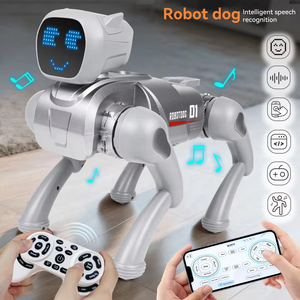
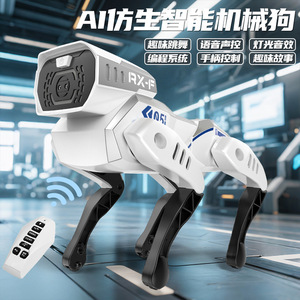
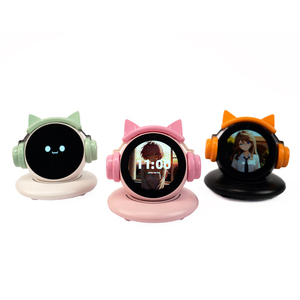


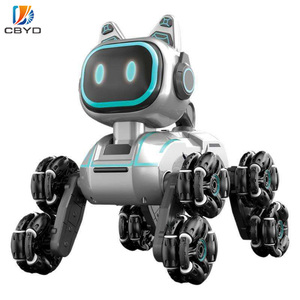

Moving beyond single-button plastic spring clicks: how high-precision micro-servos, multi-linkage chassis, and integrated sensor fusion are redefining the category in Tier-1 manufacturing hubs.
The global market for transformable toy cars has undergone a paradigm shift over the past three decades. The early generations relied purely on energy-storage coil springs and mechanical trip-latches that released when an optical or bumper contact occurred. While cost-effective, these mechanisms suffered from accelerated plastic wear, structural fatigue within 500 to 1,000 cycles, and extreme sensitivity to manufacturing dimensional tolerances.
Today, enterprise-grade transformable toy car manufacturers—spearheaded by Shenzhen and the greater Guangdong mechatronics cluster—have transitioned to continuous dynamic servo metamorphism. By employing compact high-torque coreless motors coupled with self-locking planetary reduction gearboxes, vehicles can alter their physical geometry smoothly while retaining structural rigidity in both dynamic vehicle mode and articulated humanoid or quadruped robot mode.
Furthermore, modern chassis architecture integrates advanced omnidirectional wheels (such as Mecanum wheel drive systems) and multi-wheel articulate suspensions. The eight-wheel drive platform featured in our flagship stunt series leverages independent suspension arms driven by a master-slave transmission axis. This configuration empowers the vehicle not only to transform vertically—elevating its ground clearance from 18mm to 72mm—but also to crawl over 45-degree rock obstacles with continuous torque distribution.
Detailed analysis for global retail buyers, private label brands, and supply chain executives navigating consumer shifts and stricter global regulatory regimes.
The boundary between traditional RC stunt vehicles and interactive smart pets is rapidly dissolving. Future retail categories demand multi-modal feedback: cars that acknowledge voice commands, adapt their robotic demeanor based on dialogue history, and morph their chassis to convey emotional states such as excitement, alert mode, or sleeping orientation.
Traditional dual-stick handheld transmitters are increasingly complemented by wearable IMU (Inertial Measurement Unit) wristbands. Capacitive touch and 6-axis gyroscope gesture sensing allow kids to twist their wrists to initiate instantaneous mid-drive deformation, requiring ultra-low latency RF transceivers below 45ms to prevent operational desynchronization.
As transformable cars integrate Wi-Fi connectivity, app controls, and forward-facing optical tracking cameras, toy importers must certify compliance with stringent child privacy mandates. Sourcing teams are shifting RFQs strictly toward ODM factories capable of zero-knowledge local edge computing, encrypted token handshake architectures, and firmware level isolation.
Leading Western retailers (e.g., Target, Walmart, Fnac) are mandating carbon footprint reporting and Post-Consumer Recycled (PCR) resin adoption. Advanced factories must master high-impact ABS and POM formulation blends containing 30% to 50% recycled feedstock without compromising tensile yield strength or impact resistance during 1.2-meter drop tests.
With high-torque brushless motors and rapid-deformation servos drawing instantaneous peak surge currents up to 8A, traditional pouch lithium-polymer cells risk thermal runaway. Tier-1 manufacturing platforms are transitioning to integrated PCM protection circuits and high-stability lithium chemistry housed inside fire-retardant structural battery compartments.
Private label brands cannot afford 18-month tooling development cycles. Sourcing managers now prefer vetted "Plug-and-Play" chassis modules—where the core transformable mechanics, motherboard, and RF links are pre-certified—allowing custom outer shell injection and packaging customization in under 60 days.
A reference technical specification guide to evaluate factory capabilities, motor specifications, and unit manufacturing costs before issuing your OEM/ODM tender.
| Architecture Class | Drive & Deformation Motors | Control Topology | BOM Cost Target | Typical Failure Point | Optimal Retail Channel |
|---|---|---|---|---|---|
| Spring-Latch Trigger Entry Consumer |
Single DC Core Motor + Release Spring | 27MHz / 49MHz Simple RF | $2.80 - $5.50 | Spring fatigue; plastic clip shear under drop impact | Hypermarkets, impulse seasonal promotions, dollar chains |
| Dual-Rack Servo Slide Mid-Tier Standard |
Twin 130 Carbon-Brush Motors + POM Racks | 2.4GHz Spread Spectrum Transceiver | $7.50 - $13.20 | Gear strip under manual force; motor thermal stall | Specialty toy chains, department stores, Amazon brand stores |
| Multi-Linkage 8-Wheel Stunt Heavy Duty RC |
Four N20 Metal Gearmotors + Slip Clutches | 2.4G + 6-Axis Gesture Sensing Bracelet | $14.00 - $22.50 | Flex cable fatigue across dynamic rotating joints | Hobby stores, premium retail e-commerce, electronic gifts |
| AI Vision & Companion Robot Next-Gen Flagship |
Digital Bus Servos + Dual Core Drive Motors | Dual-Band Wi-Fi / BLE + Edge NLP Processing | $28.00 - $55.00 | Microphone noise cross-coupling; cloud latency | EdTech catalogs, crowdfunding, consumer robotics distributors |
Operating in the heart of Shenzhen’s world-renowned hardware cluster, we bridge the gap between precision electro-mechanical engineering and soft-goods integration.
We own dedicated high-speed SMT lines, automated PCB optical inspection (AOI), and in-house firmware programming suites, cutting electronic sub-assembly lead times by 35% compared to assembly-only factories.
Our tooling workshop produces injection molds with tolerances within ±0.015mm, guaranteeing that multi-hinged transformable chassis segments fit seamlessly without unsightly gaps or air rattles.
All core electrical assemblies are architected around stringent EN 71, ASTM F963, CPSIA, IEC 62115 (Electric Toy Safety), and RED/FCC radio regulations, eliminating unexpected third-party lab redesign delays.
Work directly with project engineers who understand western retail standards, direct packaging barcoding guidelines, drop-testing parameters, and flexible container loading schedules.
Direct answers to critical production, testing, MOQ, and engineering questions frequently encountered during transformable toy car factory audits.