
Bionic Actuation
Voice Control
From complex stunt-capable bionic companions to localized Large Language Model (LLM) emotional plush toys, explore our standard reference architectures optimized for rapid brand deployment.
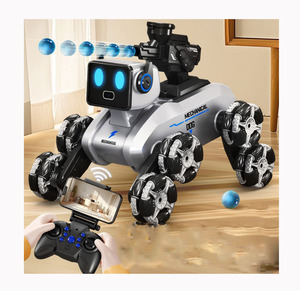
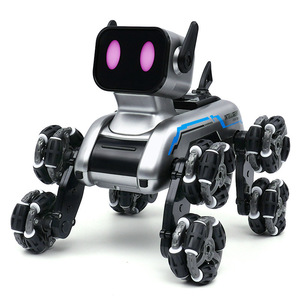
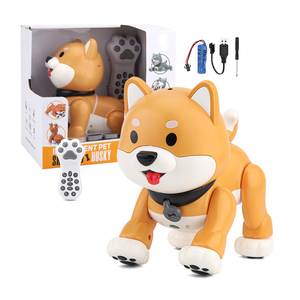
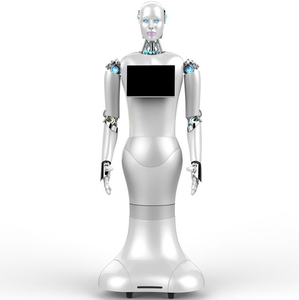
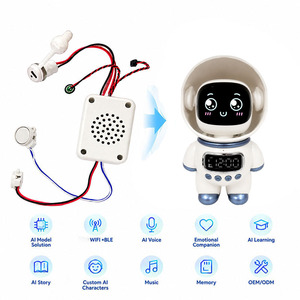
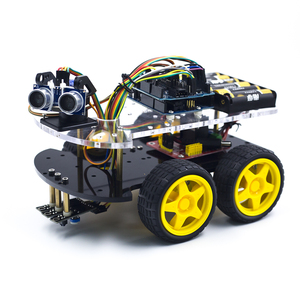
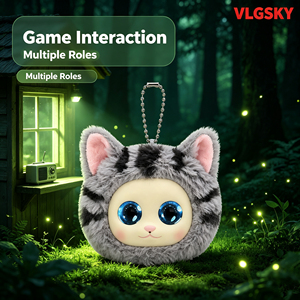
Resolving the classic manufacturing disconnect between tactile softness and high-density microelectronics through turnkey engineering.
Traditional toy fabrication suffers high failure rates when inserting standard rigid electronics into plush skins. We engineer custom inner skeletons, optimized hollow chassis, and vibration-dampening acoustic cavities concurrently with CAD plush sewing patterns to preserve haptic softness.
For established plush brands and global IP owners unwilling to redesign their production supply line, we offer modular 'AI Movement Boxes' and modular sound modules. These compact units integrate high-torque servos, capacitive sensors, and Bluetooth/Wi-Fi chipsets ready for installation.
Operating directly within Shenzhen’s high-tech manufacturing grid, AItoyplays harnesses unrivaled component sourcing agility. We secure tier-1 supply contracts for high-efficiency DSP chips, low-noise brushless motors, and circular AMOLED eye-displays at factory direct economies of scale.
Analyzing market forces, regulatory pressure, and architectural shifts reshaping how retail enterprises and consumer tech brands purchase electronic plush lines.
Data security scrutiny under COPPA and GDPR-K has made persistent cloud streaming liabilities noticeable for retail buyers. Modern procurement schedules prioritize edge-AI NPU chipsets executing wake-word detection, emotion analysis, and core dialog locally, offloading complex interactions to zero-log cloud pipelines.
Standard sound boxes no longer sustain premium retail gross margins. Enterprise importers increasingly source products featuring variable mechanical breathing mechanisms, embedded pulse solenoids, and heat dissipation pads that mimic genuine living organisms for pediatric therapy and companionship.
New European Union battery circularity regulations dictate that smart toys feature tool-accessible or removable rechargeable battery packs without destroying the stitched seams. Smart engineering teams design hidden, child-proof magnetic or reinforced zip compartments for effortless battery replacement.
Evaluate the technical implications, bill-of-materials (BOM) cost tiers, and compliance requirements across various cuddly toy architectures.
| Architecture Type | Primary Silicon & Sensor BOM | Network Dependency | Compliance Vectors | Target Applications |
|---|---|---|---|---|
| Classic Sound/Motion | 8-bit OTP Microcontroller, Piezo Sensor, Brushed Motor | None (Air-gapped) | EN 71-1, ASTM F963 Physical Safety | Promotional merchandise, basic mass retail plush |
| Sensor-Rich Bio-Companion | 32-bit ARM Cortex-M, Capacitive Touch, IMU 6-Axis, Coreless Servos | BLE 5.2 (Optional App Sync) | IEC 62115, EMC, RoHS, REACH | Sensory therapy pets, sleep aids, animated IP characters |
| Edge-AI Interactive Toy | NPU Audio Processor, Dual MEMS Microphones, Circular OLED Eyes | Wi-Fi 6 / Bluetooth Dual Mode | RED Directive, FCC Part 15, COPPA Audio Safety | Early childhood language tutors, responsive robotic companions |
| Conversational LLM Plush | ESP32-S3 or Embedded Linux SOC, Secure Cryptographic Hardware | Continuous High-Bandwidth Wi-Fi | GDPR-K, CCPA, Cyber Resilience Act (CRA) | Lifelong emotional companions, adaptive smart storytelling toys |
Inside our Shenzhen R&D labs: Translating advanced human-robot interaction (HRI) theory into durable, scalable consumer merchandise.
Modern smart toys move beyond mechanical switch closures. By incorporating pressure-mapping capacitive arrays across the skin surface and integrating emotional tone analysis via edge audio models, our cuddly companions distinguish between a soft hug, an aggressive shake, or a gentle stroke, modulating response vocalizations accordingly.
Moving mechanical eyes are prone to gear fatigue and motor noise that compromises plush cuddliness. Our latest platforms leverage circular high-contrast IPS and AMOLED displays embedded behind anti-reflective curved resin lenses, rendering lifelike micro-expressions, pupil dilation, and emotional reactions with near-zero mechanical noise.
Collaborating with specialized children's knowledge base providers, we integrate vector database memory modules onto our companion firmware. This architecture allows the cuddly toy to remember child preferences, recent conversations, learning progression, and bedtime habits over years without continuous cloud re-training.
Crucial manufacturing, regulatory, and production logistics questions answered by our engineering and export team.
For fully custom OEM designs involving bespoke plush pattern tooling, plastic chassis injection molds, and custom PCB layout engineering, our standard starting production run is 1,000 to 2,000 units per batch. However, for buyers leveraging our ready-to-deploy ODM chassis architectures (such as the AI Smile Face series or drop-in AI Movement Boxes) customized solely with proprietary fabric skins, private embroidery, and tailored firmware, pilot runs can start at 500 units.
Data protection starts at hardware design. Our connected AI modules utilize hardware-level cryptographic key chips to authenticate cloud telemetry. Microphones can be hardware-muted via physical disconnection switches, and our reference firmware does not store raw acoustic audio permanently. Data sent to inference servers is strictly anonymized tokenized speech metadata, meeting all COPPA (USA) and GDPR-K (EU) guidelines.
Because an AI toy bridges soft plush toys and battery-powered electronics, it must comply with dual-layer safety standards: ASTM F963 (USA) and EN 71 (EU) for sharp points, small parts, seam tension, and flammability; IEC 62115 for electrical and heat safety; RoHS and REACH for chemical safety; plus FCC / CE-RED / IC for wireless radio emission safety. We coordinate testing via accredited third-party laboratories (SGS, TÜV, Intertek) prior to release.
Electronics enveloped by synthetic polyester fiber stuffing represent a serious thermal containment challenge. Our mechatronics team integrates customized aluminum heat-sink spreaders that channel processor heat directly into structural chassis surfaces or external non-accessible bracket channels. We also implement automatic firmware throttling if internal enclosure temperatures exceed safe thresholds (42°C).
A standard OEM lifecycle proceeds through distinct phases: Conceptual evaluation & 3D modeling (1–2 weeks), rapid plush pattern generation & functional electronic prototype (3–4 weeks), DFM (Design for Manufacturing) review and injection tooling creation (4–6 weeks), followed by trial pilot run and mass assembly (30–45 days). Standard lead time for complete new-to-market development is typically 3 to 5 months.
Yes. We offer flexible firmware models. We can provide standard pre-flashed plug-and-play turnkeys, or furnish an extensive hardware abstraction layer (HAL) SDK. This enables client engineering teams to flash their own embedded models, direct audio streaming endpoints to custom proprietary LLM servers, and retain total control over IP content delivery.
Whether you require drop-in voice modules, custom bionic chassis engineering, or fully certified mass production of a proprietary AI companion, our Shenzhen technical team is prepared to analyze your design brief.
Get Catalog