High-Performance AI Companion Pets & Mechatronic Modules
Engineered with conversational neural networks, touch-capacitive haptics, low-latency audio DSPs, and industrial-grade micro-servos for commercial export programs.

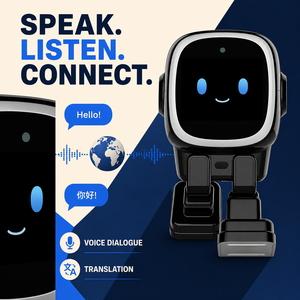
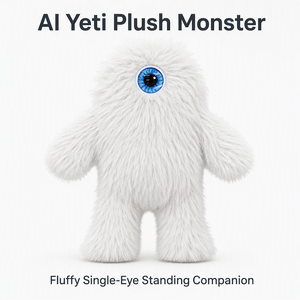
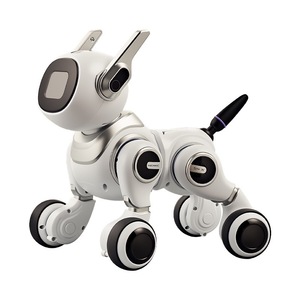
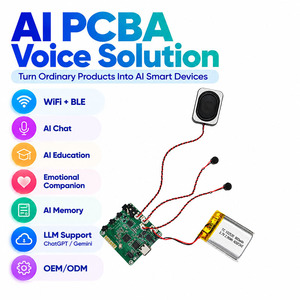
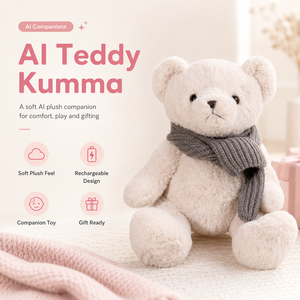
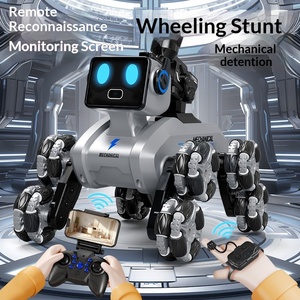
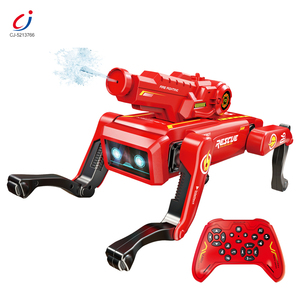
The Paradigm Shift: From Scripted Animatronics to Generative Multimodal AI Pets
The global electronic toy and animatronic companion sector is undergoing an irreversible structural transformation. For over three decades, the traditional interactive toy market relied strictly on deterministic state-machine microcontrollers (MCUs), triggering fixed, hardcoded WAV audio tracks via rudimentary squeeze switches or simple infrared tripwires. In today's hyper-connected consumer ecosystem, global buyers face diminishing retail margins on static toys as tech-literate consumers demand authentic cognitive engagement, adaptive emotional memory, and fluid conversational intelligence.
As an industry-leading original design and equipment manufacturer based in Shenzhen, Shenzhen Atp Intelligent Electronics Co., Ltd. (AItoyplays) operates at the nexus of hardware engineering and advanced edge-to-cloud AI deployment. Modern AI interactive pets represent a synthesis of three core technological layers: multimodal perceptual input arrays, hybrid low-latency cognitive processing pipelines, and compliant mechatronic actuation systems. Developing commercial-grade products requires resolving critical mechanical-electrical conflicts that standard toy factories cannot navigate, such as internal acoustic resonance, high-efficiency thermal management inside plush enclosures, and international data compliance.
Multimodal Sensor Fusion
Integrating far-field dual-MEMS microphone arrays with real-time Acoustic Echo Cancellation (AEC) and hardware beamforming. Multi-zone capacitive touch sensors embedded beneath conductive fleece fabric distinguish between a strike, a stroke, and continuous affectionate hugging.
Hybrid Edge-Cloud Architecture
Local sub-watt Neural Processing Units (NPUs) run zero-latency wake-word recognition (KWS) and basic affective motor responses offline. Rich semantic dialogues, multi-turn vector memory, and personalized storytelling are processed via encrypted cloud Large Language Models (LLMs).
Silent Biomimetic Kinematics
Eliminating gear whine through custom POM/nylon planetary gearboxes, brushless coreless micro-motors, and harmonic skeletal pivots. Structural dampening decouples mechanical vibration from sensitive internal audio pickup microphones.
Future Sourcing Trends: Navigating the 2025–2030 AI Pet Landscape
Procurement executives and toy brand category managers must adapt their sourcing strategies to keep pace with rapid generational shifts in consumer electronics. Sourcing an AI interactive pet is no longer an exercise in calculating bulk fabric weight and plastic injection tonnage; it is a high-level orchestration of recurring cloud inference costs (Tokenomics), continuous firmware-over-the-air (FOTA) roadmaps, and evolving consumer safety mandates.
Critical Sourcing Vectors for Enterprise Procurement Teams
1. Monetization & Cloud Subscription Economics: Importers must choose between subsidized hardware coupled with user subscriptions or standalone hardware with amortized perpetual token pools. Our factory engineers customized lightweight API gateways that optimize LLM prompt compression, slashing cloud operational expenditure by up to 60% compared to generic OpenAI API endpoints.
2. The Modular Core Movement ("Drop-in Intelligence"): Retailers face seasonal obsolescence risks with dedicated character plush. The market is shifting decisively toward universal standardized movement boxes (e.g., our AI Movement Box series). A single qualified electronic skeleton can be dressed in dozens of interchangeable plush skins across seasonal product cycles, dramatically reducing multi-SKU injection tooling overhead and accelerating time-to-market.
3. Stringent Thermal & Enclosure Safety Standards: Enclosing lithium polymer battery cells, Wi-Fi RF transmitters, and dynamic motor drivers inside dense, insulating polyester plush presents real thermal runaway risks. Forward-looking procurement demands dual-layer NTC thermal cutoffs, flame-retardant PP stuffing (UL94 V-0 equivalent), and rigid battery chassis capable of withstanding standard 1-meter drop testing and 100N crush requirements (ASTM F963 / EN 71 Part 1).
| Architecture Tier | Core Connectivity | Latency / Experience | Ideal Target Market | Regulatory / Compliance Scope |
|---|---|---|---|---|
| Offline Biometric Sensor Pet | None (Standalone MCU) | Instantaneous (<50ms) / Scripted barks & tail wagging | Mass Retail, Infants (0-3 yrs), Low BOM budget | Standard: EN71, ASTM F963, EMC |
| Hybrid BLE Smartphone Gateway | BLE 5.2 to App / Cellular | Medium (1.2s - 2.0s) / App-mediated LLM chat | Teens, Novelty Gifts, Mid-tier Brands | RED, FCC ID, App Store Privacy |
| Wi-Fi Direct Embedded Companion | Dual-Band 2.4/5GHz Wi-Fi | Ultra-Low (600ms - 900ms) / Natural conversationalist | Elderly Care, EdTech, Premium Collectibles | FCC Part 15C, COPPA, GDPR, IEC 62115 |
| Multimodal Vision-Enabled Robot | Wi-Fi + Onboard Camera NPU | Real-time face tracking + Emotion reaction | Tech Enthusiasts, Executive Desk Pets | Biometric Data Security, CA Title 20, CE |
Why Tier-1 Global Importers Partner with Shenzhen Atp (AItoyplays)
Eliminating the friction between precision electronic engineering and artisanal plush manufacturing through end-to-end in-house vertical integration.
Integrated Soft-Hard Engineering
Standard electronics vendors don't understand fabric tension, while standard plush sewing factories fail at electrostatic discharge (ESD) protection. We design acoustic chambers, wire routes, and heat sinks directly into the plush pattern prototypes from Day One.
Direct Shenzhen Supply Density
Situated in Shenzhen, China's hardware Silicon Valley, our factory operates within a 30-minute radius of the world's densest concentration of high-yield SMT lines, acoustic component suppliers, custom gear molders, and specialized textile mills.
Comprehensive Testing & QA
Every production batch undergoes automated acoustic chamber calibration, drop-testing with operational servos, salt-spray contact tests, needle detection, and strict zero-leakage radio emission checks in compliance with EN 71, ASTM F963, and IEC 62115.
End-to-End OEM/ODM Project Delivery Lifecycle
Navigating an interactive toy project from initial character concept sketches to retail-ready ocean freight requires rigorous stage-gate governance. Our structured process guarantees product integrity and prevents expensive tooling revisions:
Architectural Feasibility
Character art analysis, target dimension allocation, acoustic speaker cavity sizing, thermal dissipation simulations, and target BOM pricing validation.
Prototyping & PCB Layout
CNC rapid enclosure prototyping, 3D skeletal printing, custom SMT board fabrication, sensor harness integration, and first-run working soft samples.
Tooling & Certifications
Hard-steel injection tooling, plush dye-lot matching, Golden Sample sign-off, and formal submission to accredited labs (SGS/TÜV/Intertek).
Mass Production & QA
Cleanroom electronics assembly, multi-stage automated functional testing, dual needle-detection scans, packaging assembly, and containerized dispatch.
Frequently Asked Questions for Professional Toy Importers
Clear, unvarnished answers addressing the technical, legal, and operational realities of sourcing AI interactive pets.
• How do you guarantee children's privacy under COPPA and GDPR regulations?
Our cloud pipelines employ a zero-storage voice architecture. Audio streams are converted from speech-to-text (STT) inside temporary volatile memory, scrubbed of Personally Identifiable Information (PII), and processed through sandboxed LLMs with parental consent barriers. We never store raw audio logs on third-party cloud servers.
• What is the typical lead time for custom OEM plush tooling and electronics?
Plush pattern prototyping and basic working electronic samples take 14 to 21 business days. Custom plastic injection tooling for internal motor skeletons and battery boxes requires 30 to 35 days. Mass production following Golden Sample approval typically spans 45 to 60 days depending on component allocation.
• How is mechanical motor noise prevented from interfering with the microphone?
We isolate the microphone array on silicone suspension dampers positioned away from the gearbox. Furthermore, we program the DSP firmware with digital notch filters and adaptive noise cancellation tuned specifically to the motor's operational frequency bands, ensuring clean voice pickup even while moving.
• Can we supply our own proprietary AI voice character or fine-tuned LLM?
Yes. Our modular firmware supports custom API endpoint routing. You can connect our hardware directly to your proprietary cloud backend, custom voice clone model (e.g., ElevenLabs or Azure Speech), or tailored character memory prompt tree via our standard secure authentication protocol.
• What are the minimum order quantities (MOQs) for custom OEM projects?
For ODM projects using our existing certified electronic movement boxes and standard fabrics, the MOQ starts at 1,000 to 2,000 units. For fully bespoke OEM designs requiring custom tooling, specialized textile dyeing, and custom PCB fabrication, the standard production MOQ is 3,000 units.
• What safety certifications do your interactive pet products carry?
Our products are engineered to pass North American and European toy standards: EN 71 (Parts 1, 2, and 3), ASTM F963, CPSIA, IEC 62115 (Electric Toy Safety), RoHS, REACH, and California Proposition 65. For wireless devices, we provide full FCC ID, RED, and CE-RED telecommunication test certifications.
Accelerate Your Next AI Toy Development Program
Whether you require a custom-engineered IP character with real-time generative dialogue, a biomimetic robotic pet, or standalone high-yield sound and motion modules, our Shenzhen engineering facility is prepared to deliver your vision to market on schedule.