Top Trusted Interactive Robot Toys Factory & Supplier
Precision Engineering, Voice-AI Algorithmic Integration, Soft Goods Modularization, and International Compliance Under One Scalable Production Architecture.
High-torque gearboxes with acoustic dampening casing
EN71 / ASTM
Global Compliance
IEC 62115, CE RED, FCC-ID, CPSIA & COPPA aligned
2.4M+
Annual Unit Yield
Supplying multinational retailers & IP owners worldwide
Production-Ready ODM / OEM Catalog
Benchmark Interactive Robotic Systems & Smart Companions
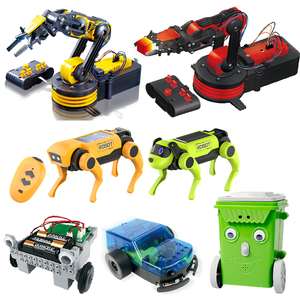
Explore eight core smart hardware architectures developed and manufactured at our Shenzhen facility. Each platform offers modular sensor arrays, compliant low-voltage power units, and custom firmware customization.
Vision & Telepresence
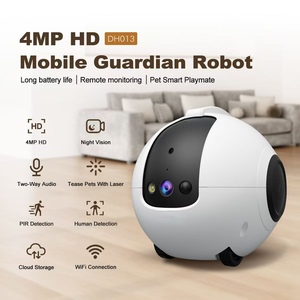
ChongxinIOT Smart Pet Camera Robot 4MP 10000mAh Dual-Band Companion
Optics: 4MP Full HD with Pan-Tilt 360° LiDARBattery: 10,000mAh Auto-Dock InductionAudio: Duplex 2-Way Noise-Cancelling Audio
Engineering the Synergy Between Soft Goods and Robotic Mechatronics
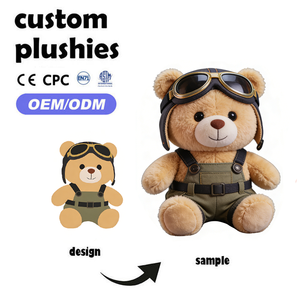
The manufacturing of modern interactive robotic toys demands a profound departure from traditional consumer electronics assembly. While classic plastic robots focus entirely on rigid structural rigidity, today's high-growth consumer segment favors hybrid robotic architectures—systems that balance soft tactile exteriors with complex internal mechatronics, voice artificial intelligence, capacitive touch sensing arrays, and thermal-regulated power supplies. As the B2B manufacturing brand operated by Shenzhen Atp Intelligent Electronics Co., Ltd. (AItoyplays), our production facility in Shenzhen bridges the historical friction between high-precision PCBA production and artisan soft-plush sewing.
Industry post-mortems reveal that over 68% of commercial smart-toy failures trace directly to poorly engineered integration at the fabric-hardware boundary. Typical failure modes include severe acoustic attenuation where speaker output is muffled by polyester PP-cotton stuffing, motor gear fatigue under fabric tension, broken wiring harnesses caused by repeated squeezing, and thermal accumulation around lithium-ion battery enclosures. Our integrated design-for-manufacturing (DFM) framework resolves these systemic engineering bottlenecks before hard tooling commences.
Acoustic Chamber Isolation
Sealed resonant speaker cavities isolate micro-drivers from internal cotton pressure, boosting high-frequency voice clarity and eliminating fabric buzzing during vocal playback.
Torque-Decoupled Kinematics
Worm-gear and servo drivetrains feature floating clutch linkages. Even if a child forcibly resists head turning or arm flapping, the gear train slips safely without stripping teeth.
Capacitive Matrix Sensors
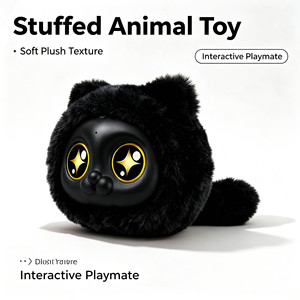
Flexible conductive yarn traces integrated directly beneath the outer plush skin register petting, hugs, and directional swiping without rigid switches protruding through the fur.
Strategic Sourcing Intelligence
Global Procurement Trends in Interactive Toy Robotics (2025–2030)
Procurement directors and sourcing executives from global toy retail brands, educational publishing houses, and IP licensing conglomerates are recalibrating their vendor selection criteria. The consumer landscape is shifting rapidly from novelty electronic toys toward emotionally resonant companions and privacy-first learning instruments. Enterprise buyers must anticipate four macro sourcing shifts:
Hybrid Edge AI & Privacy
Regulatory scrutiny under COPPA 2.0 and the EU AI Act makes constant cloud voice streaming risky. Tier-1 buyers demand offline on-device wake-word engines and localized dialogue trees, falling back to secure encrypted APIs only when parental permission is active.
Screen-Free Play Revival
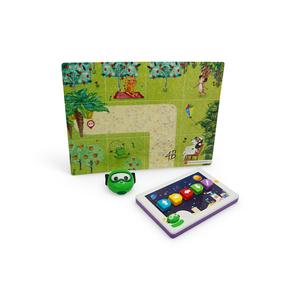
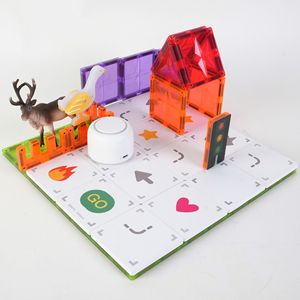
Pediatric screen fatigue has driven a massive surge in tangible, screenless STEM robotics. Demand is concentrated on physical coding tiles, barcode navigation surfaces, and haptic physical feedback systems that teach algorithmic logic without tablet displays.
Modular "Movement Box" OEM
Retailers are adopting drop-in universal mechatronic cores (AI Movement Boxes). By decoupling the standard electronic-mechanical skeleton from seasonal plush skins, brands cut tooling amortizations by up to 60% and reduce sample lead times from 16 weeks down to 20 days.
Circular ESG Compliance
North American and European import regulations mandate full traceability for recycled rPET outer fabrics, non-brominated flame retardants, and easily accessible modular battery compartments complying with the newly minted EU Battery Directive (2023/1542).
Comparative Technical Matrix: Robotic Architecture vs Target Channels
Evaluate your product roadmap against technical complexity, unit pricing tiers, and international compliance boundaries:
Architecture Class
Core Sensor & Drive Stack
Estimated Tooling / NRE
Compliance Envelope
Optimum Retail Channel
Screen-Free STEM Coder
Optical line trackers, hall encoders, micro DC motors, physical RFID tile sensor
Moderate ($12k - $22k)
EN71-1/2/3, ASTM F963, EMC Directive, RoHS 2.0
Educational distributors, Montessori retail, specialty gift catalogs
UL 62368-1, IEC 62115, CE RED, California Prop 65, REACH SVHC
Smart home channels, pet tech specialty distributors, online DTC
Shenzhen Manufacturing Benchmark
Integrated Plush Construction & Electronic Manufacturing Capabilities
AItoyplays (Shenzhen Atp Intelligent Electronics Co., Ltd.) is strategically headquartered at the epicenter of the world's electronics supply network in Shenzhen, Guangdong. This geographic proximity grants direct access to top-tier IC silicon foundries, custom speaker winding plants, micro-motor tooling facilities, and specialized textile finishing mills. Unlike conventional plush factories that outsource electronics to disconnected third parties—or electronic assemblers that treat plush as an afterthought—our manufacturing model unifies both disciplines under one roof.
Turnkey Quality Architecture
From the initial 3D clay CAD iteration to golden sample signoff and automated mass production, our quality management protocol guarantees strict batch-to-batch consistency. Every interactive toy undergoes functional stress tests that exceed statutory regulatory mandates.
100% In-Line Acoustic Calibration: Real-time FFT spectrum analysis in soundproof chambers ensures zero speaker distortion, buzz, or audio clipping across voice ranges.
15,000-Cycle Mechanical Stress Cycling: Internal servomotors, gearboxes, and cam mechanisms run continuously under simulated fabric loads to confirm thermal limits.
Rigid Seam Pull & Needle Detection: Soft exteriors endure 90N pull tests on all seams, eyes, and noses, followed by dual-probe 1.0mm ferrous needle detection.
Battery Protection Circuitry: Dual IC protections against over-charge, over-discharge, short-circuit, and thermal runaway, complete with UN38.3 test reports for seafreight and airfreight.
Daily Production Throughput:10,000 - 15,000 Finished Units
Facility Audits & Credentials:ISO 9001, BSCI, SEDEX, Disney FAMA
B2B Procurement FAQs
Answers to Critical Sourcing & Engineering Inquiries
Direct technical and commercial answers to help enterprise procurement directors, project managers, and quality assurance teams make informed decisions.
What is your Minimum Order Quantity (MOQ) for custom OEM vs ODM platforms?
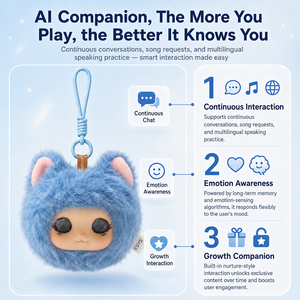
For ODM projects based on our existing mechanical platforms or universal AI Movement Boxes (such as the AI Smile Face series), our standard production MOQ begins at 1,000 units with customized exterior plush, brand embroidery, and preloaded firmware. For ground-up custom OEM projects requiring bespoke injection molds, unique gearbox kinematics, and proprietary PCB layouts, the baseline production run is 3,000 to 5,000 units to amortize non-recurring engineering (NRE) expenditures.
How do you handle international safety certifications (EN71, ASTM F963, IEC 62115)?
We operate a pre-compliance testing laboratory on-site in Shenzhen to verify mechanical hazards (small parts, sharp points, tension), drop-test durability from 3 feet, flammability, and electromagnetic interference (EMC) before sending prototypes to certified third-party labs like SGS, TÜV, or Intertek. We collaborate directly with the buyer's designated testing body to secure official CE, FCC-ID, IC, RoHS, REACH, and battery shipping documentation (UN38.3, MSDS).
Can you protect proprietary IP, custom character designs, and localized audio files?
Yes. Intellectual property security is managed under strict confidentiality agreements (bilateral NDAs signed before design exchange). Digital assets such as voice recordings, translation libraries, and firmware code are stored on encrypted offline servers. Finished molds and custom embroidery dies remain the exclusive commercial property of the client, backed by Disney FAMA-level audit certifications that prevent unauthorized secondary market overruns.
What is the standard development lead time from concept sketch to mass delivery?
Typical ODM prototyping takes 10 to 15 business days for functional 3D printed samples with hand-sewn plush skins. For complex OEM designs involving steel tooling for injection housings, the DFM and tooling phase requires 35 to 45 days. Following final "Golden Sample" approval and pilot production run, standard mass production takes 35 to 45 calendar days, contingent upon seasonal battery and IC lead times.
How do you resolve battery replacement and child safety in plush-wrapped robots?
Safety standards under ASTM F963 and EN 71 strictly regulate battery enclosures to prevent accidental swallow hazards. We engineer custom screw-secured, flame-retardant ABS battery housings situated within hidden, hook-and-loop fabric flaps or zip closures with safety sliders. For rechargeable lithium models, we integrate USB-C ports with reinforced anchor plates, thermal cut-off thermistors (NTC), and child-proof lockout switches.
Can you provide standalone movement modules for our domestic toy assembly plant?
Yes. Through our component supply division, we manufacture and ship standalone AI Movement Boxes, sound recording units, capacitive sensor pads, and LED eye matrix boards directly to buyers' overseas assembly partners. All modules arrive pre-programmed, calibrated, and packaged in ESD-safe trays with detailed integration manuals and wiring pinout diagrams.
Kickstart Your Next AI Robotic Toy Program With Us
Whether you require private-label ODM adaptation of our proven AI companion platforms or custom OEM mechatronic engineering from preliminary sketches, our Shenzhen technical team is standing by to evaluate your project specifications.