Engineered Bionic Quadruped Dogs & Commercial Smart Pets
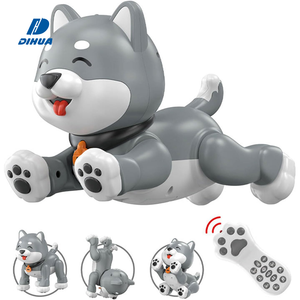
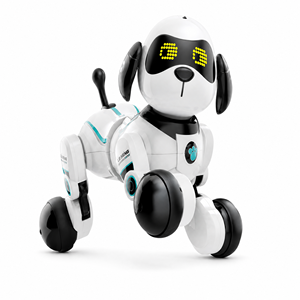
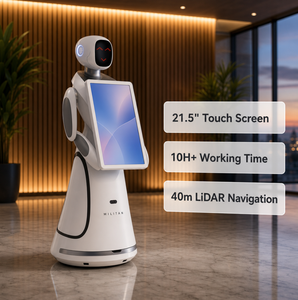
From industrial-grade autonomous navigation platforms and educational STEM bionic quadrupeds to consumer entertainment companions, inspect our verified OEM/ODM production fleet.
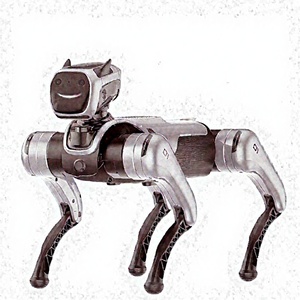
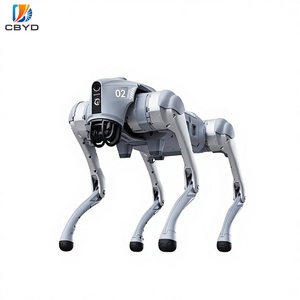
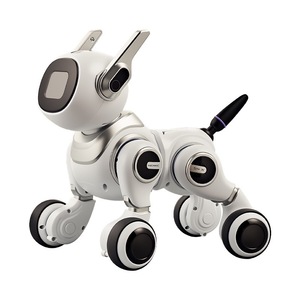
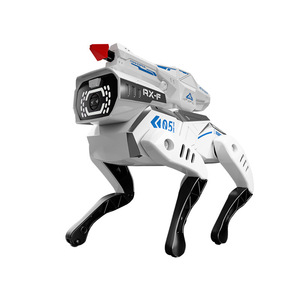
Technical Whitepaper: Mechatronics & Joint Control Architecture in Modern Quadruped Robotics
Procuring remote-controlled and autonomous quadruped robot dogs demands a precise understanding of the convergence between mechanical torque efficiency, bus-servo communication latency, and real-time kinematic balancing. As an established manufacturing partner headquartered in Shenzhen—the hardware Silicon Valley of global smart electronics—Shenzhen Atp Intelligent Electronics Co., Ltd. (AItoyplays) mitigates traditional failure modes where mechanical linkages bind, heat builds up rapidly in coreless motors, or control algorithms fail under varied terrain friction.
Modern RC robot dogs are structurally categorized into two distinct engineering tiers: High-Torque Quasi-Direct Drive (QDD) Quadrupeds engineered for dynamic stability, stair climbing, and sensor-payload transport; and Serial Bus-Servo Companion Quadrupeds engineered for high articulation, consumer entertainment, and educational STEM applications. Our production infrastructure integrates proprietary brushless motor windings, planetary gearboxes with minimal backlash, dual-loop absolute magnetic encoders, and high-frequency real-time Linux/FreeRTOS core microcontrollers.
Quasi-Direct Drive (QDD) Actuators
Low gear ratio (6:1 to 10:1) coupled with high-pole brushless motors enables active compliance, allowing the quadruped leg to absorb external shocks safely without stripping gear teeth during falls or jumps.
Embedded Kinematics & MPC
Model Predictive Control (MPC) and Whole-Body Control (WBC) firmware recalculate joint trajectories 500 times per second, ensuring uninterrupted balance across ice, gravel, grass, and steep inclines.
Multi-Spectral Sensor Fusion
Seamlessly multiplexing solid-state 4D LiDAR, depth cameras, time-of-flight (ToF) ground sensors, and 6-axis IMUs to deliver millimeter-level local spatial mapping and obstacle avoidance.
Thermal & Current Regulation
Integrated PCB drivers feature localized over-temperature sensors, dynamic regenerative braking dissipation, and bus-level over-current trip points to guarantee continuous duty cycles.
B2B Engineering Spec Comparison: Industrial vs. STEM vs. Retail Toy Quadrupeds
When drafting an OEM or ODM procurement brief, choosing the correct actuator class, battery topology, and processing unit dictates 70% of the unit bill-of-materials (BOM) cost and subsequent certification scope. Review this comparative engineering matrix derived from our factory manufacturing standards:
| Evaluation Parameter | Enterprise / Research Grade (e.g. Go2 Pro) | STEM / Bionic Grade (e.g. Go2 Air) | Consumer Retail Robot Dog (e.g. G110A) |
|---|---|---|---|
| Actuator Architecture | Brushless QDD with dual magnetic encoders | Coreless / Brushless serial bus servos | Miniature DC reduction brushed gear motors |
| Degrees of Freedom (DoF) | 12 to 16 Active DoF (3-4 per leg) | 12 Active DoF (Hip, Thigh, Calf) | 4 to 8 Semi-coupled articulated linkages |
| Compute Core / MCU | ARM Cortex-A72 Octa-Core + Dedicated NPU | Quad-Core Cortex-A53 + RTOS MCU | 8-bit or 32-bit Dedicated Toy MCU |
| Perception / Sensors | Solid-State LiDAR, Depth Camera, Foot Pressure | Ultrasonic, Wide-Angle Camera, Foot Contact | Capacitive Touch, Infrared Obstacle Avoidance |
| Battery Architecture | High-C Li-Ion Pack (21.6V - 28.8V, BMS Smart Bus) | Li-Polymer 3S/4S (11.1V - 14.8V, Balanced BMS) | Li-Ion 3.7V - 7.4V or Replaceable AA Battery Bays |
| Target Regulatory Scope | CE Machinery, FCC Part 15B, RoHS, UN38.3 | CE-RED, FCC ID, EN 62115, EN 71, RoHS | ASTM F963, EN 71 Parts 1-3, CPSIA, IEC 62115 |
Future Procurement & Technological Trends in Bionic Quadrupeds (2025–2030)
Understand where the quadruped robotics sector is heading to secure long-term commercial differentiation and protect your product roadmap against technological obsolescence.
1. Edge Multimodal LLM Voice Brains
Next-generation robot pets are transitioning away from static audio playback. Importers are requesting onboard or edge-cloud localized Large Language Model (LLM) integration. Through natural speech processing, the robot dog comprehends multi-layered semantic context, recognizes human emotional distress, and translates verbal instructions into complex choreographic gaits.
2. Ultra-Lightweight Carbon/Magnesium Chassis
Energy density remains a vital procurement threshold. Advanced manufacturing is adopting high-pressure magnesium-aluminum die castings and carbon-fiber reinforced polyamides. This weight reduction increases runtimes from 45 minutes to over 150 minutes while maintaining torsional rigidity against continuous drop-impact tests.
3. Modular Payloads & Standardized APIs
Commercial buyers increasingly seek versatile platforms. Rather than hard-wired single-purpose electronics, forward-looking suppliers deliver quick-disconnect payload rails supplying 12V/5V regulated DC alongside CAN-bus and Ethernet interfaces. Buyers can hot-swap robotic arms, 360-degree pan-tilt surveillance cameras, or gas detectors.
Why Global Brands Partner with Shenzhen Atp Intelligent Electronics (AItoyplays)
Building high-performance bionic robot dogs or durable smart companion animals requires seamless coordination between soft goods, precision structural mechanics, and sophisticated firmware engineering. Too many foreign supply chains suffer high defect rates because toy factories lack micro-motor and circuit design capabilities, while robotics startups lack cost-effective mass production assembly practices. AItoyplays bridges this exact engineering divide.
Cross-Discipline Engineering
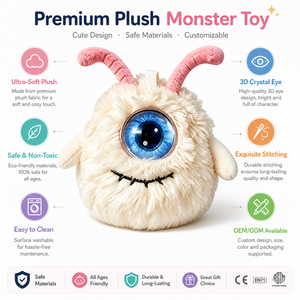
Our Shenzhen R&D center co-develops plush skins, high-impact injection shells, surface-mount PCBs, and kinematic firmware under one cohesive project directorate, eliminating communication bottlenecks.
Shenzhen Component Epicenter
Immediate access to Tier-1 brushless motor winding specialists, silicon molding plants, voice-chip silicon fabs, and battery pack assembly houses translates into 40% shorter prototyping cycles.
Stringent Reliability Validation
Every quadruped batch undergoes 72-hour continuous dyno joint burn-in, acoustic noise chamber tests, drop simulations, ESD electrostatic testing, and environmental temperature stress cycles.
Full Regulatory File Preparation
We provide full lab-ready technical documentation, schematic reviews, Bill of Materials declarations, and battery UN38.3 test summaries to ensure swift customs clearance into North America, the EU, and APAC.
Frequently Asked Questions for RC Robot Dog Buyers & Distributors
Critical answers addressing minimum order quantities (MOQs), firmware customizations, battery logistics, and international toy safety certifications.
What is the standard production lead time and MOQ for custom OEM quadruped dogs?
For existing ODM platforms requiring custom colorways, silk-screen logos, and retail packaging, standard MOQs begin at 500 units with a 30 to 45-day production cycle. For ground-up OEM projects involving custom injection molds and custom PCB motor controller development, tooling lead times range from 45 to 60 days, followed by 30 days for pilot validation and mass assembly.
How do you handle battery shipping regulations (UN38.3, MSDS) for hazardous air and sea freight?
High-capacity lithium battery packs used in robotic quadrupeds are subject to stringent Class 9 dangerous goods regulations. All our battery assemblies are strictly certified to UN38.3, IEC 62133, and CE standards, accompanied by updated MSDS and drop-test transport safety reports for hassle-free sea container or air courier clearance worldwide.
Can our development team customize the onboard kinematics firmware and control software?
Yes. On our enterprise and STEM quadruped platforms, we provide comprehensive C++ and Python SDKs, ROS/ROS2 driver nodes, and RESTful API endpoints. Buyers can deploy custom autonomous behavior trees, vision perception algorithms, or proprietary remote control applications directly onto the robot's onboard compute unit.
What international toy and electrical safety certifications do your robot dogs pass?
Depending on your designated market channel, our products are engineered to comply with European directives EN 71 (Parts 1, 2, 3), EN 62115 (Electric Toy Safety), CE-RED for radio equipment, RoHS, and REACH. For North America, we verify compliance with ASTM F963, CPSIA lead/phthalates restrictions, and FCC Part 15 subpart B/C for RF transmitters.
How do you prevent motor overheating and joint burnout during intensive operation?
Each actuator features an embedded NTC thermistor closely coupled with the stator windings. Our motor driver firmware continuously executes real-time thermal modeling. When safe operational temperatures are approached, current output is smoothly limited through intelligent torque throttling, protecting gearbox and winding integrity without collapsing the robot.
What after-sales spare parts and warranty support are available for B2B importers?
We offer 1% to 2% spare components (such as extra leg linkages, foot rubber dampeners, internal bus wires, and backup servo modules) alongside complete order shipments. Additionally, we provide detailed exploded-view technical repair schematics, video repair tutorials, and dedicated factory engineering support for distributor servicing centers.
Launch Your OEM / ODM Quadruped Robotics Line
Connect directly with our Shenzhen engineering specialists. Whether you require private-label retail companion pets, bionic STEM educational kits, or custom high-torque inspection quadrupeds, our technical sales team will review your specifications, functional objectives, and target pricing within 24 business hours.