100%
Supply Chain Co-Location (Shenzhen)
6+
Integrated Interaction Modalities
< 350ms
Local NLP Edge Wake-Up Latency
Tier-1
ASTM F963 / EN 71 Global Compliance
Precision Engineering Roster
Featured Smart Robotic Platforms & Interactive Modules
Production-ready reference designs configured for rapid OEM branding, modular firmware calibration, and scalable electronic-to-plush industrialization.
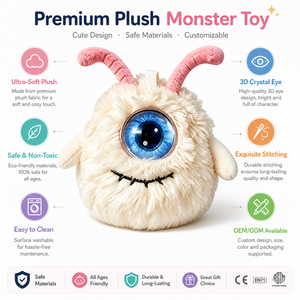
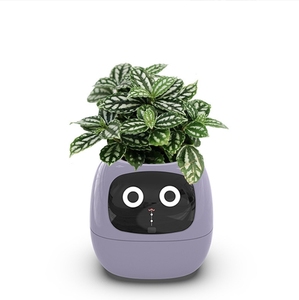
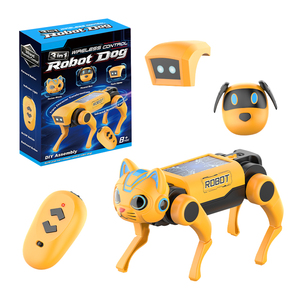
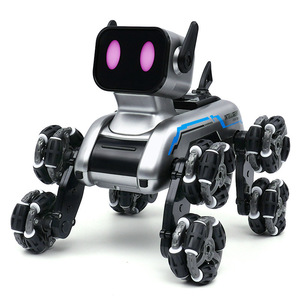
Industrial Procurement Analysis
The Paradigm Shift in Smart Toy Robot Manufacturing & Global Sourcing
The global market for smart toy robots and connected electronic companions has undergone an irreversible transition. Moving far beyond the legacy era of static, pre-recorded sound-chip novelty toys, enterprise retail buyers and direct-to-consumer toy brands are shifting budgets toward autonomous, emotionally responsive, and Large Language Model (LLM)-augmented companions.
In this transformed landscape, identifying qualified "smart toy robot factories" requires assessing engineering depth that reaches far past standard injection molding or simple plush stitching. Modern hardware-software integration mandates deep expertise across hybrid mechanical chassis development, edge computing audio processing, low-power sensor arrays, and multi-protocol encrypted networking. When international sourcing directors evaluate contract manufacturing hubs in Shenzhen and Guangdong, the critical differentiator is no longer merely cost-per-unit; it is the supplier's systemic ability to eliminate failure modes where soft plush construction meets rigid mechatronics.
Edge vs. Cloud Partitioning
Balancing offline deterministic voice commands (sub-100ms) with cloud LLM inference over Wi-Fi without degrading duty cycle or thermal headroom.
Strict Privacy & Data Isolation
Zero-footprint audio processing pipelines satisfying COPPA (US) and GDPR-K (EU), ensuring children’s telemetry is cryptographically isolated.
Mechatronic Durability
Overcoming micro-servo gear shear and motor brush burnout from frequent drop shocks through reinforced POM gears and acoustic dampening.
Integrated Factory Infrastructure
Enterprise Strengths: One Unified Partner for Plush Construction & Embedded Electronics
Operated under the engineering governance of Shenzhen Atp Intelligent Electronics Co., Ltd. (AItoyplays), our production infrastructure directly solves the principal cause of smart-toy manufacturing bottlenecks: the functional disconnect between plush soft-goods sewers and electronics assemblers. Conventional supply chains split responsibility across separate vendors—a plush vendor, a PCB assembly house, and a packaging plant. This fragmentation frequently causes assembly mismatches, including acoustic muffled resonance from ill-positioned speaker chambers, severed internal wire harnesses due to unstrained plush stuffing, and failing drop-test certifications.
| Engineering Core | Legacy Sourcing Bottlenecks | AItoyplays Proprietary Methodology | Direct Buyer Benefit |
|---|---|---|---|
| Mechanical & Plush Integration | Plush outer skin wraps tightly over motors, causing high friction, overheating, and premature motor failure. | Simultaneous CAD modeling of internal rigid "skeletons" (AI Movement Box) alongside digital pattern grading. | Zero motor stall incidents; uniform surface plushness without mechanical bulge. |
| Acoustic Calibration | Speaker diaphragms compressed by internal PP cotton stuffing, resulting in tinny audio and muffled voice output. | Integrated acoustic resonance chambers engineered inside the injection-molded chassis with particulate fabric barriers. | Clear audio output; reliable, high-accuracy keyword wake-up rates even in noisy environments. |
| Wiring Harness Integrity | Hand-soldered point-to-point connections torn loose during high-pressure polyfill stuffing operations. | Pre-routed modular snap-in flex harnesses, sealed sensor junction boxes, and industrial strain relief boots. | Drastic reduction in factory RMA rates and seamless compliance with international pull-force and drop tests. |
| Safety & Thermal Balance | Lithium batteries packed against warm motor drives with inadequate thermal dissipation and lack of shutoff redundancy. | Isolated, fire-retardant battery bays equipped with independent hardware PTC fuses and real-time NTC thermal monitoring. | Fast-track certifications for IEC 62115, UN38.3, and CE electrical toy requirements. |
Forward-Looking Industry Insights
Future Procurement Trends in Smart Toy Robotics (2025–2030)
For retail category managers, private-label distributors, and technology IP licensors, remaining competitive requires predicting technical evolution 18 to 24 months before mass retail deployment. During the 2026-2030 cycle, our engineering roadmap highlights four definitive structural trends reshaping how smart robots are specified, manufactured, and imported:
01. Hybrid Offline/Cloud Edge AI
Integration of ultra-low-power Neural Processing Units (NPUs) running localized tinyML algorithms. Toys execute instant local offline facial recognition, gesture sensing, and voice commands, only utilizing Wi-Fi LLM connectivity for complex conversational dialogues.
02. Multi-Modal Sensory Skins
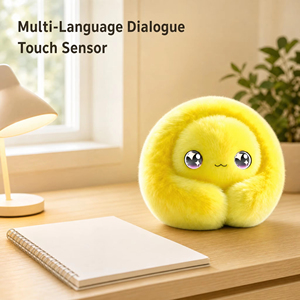
Transition from physical micro-switches to capacitive fabric touch sensors, piezoresistive pressure matrices, and acoustic directional mic arrays woven directly beneath plush skin to simulate organic biological petting reactions.
03. Flexible OLED & Expressive Eyes
Replacing static backlit plastic eyes with custom round AMOLED screens and dynamic micro-expressions. These display lifelike emotional states, pupil dilation, and status indicators synchronized to voice cadence and movement.
04. Modular Sub-Chassis Sourcing
Global brands are increasingly sourcing pre-certified mechatronic platforms ("Movement Boxes") that slip into localized plush skins, reducing regional tariff exposure while compressing SKU development cycles from 9 months down to 8 weeks.
Vendor Due Diligence
Frequently Asked Questions: Smart Toy Robot Sourcing & OEM/ODM Verification
What parameters are mandatory for an actionable OEM/ODM project brief?
To deliver an accurate engineering feasibility review and unit costing within 48 hours, our technical team requires: 3D CAD step files or 2D orthographic concept art, target dimension bounds, bill-of-features (e.g., degree-of-freedom for servo motion, specific sensor types, offline voice vs. Wi-Fi cloud interaction), battery chemistry preferences, target retail price, designated sales territories for compliance scoping, and planned initial order batch volume.
How do you prevent the sound of internal mechanical gearboxes from polluting audio inputs?
We employ a three-tier mitigation strategy: First, we utilize high-precision helical gears molded from self-lubricating POM (polyoxymethylene) with custom silicone dampening boots on motor brackets. Second, microphone capsules are mechanically isolated from the main internal chassis using suspension bushings to minimize structural vibration. Third, our DSP firmware incorporates adaptive spectral noise subtraction to cancel motor noise frequencies from voice streams in real time.
What certifications are required to clear customs in North America and the European Union?
Electric interactive robotic toys require multi-standard certification depending on configuration: In North America: ASTM F963 (mechanical/physical hazards, heavy metals), CPSIA (lead/phthalates), FCC Part 15B/15C (electromagnetic emissions and intentional radiators for RF/Wi-Fi), and battery standards including UL 2054 / UN38.3. In the European Union: EN 71 (Parts 1, 2, 3), IEC 62115 (electric toy safety), RED (Radio Equipment Directive 2014/53/EU for wireless modules), RoHS, and REACH. In-house test routines precede official testing by accredited laboratories (e.g., SGS, TÜV, Intertek).
How does the factory protect client intellectual property and custom firmware?
We safeguard buyer assets through strict contractual NDAs, segmented factory networks, and encrypted flash programming. Custom character molds remain the exclusive proprietary asset of the client and are stored in secured tooling facilities. Microcontroller firmware flash security registers are permanently locked in production, preventing firmware reverse engineering and readout.
What are the standard lead times for prototyping, tooling, and mass production runs?
Typical project schedules follow a structured phase gate: Initial 3D mechanical mock-ups and plush pattern drafts require 10 to 14 business days. Functional rapid-prototypes (incorporating hand-assembled PCBs and functional 3D printed skeletons) are ready in 3 to 4 weeks. Injection mold design and steel tooling (for hard chassis or movement boxes) takes 30 to 45 days. Golden sample approval is followed by pilot mass production runs in 35 to 45 days, depending on component sourcing lead times.
Quality Assurance Framework
End-to-End Factory Inspection & Quality Control Protocol
To safeguard brand reputation and prevent costly import rejections, every smart robot manufactured across our Shenzhen production lines runs through a four-stage quality assurance protocol:
IQC (Incoming Material)
Micro-spectrometer fabric inspection, pull-force fiber loss testing, PCB component solderability confirmation, and battery capacity/internal resistance batch audits.
IPQC (In-Process QC)
Continuous automated torque verification during servo assembly, acoustic spectrum microphone/speaker chamber calibration, and visual optical inspection of PCBA joints.
100% Function Testing
Each unit undergoes a mandatory continuous burn-in test (actuation, LED cycle, and audio loop) followed by RF sensitivity and power-draw verification.
FQC & OQC (Packaging)
Full-package ISTA drop testing, metal detection to eliminate needle or staple hazards in plush bodies, and master-carton burst-strength verification prior to container loading.