Hardware Portfolio
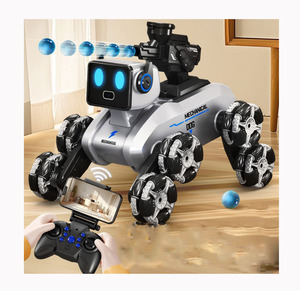
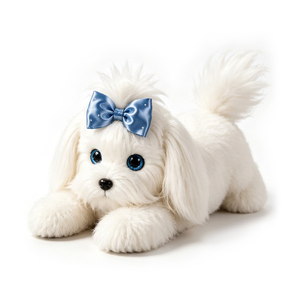
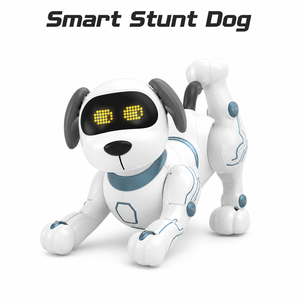
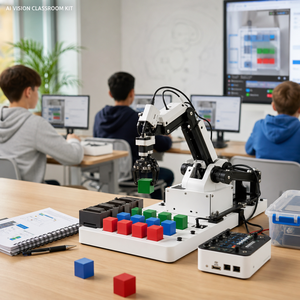
Featured AI Desktop Companions & Interactive Robotics
Tested platforms engineered for rapid OEM customization, branded IP firmware integration, and seamless deployment across Japanese retail, educational, and corporate sectors.
Executive Technical Whitepaper
Engineering Affective Robotics for Tokyo: Strategic Market Architecture
The convergence of Large Language Models (LLMs), edge neural processing units (NPUs), and micro-electromechanical systems (MEMS) has transformed the desktop robotics landscape from rudimentary novelty toys into sophisticated affective computing companions. In the Greater Tokyo Area—encompassing central business districts like Marunouchi and Otemachi, academic centers in Hongo, and high-density residential wards such as Setagaya and Suginami—demand for ambient desktop AI is driven by distinct cultural, demographic, and technological factors that require purpose-built manufacturing precision.
Tokyo represents the world's most sophisticated testbed for emotional hardware companions. With an urban structure characterized by single-person residences (tanshin shotai exceeding 50% in central Tokyo), long working hours, and an aging demographic, the psychological requirement for iyashi (soothing, emotional restorative comfort) has shifted from passive entertainment toward interactive, empathic electronics. However, the Japanese B2B procurement environment maintains zero tolerance for mechanical noise, thermal leakage, acoustic distortion, or conversational latency. As an established original equipment and original design manufacturer (OEM/ODM) based in Shenzhen with dedicated export infrastructure serving Tokyo trading houses (shosha), distributors, and consumer brand owners, we address this intersection with surgical manufacturing rigor.
Core Engineering Thesis: An AI desktop companion destined for the Tokyo market must solve three critical technical paradoxes: achieving high-empathy multimodal LLM voice interaction within sub-500ms conversational latencies, maintaining silent motor and servo mechanics that respect tight Japanese living spaces, and passing stringent Japanese regulatory standards including TELEC radio certifications and PSE safety mandates.
Unlike Western markets where desktop robots frequently emphasize utilitarian task completion or aggressive virtual assistant capabilities, Japanese end-users evaluate companions based on affective nuance: micro-expressions rendered on high-definition OLED/TFT matrices, soft and unobtrusive ambient presence, non-invasive voice wake-up mechanisms, and tactility. Whether housing electronics inside an aerospace-grade polymer shell or integrating custom audio-motion modules inside soft plush materials, successful export to Tokyo demands an integrated supply chain capable of simultaneous mechanical, electronic, firmware, and compliance engineering.
Deployment Paradigms
Localized Application Scenarios Across Greater Tokyo
From corporate workstations in Minato-ku to elderly care centers in Hachioji, our hardware platforms are tailored to specific Japanese operational environments.
Corporate Stress Alleviation in Marunouchi & Shibuya
Desk-bound professionals in high-intensity corporate headquarters require non-disruptive, silent companion hardware. Integrated with POM whisper gears (<32dB operational noise) and subtle micro-expression screens, our companions act as ambient productivity pacing monitors, gentle hydration reminders, and stress-reducing desktop presences that operate discreetly without disturbing open-office etiquette.
Compact Living Companionship in 1K/1DK Tokyo Apartments
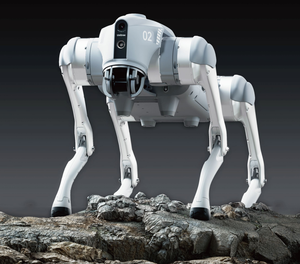
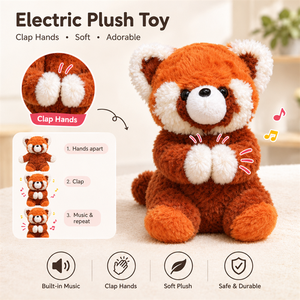
Real estate constraints in urban Tokyo make pet ownership strictly prohibitive in rental covenants. Our bionic quadruped and animated plush companions feature space-efficient 120mm to 220mm footprints, edge-sensor collision avoidance for cluttered desks, and soft tactile materials that deliver genuine emotional companionship without violating residential noise or pet regulations.
Silver Generation Monitoring & Day-Care Facilities
Serving suburban nursing homes and solitary seniors across western Tokyo, our custom plush AI dogs and dialogue units provide cognitive stimulation, medication reminders, and natural conversational exchange in polite Japanese (Keigo), while non-intrusive edge telemetry signals activity patterns to designated family caregivers without camera surveillance vulnerabilities.
Bilingual STEM & GIGA School Educational Programs
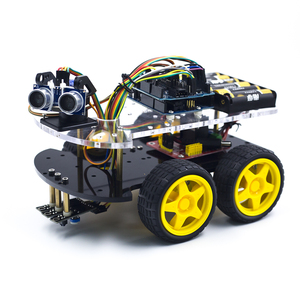
In accordance with MEXT programming literacy initiatives across Tokyo metropolitan primary and secondary schools, our Arduino-compatible STEM robot starter kits and 4-axis AI vision robot arms deliver hands-on mechatronic and machine vision education, bridging visual scratch programming with real-time C++ embedded control.
Character Licensing, IP & Akihabara Otaku Culture
Tokyo is the global capital of character merchandising. We collaborate directly with Japanese media rights holders, anime studios, and VTuber agencies to convert static intellectual properties into expressive physical AI desktop figurines, combining bespoke resin molding with custom synthetic voice models trained on original voice actress datasets.
Technological Evolution
Tokyo Market Engineering Trends: Edge Intelligence & Acoustic Optimization
Procurement teams from major consumer electronics brands in Akihabara and lifestyle chains like Tokyu Hands, Loft, and Yodobashi Camera are recalibrating their hardware criteria. Five overarching engineering trends define the current Tokyo procurement landscape:
1. Hybrid Edge-Cloud AI with Local Wake-Word Synthesis
Data privacy concerns governed by Japan's Act on the Protection of Personal Information (APPI) make constant cloud streaming of bedroom or private office audio untenable for Japanese consumers. Our modern architecture utilizes on-device quantized neural network inference for real-time Japanese wake-word detection ("Moshi-moshi", character name recognition) and acoustic emotion parsing, offloading complex context modeling to secure cloud instances via encrypted TLS 1.3 only when prompted.
2. Low-Noise High-Torque Coreless Micro-Servos
In high-density apartment complexes with paper-thin partition walls (common in older Tokyo apartments), gear backlash and high-frequency servo whine are primary causes of consumer returns. By incorporating custom coreless motors with planetary sintered copper gearing and damping silicone dampeners, our robotic joints achieve silky dynamic transitions under 30 decibels at 30cm measurement distances.
3. Far-Field Microphone Arrays with Beamforming for Japanese Phonemes
Standard microphone modules optimized for English consonants frequently clip or drop soft Japanese vowel transitions, silent pauses (ma), and soft-spoken honorific sentence endings (desu, masu). Our desktop companion audio assemblies feature dual digital MEMS microphones with specialized hardware DSP noise reduction, tailored to detect 60dB conversational speech from up to 3 meters within typical reflective apartment interiors.
4. Haptic Thermal & Breathing Feedback Mechanisms
Beyond visual screens and speakers, Tokyo buyers increasingly request multi-sensory emotional grounding. Through compact eccentrically rotating mass (ERM) motors, linear resonant actuators (LRAs), and controlled ceramic heating pads, our companions can simulate rhythmic respiration cycles and biological warmth (36.5°C to 38°C), substantially elevating perceived empathic connection.
Architecture Comparison for Tokyo B2B Sourcing Channels
| Platform Category | Processor & Memory | Degrees of Freedom (DoF) | Acoustic & Display Array | Power Architecture | Ideal Tokyo Channel |
|---|---|---|---|---|---|
| AI Voice Plush Companion | Dual-core 32-bit MCU + 16MB SPI Flash | 1–2 DoF (Head nod, tail tilt) | Single 40mm Mylar Speaker + 1x MEMS Mic | USB-C Li-ion (PSE Marked, 1800mAh) | Lifestyle Gift Retail, Nursing Care |
| Bionic Quadruped Robot | Quad-core ARM Cortex-A53 + Edge NPU | 12 DoF (Ultra-compact coreless servos) | Dual MEMS Array + 3D ToF Vision Sensor | High-drain 21700 Pack (TELEC/PSE) | Tech Startups, University Labs, STEM |
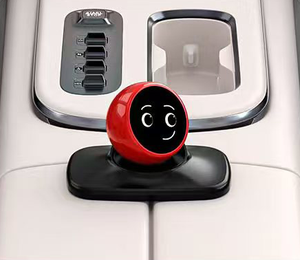
| AI Figurine Desktop Unit | ARM Cortex-M4 + Audio Codec DSP | 3 DoF (Pan, tilt, orbital lean) | 1.28-inch Round IPS/OLED + Ring LED | USB 5V Continuous / 1200mAh Backup | Anime/IP Merchandising, Corporate Desk |
| 4-Axis STEM Robot Arm | ATmega2560 / ESP32 Wireless Gateway | 4 DoF + Vacuum End-Effector | Color Vision Sensor + Ultrasonic | DC 12V 5A External Brick (PSE Certified) | GIGA Schools, Vocational Colleges |
Manufacturing Pedigree
Why Tokyo Importers Partner with Shenzhen Atp Intelligent Electronics
Bridging Shenzhen's hardware agile development velocity with Japan's unforgiving standards of precision, aesthetic finish, and regulatory adherence.
Plush & Mechatronic Co-Engineering
Most electronic toy projects break down where soft textiles meet internal rigid chassis. Operating our own injection tooling, SMT assembly lines, and precision sewing facilities under one roof, we eliminate muffled speakers, unsightly wire bulging, and heat entrapment at the conceptual design phase.
TELEC & PSE Certification Mastery
We handle end-to-end certification under Japan’s Radio Act (TELEC / Giteki Mark) and Electrical Appliance and Material Safety Act (PSE circle and diamond marks). Our engineers collaborate with accredited test houses (VCCI, JET, TÜV Rheinland) so your products clear Tokyo customs without delays.
Dedicated Japanese Voice & LLM Tuning
Our firmware teams deploy localized Japanese acoustic datasets, low-latency neural text-to-speech (TTS) engines, and customized honorific conversational logic that reflect natural Japanese speaking cadences, ensuring emotional resonance across diverse consumer demographics.
Strict Japanese AQL 0.4 Inspection
We operate dedicated cleanroom assembly and optical inspection lines adhering to Japanese AQL 0.4 minor / 1.0 major quality guidelines. Every desktop companion undergoes 100% mechanical endurance, 72-hour burn-in, acoustic harmonic distortion, and drop testing before packing.
Flexible MOQ & Agile Prototyping
Support from functional 3D mockups and soft-plush patterning within 7 to 10 working days, scaling up to private label production batches from 500 units to multi-container mass production for nationwide Japanese retail promotions.
Direct Port-to-Port DDP Tokyo Logistics
Complete export handling with comprehensive Incoterms support (FOB Shenzhen, CIF Tokyo, DDP Tokyo/Yokohama). We coordinate Japanese customs documentation, consumption tax (JCT) processing, and palletized distribution straight to your domestic logistics hub.
Buyer Due Diligence
Frequently Asked Questions by Japanese Procurement Teams
Clear, definitive technical answers addressing regulatory compliance, firmware localization, intellectual property protection, and logistics.
Q1: How do you manage TELEC (Giteki) certification for wireless robots?
All our wireless desktop companions integrating Wi-Fi (2.4GHz/5GHz) and Bluetooth (BLE 5.0–5.3) are engineered using RF modules pre-certified or custom-tested under the Japanese Radio Act (Article 38-24). We handle all technical documentation, test reports from accredited laboratories, and laser-etch or mold the Giteki mark directly onto the device housing and packaging.
Q2: What battery safety certifications (PSE) accompany your shipments to Tokyo?
For battery-powered companions, we incorporate lithium-ion or lithium-polymer cells that have passed METI Ordinance requirements, including overcharge, thermal runaway, and drop tests. We deliver circular PSE certification documentation for integrated power systems and diamond PSE certified AC wall adapters, ensuring frictionless customs clearance at Tokyo and Yokohama ports.
Q3: Can you customize Japanese voice models and Keigo conversational tones?
Yes. Our firmware architecture supports localized Japanese LLMs (such as customized Llama, Claude, or proprietary Japanese-trained models) combined with specialized TTS engines. We fine-tune character personalities to adhere to appropriate levels of politeness (Teineigo, Sonkeigo, or casual character dialects) based on your target demographic.
Q4: How does your factory protect intellectual property for custom character designs?
We routinely manufacture licensed anime figurines and proprietary corporate mascots for Japanese brands. We execute comprehensive Non-Disclosure Agreements (NDAs), store custom injection molds in secure mold rooms, restrict production line access, and guarantee exclusive ownership of all buyer-commissioned tooling and firmware algorithms.
Q5: What are typical turnaround times for custom sampling and mass manufacturing?
For standard platform private labeling, appearance and packaging samples require 7 to 12 days. Full custom ODM developments (bespoke chassis, electronics PCB design, custom plush sewing) take approximately 25 to 35 days to golden sample approval. Mass manufacturing cycles range between 30 to 45 days depending on order volume and component lead times.
Q6: Do you support small trial batches for Tokyo concept validation?
Yes. We understand the prudent nature of Japanese retail testing. We accommodate initial pilot production batches (often 500 to 1,000 units) to allow brands to conduct pop-up validations in Shibuya, Akihabara, or crowdfunding campaigns on Makuake and Campfire before initiating full-scale manufacturing runs.
Ready to Engineer Your AI Desktop Companion for the Tokyo Market?
Consult directly with our bilingual Shenzhen-Tokyo engineering team. Share your CAD designs, functional specifications, target unit economics, or compliance requirements to receive a comprehensive DDP quotation and technical feasibility assessment.