Engineered AI Educational Platforms for Moscow Distributors
Direct-from-factory intelligent educational hardware platforms, available with modular firmware flashed for bilingual Russian-English deployment, SDK access, and custom industrial designs.
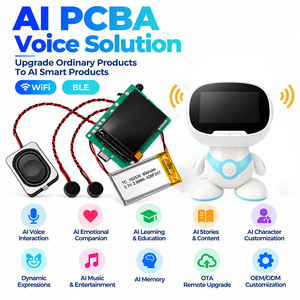
AISK AI Development Board for Educational Robot With AI Model Voice Interaction Screen Display
View Engineering Specs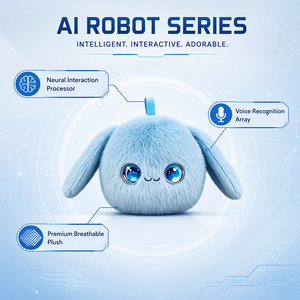
Multilingual AI Language Tutor Plush Cotton Immersion Talking Robot Mandarin-English-Russian
View Engineering Specs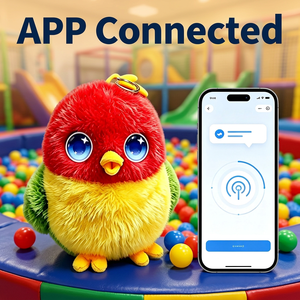
Interactive Desktop AI Device with Emotional Companionship and Multilingual Dialogue Children Gift Box
View Engineering Specs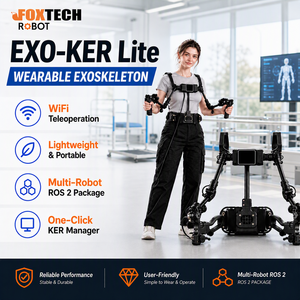
EXO-KER Lite 16 Channel Motion Capture ROS2 Imitation Learning Wearable Exoskeleton Teleoperation
View Engineering Specs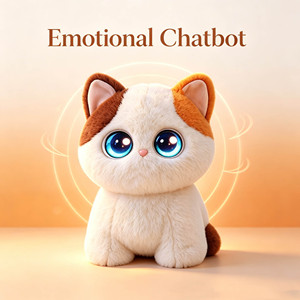
2026 Custom Educational Robot AI Companion Toy 2.4G WiFi 24/7 Voice Assistant LCD Screen OEM/ODM
View Engineering Specs
Intelligent Voice Command Action Plush Doll Pet Dog Toy Voice Interactive Talking Puppy Companion
View Engineering Specs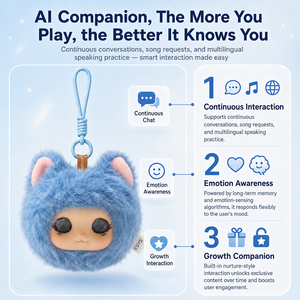
Custom Interactive Robot Smart Talking Stuffed AI Plush Toy Multi Expressions for Kids Daily Study
View Engineering Specs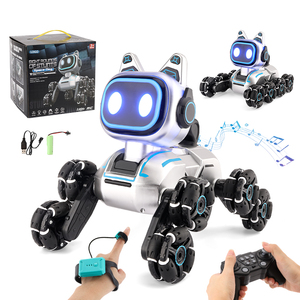
Eight Wheeled Intelligent Remote Control Pets Gesture Sensing Double Control Mini RC Robot Dog
View Engineering Specs1. The Strategic Shift in Moscow’s EdTech & Robotic Automation Market
The Moscow metropolitan educational district, alongside regional innovation clusters such as Skolkovo and the Innopolis engineering ecosystem, is undergoing a profound structural pivot. In previous procurement cycles, institutional and commercial distributors across the Russian Federation were largely dependent on European and North American turnkey educational robotics kits. However, supply chain reorientations, sovereign technology directives, and systemic modernization initiatives have propelled a surge in demand for factory-direct hardware partnerships centered around Shenzhen’s core electronics and electromechanical clusters.
Procurement officers for municipal educational pilot projects, retail chains such as Detsky Mir and M.video-Eldorado, and specialized private academies are no longer seeking basic static electronics. The operational focus has shifted to adaptive AI tutors equipped with edge Natural Language Processing (NLP), low-latency wake-word recognition tuned for Slavic phonetics, and robust robotic platforms supporting modular development boards (ROS2, ESP32, Linux-based neural network accelerators). Sourcing directly from an original design manufacturer (ODM) with fully integrated electronics assembly and soft goods production eliminates costly multi-tier distributor markups while ensuring direct control over intellectual property and hardware modifications.
2. Localized Moscow Applications: Institutional, Commercial, and STEM Deployments
To succeed within the Moscow market, AI robotics hardware must address concrete linguistic, climatic, and pedagogical challenges. Our manufacturing operations configure products for four precise application verticals:
K-12 & Preschool ESL Immersion
With increasing demand for polyglot education (Mandarin Chinese and English immersion alongside native Russian), our companion plush and desktop robots feature custom dual-engine phoneme recognition, enabling real-time dialogue corrections without cloud dependencies.
Technical Lyceums & Quantoriums
Advanced educational robotics centers leverage our open development boards (AISK Series) and kinematic imitation teleoperation systems (EXO-KER Lite) to teach Python, C++, ROS2 node mapping, and machine vision pipeline integration to secondary and collegiate students.
Neurodevelopmental Therapy
Applied in specialized pediatric clinics across Moscow and St. Petersburg. Tactile, soft-constructed intelligent companions provide interactive emotional response protocols, mechanical breathing pulses, and bio-sensory feedback to support children on the autism spectrum.
Omnichannel Smart Retail
Supplying top Russian e-commerce portals (Wildberries, Ozon, Yandex Market) with private-label AI companions. Features include high shelf-appeal packaging, multi-expression LCD/AMOLED screens, and customized firmware localized for Cyrillic companion mobile apps.
3. Architectural Analysis: Edge-AI vs. Cloud-Connected Architecture for the Eurasian Economic Union (EAEU)
Deploying connected smart toys and robotic platforms in the Russian market requires navigating precise connectivity constraints and data governance regulations (Federal Law No. 152-FZ on Personal Data). As a direct manufacturer, Shenzhen Atp Intelligent Electronics Co., Ltd. configures two discrete engineering topologies to match institutional security and consumer retail expectations:
| Architecture Vector | Offline Edge-AI Architecture | Hybrid Cloud-Tethered Architecture | Institutional ROS2 / Open SDK System |
|---|---|---|---|
| Primary Processing Engine | Dedicated Neural Network SoC with onboard NPU (0.5–2.0 TOPS) | Dual-Core MCU / Wi-Fi 2.4GHz with secure cloud endpoints | Multi-channel ARM Cortex with ROS2 middleware bridges |
| Cyrillic NLP Latency | <120 ms (Local keyword spotting & speech synthesis) | 400–850 ms (Subject to regional server routing) | Deterministic / Microsecond kinematics execution |
| Regulatory Risk Profile (152-FZ) | Zero external data transmission; 100% compliant by default | Requires localized Russian data relay or host server compliance | Open-source local sandboxing; zero telemetry egress |
| Targeted Deployment Scenario | Preschool classrooms, remote regions, military-adjacent schools | Urban connected households, conversational consumer plush | Technical universities, Quantoriums, commercial robotics labs |
| Hardware Bill of Materials (BOM) | Higher initial chip cost; zero recurring cloud infrastructure fees | Economical BOM; operational subscription costs apply | Modular industrial actuators, high-density sensor arrays |
4. Emerging Macro Trends in the Moscow Educational Robotics Market
Supply Chain Consolidation to Shenzhen
Moscow procurement houses are bypassing intermediate European trade brokers to contract directly with tier-1 factories. This direct-to-plant protocol delivers a 35% to 50% unit cost optimization, allowing importers to absorb logistical fluctuations while maintaining aggressive retail price points across Central Russia.
Hardware Convergence: Soft Goods & High Tech
The traditional boundary between rigid plastics and plush toys has dissolved. The fastest-growing market category in Moscow shopping malls is the "Emotional Smart Companion"—an organic marriage of hypoallergenic short-pile fabric, silicone expressiveness, and embedded mechanical skeletal servos driven by localized voice AI.
Aggressive Compliance Normalization
Customs enforcement under the Technical Regulations of the Customs Union (TR CU 008/2011 "On the safety of toys" and TR CU 020/2011 "Electromagnetic compatibility") is stringent. Importers now demand verified factory-level acoustic attenuation, non-toxic PCB coatings, and battery cell drop certifications prior to ex-works dispatch.
5. Factory Engineering Advantage: Shenzhen Atp Intelligent Electronics Co., Ltd.
Operating under the global B2B manufacturing banner AItoyplays, Shenzhen Atp Intelligent Electronics Co., Ltd. solves the engineering friction that typically disrupts smart educational robotics projects. Most contract manufacturing initiatives break down at the complex boundary where structural soft goods intersect with precision electromechanical assemblies: speaker audio becomes muffled within polyester fiberfill, motor gear noise disrupts directional microphone pick-up arrays, and battery compartments fail child-safety drop testing.
Dual Core Infrastructure
Our Shenzhen facility houses clean-room SMT production lines alongside advanced computer-guided ultrasonic textile cutting and precision stitching workshops. Both systems are developed under a unified CAD/CAM workflow.
Acoustic & Kinetic Co-Design
We isolate motor resonance using multi-point elastomer dampeners and engineer acoustic chambers with resonance tuners, ensuring crystal-clear Cyrillic speech intelligibility even under high-torque servo movement.
Turnkey Modular SDKs
From drop-in "AI Movement Boxes" to complete multi-channel ROS2 wearable exoskeletons, our platforms are engineered for rapid firmware adaptation, flashing custom Russian LLMs or institutional curriculum software with ease.
Certified Quality & Traceability
Our manufacturing processes comply with ISO9001, ICTI Ethical Toy Program standards, and international safety frameworks including EN 71, ASTM F963, and the documentation benchmarks required for EAC marking validation.
6. Moscow Buyer & Distributor FAQ (Technical & Sourcing Specifications)
Key engineering, regulatory, and logistics questions answered for B2B procurement managers, technical directors, and importers operating within the Russian Federation.
Initiate Your Custom AI Educational Robotics Project
Connect directly with our senior electronics and electromechanical engineering teams in Shenzhen. Request hardware samples, technical datasheets, Russian localization specifications, or comprehensive volume manufacturing quotes.
Send an Inquiry