AI Toy Trends 2025: Supplier & Exporter Serving the United States Market
A B2B Strategic Blueprint on Next-Gen Generative LLM Integration, Embedded Sensory Robotics, and CPSIA/COPPA-Compliant Toy Manufacturing for North American Importers and Enterprise Toy Brands.
32.4%
Projected US AI Toy CAGR (2024–2030)
< 180ms
Target Voice Latency Benchmark
100%
FCC / CPSIA / COPPA Alignment
Shenzhen
Turnkey Hardware & Module R&D Hub
Product Architecture
Advanced Interactive Hardware & AI Robotic Solutions
Engineered for seamless US retail, institutional STEM, and digital-physical companion distribution.
Executive Intelligence
The 2025 AI Toy Ecosystem: Transforming North American Play & Learning
Moving beyond hardcoded dialogue trees into multimodal Large Language Models (LLMs), edge AI inference, and embodied emotional intelligence.
Generative Voice AI vs. Legacy Sound Modules
Prior generation interactive toys relied on static masked ROM sound microcontrollers triggered by binary switches. In 2025, American consumers demand dynamic contextual dialogue. Our current-generation voice AI architectures integrate dual-microphone beamforming arrays, edge-processed Automatic Speech Recognition (ASR), and low-latency cloud inference through OpenAI, Claude, or custom closed-domain LLM platforms. This allows toys to remember past conversations, personalize bedtime stories, and adjust developmental scaffolding in real time.
Embodied AI & Spatial Multi-Modal Sensing
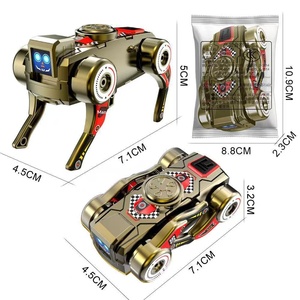
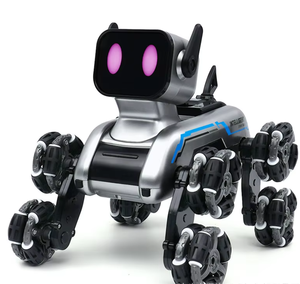
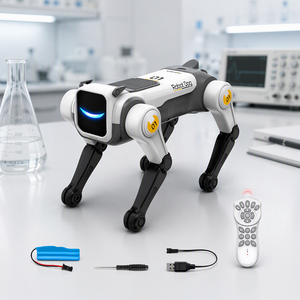
AI in toys has migrated from passive screen interaction to physical manifestation. Using low-power time-of-flight (ToF) distance sensors, capacitive touch arrays beneath fabric skins, and computer vision micro-cameras, 2025 robotic toys observe and react to user affect and room geometry. From robotic quadruped stunt balance mechanisms to desktop electronic pets tracking light and sound variations, physical toys are becoming dynamic robotic entities.
Edge AI & Zero-Trust Data Architecture
Consumer privacy is the primary gating factor for AI toys entering the US market. The 2025 export standard centers on hybrid processing architectures: running wake-word activation and sentiment heuristic filters locally on ultra-low-power microcontrollers (e.g., ESP32-S3 or ARM Cortex-M55), while transmitting encrypted, anonymized audio payloads via TLS 1.3 only when explicit permission is granted. This operational isolation mitigates cloud eavesdropping concerns completely.
Application Engineering
Localized US Market Use Cases & Deployment Channels
Aligning hardware capabilities with distinct retail, clinical, and pedagogical consumer tiers across North America.
1. K-12 STEM & Next Generation Science Standards (NGSS)
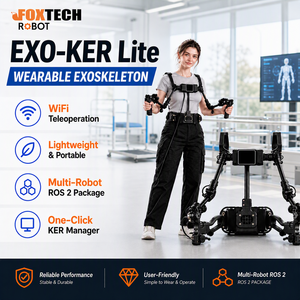
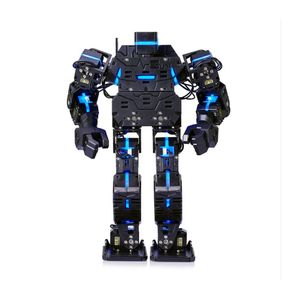
In US public and private school systems, programmable biped robotics and ROS2 imitation learning units bridge mechanical assembly with software literacy. By providing Python, C++, and visual block coding APIs, educational distributors fulfill NGSS engineering design criteria, transitioning students from introductory tactile coding to institutional data-collection workflows.
2. Pediatric Therapy, Sensory Regulation & SEL
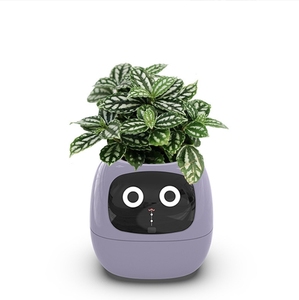
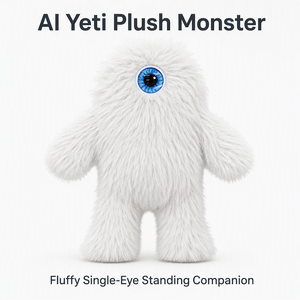
Social-Emotional Learning (SEL) is one of the fastest growing categories in American specialty toy retail. Voice-enabled plush companions and biological feedback planters are integrated into sensory calm-down corners and clinical occupational therapy setups. Soft, haptic-responsive mechanical breathing mechanisms simulate physiological respiration, measurably lowering childhood anxiety spikes.
3. Kidult Tech & Ambient Desktop Companion Culture
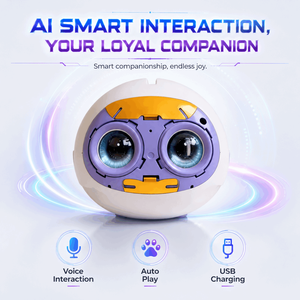
The "Kidult" demographic accounts for more than $9 billion in annual US toy spending. Self-regulating smart planters with emotive eye expressions, transforming mechanical desk spinners, and autonomous spherical desktop pets cater to young professionals seeking ambient companionship, gamified work breaks, and aesthetic digital-physical crossover desktop decor.
The Shenzhen Atp Intelligent Electronics Advantage: Closing the Hardware-Soft Goods Divide
The failure rate in AI toy manufacturing stems directly from organizational fragmentation: standard plush factories fail to comprehend electromagnetic interference (EMI), acoustic chamber resonances, and LiPo thermal dissipation, while traditional electronics assemblers lack pattern sewing precision and child-safe tensile reinforcement. AItoyplays operates as a unified engineering powerhouse in Shenzhen, integrating fabric structural engineering, injection molding, custom PCBA layout, and embedded firmware authoring under a single ISO9001-certified operational umbrella.
Acoustic & Ergonomic Optimization
Sound distortion is the hallmark of subpar smart plush. We design internal speaker enclosures with acoustic frequency ports that project clearly through dense polyester stuffing and high-pile faux fur without requiring unsightly chassis perforations, maintaining a natural plush aesthetic.
Drop-In AI Movement Modular Box
Looking to upgrade an existing top-selling plush character into an interactive smart toy without overhauling existing patterns? Our modular "Movement Box" units incorporate pre-certified battery sleds, mechanical linkages, sound processing, and sensors into a turnkey drop-in core.
Full US Regulatory Compliance Pipeline
We work directly alongside accredited testing bodies (SGS, Intertek, TÜV Rheinland) to formulate production lines that satisfy ASTM F963-23 mechanical safety, CPSIA lead and phthalate restrictions, FCC Part 15 subpart B/C wireless operation, and California Proposition 65 thresholds.
Sourcing Intelligence
Frequently Asked Questions: US Procurement & Compliance
Critical engineering, regulatory, and supply chain insights for wholesale procurement directors and private label brands.
How do you ensure AI voice toys comply with US COPPA regulations?
Our connected electronic architectures are engineered with Privacy-by-Design. Microphones require physical activation (press-to-talk or switch engagement) or explicit opt-in. Audio streams processed via cloud APIs are scrubbed of personally identifiable information (PII), encrypted via TLS 1.3, never retained for model retraining, and comply with the Children's Online Privacy Protection Rule (COPPA) as verified by third-party US legal audits.
What mandatory certifications apply before clearing US Customs (CBP)?
All consumer toys destined for the United States require a Children's Product Certificate (CPC) supported by test reports from a CPSC-accepted accredited laboratory. Key testing parameters include ASTM F963 (flammability, sharp edges, small parts torque/tension tests, heavy metal migration), CPSIA lead substrates, and FCC Part 15 certification for radio frequency emissions (Bluetooth/Wi-Fi).
What is the minimum viable lead time for custom OEM prototyping?
From initial design sketches or STP CAD files, functional electronic samples and sewn plush prototypes are typically delivered within 15 to 25 business days. Mass tooling for plastic enclosures requires 30 to 35 days, with pilot production runs (PPAP) and final safety testing completed in parallel to optimize commercial go-to-market timetables.
Can we specify custom LLM personalities, wake-words, and cloud backends?
Yes. Our ODM firmware platforms support cloud-agnostic integration. We can point endpoint hardware to proprietary cloud endpoints, configure custom wake-word engines (running localized DSP neural nets), and establish strict safety guardrails that constrain conversational domains suitable for designated age categories.