Advanced App-Controlled Robotics & AI Interactive Systems
From micro-servo bipedal kinematics and 4-axis AI vision arms to large-language-model companion toys, explore high-precision hardware designed for immediate B2B deployment across Nagoya and international markets.

AI Smart Robot Plush Toy - 30cm Height Polyester Material Conversation Chat Features

DeepSeek AI Desktop Robot - 37 Languages Multilingual Voice Companion

AI Smart Dog Interactive Toy Smart Robot Pet Toy with Voice Chat & Storytelling
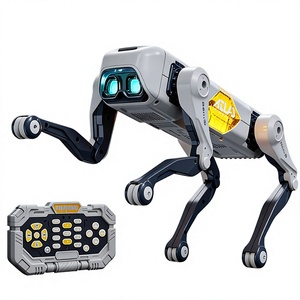
Children's Intelligent AI Mechanical Dog Voice-Controlled Programmable Simulated Toy
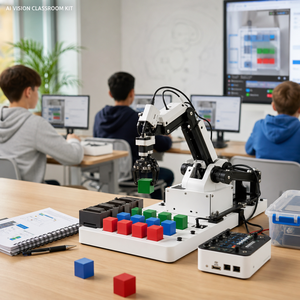
4 Axis Educational Robot Arm Kit AI Vision Suction Cup for School STEM
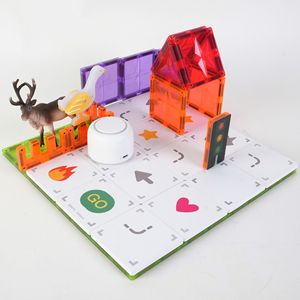
MNTL Interactive Coding Robot Toy for Kids Aged 3-5 Early Programming
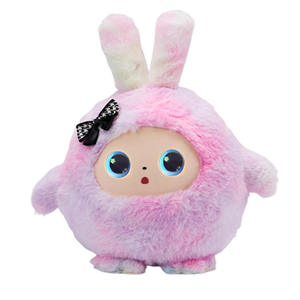
AI Interactive Plush Rabbit Doll Multilingual Smart Robot Educational Toy
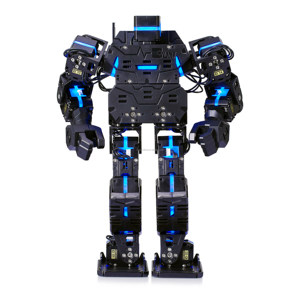
My Robot Time AI Vision Humanoid Biped Robot Learning Teaching Kit
Bridging Shenzhen's Electronic Velocity with Nagoya's Robotic Engineering Rigor
The Greater Nagoya Area, anchoring Aichi Prefecture, represents Japan’s unrivaled capital of precision manufacturing, automation, and industrial robotics. Known historically as the birthplace of Japan’s Monozukuri spirit, companies operating across the Chubu region demand uncompromising engineering tolerances, absolute RF stability, and meticulous life-cycle management. When Nagoya-based consumer electronics distributors, commercial enterprises, and educational institutions seek a trusted OEM/ODM manufacturer for app-controlled robots, they require far more than basic assembly. They require a partner that integrates Shenzhen’s fast-iteration hardware agility with Japan’s strict standards for quality, safety, and cloud-to-hardware reliability.
Shenzhen Atp Intelligent Electronics Co., Ltd. (operating the AItoyplays B2B manufacturing division) operates at this exact convergence. Our facilities in Shenzhen, China, maintain dedicated SMT production lines, high-precision cleanrooms, and automated acoustic-kinetic testing stations. By controlling every layer of the value chain—from bare printed circuit board assembly (PCBA) and microcontroller firmware development to high-torque micro-servo motor calibration and iOS/Android BLE/Wi-Fi application SDK customization—we provide Japanese trading firms, IP owners, and school procurement committees with high-yielding manufacturing pipelines directly accessible from Nagoya via rapid logistics pathways through Centrair International Airport (NGO) and the Port of Nagoya.
Unlike conventional contract assemblers that outsource sub-modules, our unified electromechanical approach resolves the notorious "interface penalty" between software latency, wireless interference, and mechanical gear wear. We guarantee full conformity with Japan’s Ministry of Internal Affairs and Communications (MIC) TELEC/Giteki certification and Electrical Appliance and Material Safety Law (PSE mark).
Modern app-controlled robotics has evolved past simplistic infrared remotes. High-tier consumers and institutional clients across Nagoya—from STEM after-school academies in Sakae and Meieki to care rehabilitation facilities in Toyohashi and Kasugai—now expect autonomous SLAM navigation, real-time edge speech recognition, generative AI dialogue, and buttery-smooth 60fps mobile application interfaces. Meeting these demands requires deep mastery over mechanical gearing ratios, low-energy Bluetooth protocols (BLE 5.2/5.3), and hardened firmware security.
Tailored Application Scenarios Across the Greater Nagoya Ecosystem
Our OEM/ODM app-controlled robotic hardware is customized to address the distinct industrial, educational, and demographic landscapes of Central Japan.
Nagoya STEM & K-12 Robotics Academies
Aichi Prefecture has spearheaded the integration of robotics into public and private elementary education. Our 4-axis AI vision arms and programmable bipedal kits feature custom Scratch/Blockly and Python SDKs designed for Japanese classrooms, empowering students to program physical servos directly from school iPads via intuitive BLE controls.
Chubu Senior Emotional Care & Therapy
Addressing the super-aging demographic in Central Japan, our bio-mimetic plush robotic companions and intelligent mechanical dogs provide therapeutic touch and low-decibel movement. Equipped with companion mobile apps for caregivers, these units track emotional engagement levels while providing Japanese-language conversation and dementia-support prompting.
Nagoya Retail, Anime & IP Merchandising
Nagoya's vibrant Otaku retail sectors in Osu and specialized gaming flagship outlets rely heavily on innovative character merchandise. We convert static character IPs into highly articulated, app-interactive smart plush toys and desktop robots with synchronized LED emotive eye screens, custom sound bites, and animated choreographies.
Strategic Development Trends: What Nagoya Robotics Importers Must Anticipate
The Japanese connected toy and consumer robotics market is experiencing a profound paradigm shift. Simple RC (radio-controlled) toys governed by basic 2.4GHz remotes are being rapidly phased out by the market in favor of smartphones and tablet-integrated systems that provide continuous cloud firmware upgrades (OTA), deep telemetry, and expandable software content. Japanese procurement directors should focus on four macro shifts when planning product pipelines:
1. Generative AI Voice Integration
Consumers expect conversational agility. Integrating localized Large Language Model (LLM) APIs allows desktop robots to converse naturally in Japanese, adopting polite honorifics (Keigo) or regional Nagoya dialects (Nagoya-ben) for high emotional resonance.
2. Hybrid Cloud & Offline Logic
Given privacy concerns under Japan's APPI (Act on the Protection of Personal Information), children's toys must process core wake words and motor kinematics locally on-device, only accessing secure cloud servers for deep dialogue computation.
3. Silent Mechatronics
Japanese consumer aesthetics prioritize silent, seamless motion. Cheap motor whining destroys the illusion of life. Our custom gearboxes utilize POM self-lubricating synthetic gears and damped stepper motors that keep operational sound below 32 decibels.
4. Screenless Physical Programming
To balance early learning with parental desire to reduce screen time, app-controlled robots are increasingly commanded via hybrid interfaces: physical RFID tiles, paper-grid coding mats, and optical color tracking with the app acting only as a parent dashboard.
Technical Benchmark: Standard Market Modules vs. AItoyplays Japanese Export Grade
Review the comprehensive architectural breakdown that distinguishes our export-ready app-controlled robotics from general domestic consumer grade hardware.
| Hardware / Firmware Dimension | Conventional Toy Wholesaler Grade | AItoyplays Japan-Export Grade (Nagoya Standards) | B2B Buyer Impact |
|---|---|---|---|
| Wireless Protocol & Latency | Generic Bluetooth 4.0 (Latency > 85ms, dropping connection) | Nordic Semi / Realtek BLE 5.2 Dual-Mode (< 15ms latency, frequency hopping) | Zero input lag during real-time smartphone joystick controls; robust in dense 2.4GHz zones. |
| RF Compliance & Certification | Basic CE/FCC only; lacks Japanese carrier compatibility | Full TELEC / Giteki MIC certified RF layouts with pre-tuned ceramic antennas | Immediate customs clearance in Nagoya Port; zero legal liability under Japan Radio Act. |
| Battery Safety & Protection | Standard Li-ion cells without secondary PTC/NTC protection | Grade-A Lithium Cobalt Oxide cells, dual NTC thermal sensors, PSE Certified circuits | Complies with Japanese fire prevention standards; prevents thermal runaway during charging. |
| Acoustic Processing | Single microphone, mono speaker without sound cavity | MEMS dual-microphone array with noise cancellation, tuned Helmholtz acoustic chamber | Crystal-clear Japanese speech recognition even in noisy classroom or living environments. |
| Motor & Gearbox Reliability | High-friction iron core motors; standard ABS injection gears | Coreless precision servos, POM synthetic self-lubricating gears, metallic output shafts | 5,000+ hour operating MTBF; eliminates stripped gears when toddlers manually force joints. |
| Mobile App Ecosystem | Generic white-label app with unlocalized English/Chinese UI | Turnkey iOS/Android apps localized into Japanese, private AWS Japan server setup | Superior Google Play Japan and Apple App Store ratings; enterprise-level user data protection. |
Why Nagoya Corporations Partner with Shenzhen Atp Intelligent Electronics
Selecting an overseas manufacturing partner requires verified competencies across industrial design, toolmaking, firmware engineering, and regulatory testing. At Shenzhen Atp Intelligent Electronics Co., Ltd., we have spent years refining our turnkey DFM (Design for Manufacturability) processes specifically for the Japanese B2B ecosystem.
Integrated Soft-Structure & Electronic Tooling
We solve the classic defect where rigid electronic movement boxes cause unsightly seams, muffled speakers, or strained seams in plush or hard-shell robotic exteriors. Our mechanical engineers design custom structural chassis with integrated dampeners and concealed battery hatches.
End-to-End Japanese Compliance Verification
We do not treat safety testing as an afterthought. Our development cycles integrate strict testing protocols against the Japan Toy Safety Standard (ST Mark - ST-2016 / ISO 8124), IEC 62115 for electrical safety, RoHS Japan, and radio wave law regulations from the initial rapid prototype phase.
Full Software & Firmware IP Protection
Japanese corporate buyers frequently commission custom behaviors, proprietary audio sets, and branded mobile app controllers. We sign robust bilingual Non-Disclosure Agreements (NDAs), store codebases in segregated private repositories, and assist in provisioning private Japanese AWS/Azure endpoints.
Frequently Asked Questions from Nagoya Importers & Enterprise Buyers
Comprehensive answers addressing regulatory compliance, custom app development, sampling schedules, and logistics channels into Central Japan.
How do you handle TELEC (Giteki) certification for app-controlled robots imported into Japan?
Every connected robot operating via Bluetooth or Wi-Fi within Japan must carry the Technical Regulations Conformity Mark (Giteki) issued under the authority of the Ministry of Internal Affairs and Communications (MIC). Our engineering team designs the RF trace architecture and collaborates directly with accredited testing laboratories (such as TELEC or TÜV Rheinland Japan). We supply full schematic diagrams, BOMs, and antenna gain reports, ensuring the certification mark and specific ID are permanently molded or silk-screened on the robot housing and displayed digitally within the companion smartphone application as required by law.
What are the lead times for prototyping and mass manufacturing for Nagoya-bound shipments?
For projects utilizing our pre-validated ODM movement and voice platforms (such as the AI Smile Face series or mechanical dog chassis), rapid aesthetic customization and functional sampling typically require 15 to 20 working days. Fully custom OEM developments—involving bespoke tooling molds, multi-layer PCB layout, and custom iOS/Android app front-ends—require 35 to 50 days to Golden Sample approval. Mass production runs scale between 30 to 45 days. Shipments routed from Shenzhen to the Port of Nagoya typically take only 4 to 6 days via direct marine container lines, or 24 to 48 hours via air cargo into Chubu Centrair International Airport (NGO).
Can the companion smartphone application be published under our own Japanese corporate developer account?
Yes, absolutely. We support full white-label and custom software publishing workflows. Our in-house software engineering department provides complete source code handovers, compiled APKs, and TestFlight builds. We assist your technical team in publishing directly under your company's Apple App Store and Google Play accounts in Japan, ensuring you retain total brand ownership, user analytics, and ongoing intellectual property rights.
How do you guarantee lithium battery compliance under Japan's PSE regulations?
Rechargeable lithium-ion batteries integrated into consumer robotics imported into Japan must adhere to stringent volumetric energy density rules and safety testing under the Electrical Appliance and Material Safety Law (PSE). We equip all battery systems with certified protection circuit modules (PCM) preventing overcharge, over-discharge, and short-circuit conditions. For units exceeding the regulated watt-hour threshold, we supply authentic PSE test certificates, UN38.3 transport reports, and MSDS documentation ready for customs declaration at Nagoya Port.
What quality control (QC) standards are enforced prior to export from Shenzhen?
Our factory operates an ISO 9001:2015 certified total quality management system. Every app-controlled unit undergoes an automated 5-step end-of-line testing sequence: 100% RF frequency calibration via shielded chambers, servo endurance stress cycling under simulated thermal loads, drop testing, acoustic speaker clarity and microphone distortion testing, and battery cycle verification. We welcome third-party pre-shipment inspections from agencies such as SGS, TÜV, or your designated inspection representatives in Shenzhen.
Ready to Engineer Your Next Generation of App-Controlled Robotics?
Whether you are expanding a STEM educational robotics line in Aichi Prefecture, sourcing private-label robotic companions for Japanese retail, or requiring high-precision electronic modules, our Shenzhen engineering facility is ready to turn your project brief into production reality.