Featured AI Robotic Pets, Smart Companions & Interactive Modules
Explore our export-ready intelligent companion hardware engineered for Australian consumer distribution, therapeutic facilities, and STEM programs.
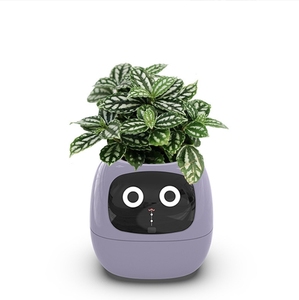
Desktop digital pet companion with soil moisture sensors, expressive OLED facial states, and intelligent irrigation.
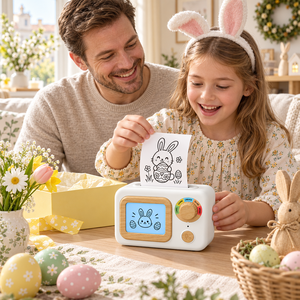
Voice-controlled smart output terminal combining edge speech recognition and instant thermal visual printing.
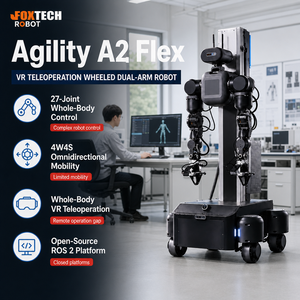
Industrial-grade 27-DOF kinematics platform for Australian university labs and advanced embodied robotics testing.
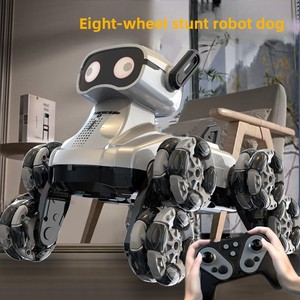
Dynamic quadruped gait platform with gesture tracking, obstacle evasion, acoustic feedback, and lithium-safe cells.
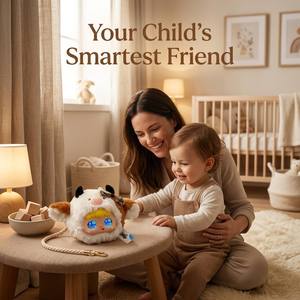
Tactile sensory chatbot pet for pediatric emotion co-regulation, NDIS therapy, and zero blue-light interaction.

Multilingual conversational terminal configured for Australian English NLP, automated learning, and desk pet antics.
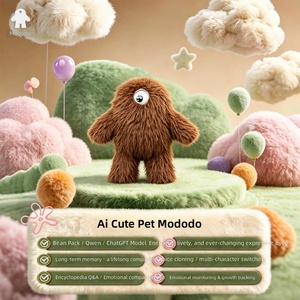
Polyester 25cm form factor with internal shock-isolated speech core, capacitive touch torso, and gentle acoustic motor.
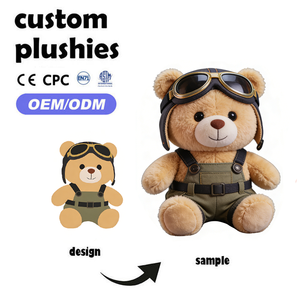
Customized emotional companion with biometric purr feedback, sleep-cycle simulation, and multi-zone touch logic.
China’s Advanced Robotics Supply Chain Serving Australia’s Companion Tech Demand
Bridging high-precision mechatronics from Shenzhen with the rigorous regulatory, therapeutic, and lifestyle standards across Sydney, Melbourne, Brisbane, and Perth.
Australia Demographics & Market Drivers
Australia boasts one of the highest pet ownership rates globally, with over 69% of households keeping pets. Concurrently, rapid urbanization in metropolitan centers like Sydney and Melbourne has triggered an unprecedented expansion of strata title apartments where stringent body corporate bylaws frequently restrict live animals. AI robotic pet dogs provide a hypoallergenic, low-maintenance emotional alternative with zero biological footprint.
Shenzhen Mechatronic Cluster Advantage
Manufactured by Shenzhen Atp Intelligent Electronics Co., Ltd. (AItoyplays), our production plants leverage the world's most dense mechatronic ecosystem. Unlike traditional toy makers who treat electronics as a plastic insertion box, we engineer the skeleton, coreless micro-servos, acoustic cavity, thermal flow, and tactile synthetic coat simultaneously, eliminating mechanical jamming and muffled sound transmission.
Institutional Healthcare & NDIS Readiness
Australia's Royal Commission into Aged Care Quality and Safety has accelerated the institutional adoption of robotic companion pets. In dementia and palliative care wards, our robotic dogs decrease agitated behaviors, stimulate cognitive memory, and provide touch therapy without the safety hazards, biting risks, or infection control challenges associated with live therapeutic animals.
Comparing Robotic Hardware Architecture: ATP Engineering vs. Conventional OEM
A granular look at the electronic, acoustic, mechanical, and safety specifications required for the Australian commercial marketplace.
| Technical Dimension | Conventional Toy Export Models | Shenzhen Atp Intelligent Bionic Pet Dogs | Australian Market Significance |
|---|---|---|---|
| Acoustic Motor Noise | 58 - 65 dB(A) (high-pitched plastic gear whine) | < 32 dB(A) (Silent planetary/coreless drive) | Crucial for aged care dementia wards and sound-sensitive neurodivergent users. |
| Voice AI Engine & NLP | Fixed 8-bit sound chip or generic cloud API | Offline Neural ASR + Australian English Accent LLM | Prevents Australian slang misinterpretation and ensures instant 200ms latency. |
| Thermal Architecture | Trapped heat inside polyester stuffing | Conductive graphite dissipation + ventilated spine | Guarantees continuous 12-hour safe running within AS/NZS thermal thresholds. |
| Tactile Biometrics | Single mechanical micro-switch | Multi-zone capacitive touch + IMU posture sensor | Enables natural reactions to back stroking, chin scratching, and sudden lifting. |
| Data Compliance | Unencrypted telemetry to arbitrary servers | Australian Privacy Principles (APP) & COPPA certified | Essential for public healthcare procurement, school tenders, and commercial imports. |
Target Applications Across the Australian Domestic & Institutional Landscape
Engineered to resolve specific geographic, regulatory, and demographic operational challenges across Australia.
1. Residential Aged Care Facilities (RACFs)
From Opal Healthcare to Anglicare and HammondCare, residential aged care providers across New South Wales and Victoria increasingly deploy therapeutic bionic pets. Our units integrate synthetic antimicrobial faux fur that tolerates standard hospital-grade sanitization wipes. The simulated heartbeat and calm breathing rhythms lower resting heart rates in dementia residents experiencing late-day "sundowning" anxiety.
2. NDIS Assistive Technology (Core & Capital)
Under the Australian National Disability Insurance Scheme (NDIS), plan managers and occupational therapists allocate funding for "Consumables and Assistive Technology" that foster autonomy and emotional regulation. Our screen-free robotic dogs and AI plush companions serve participants on the autism spectrum, helping build reciprocal social communication without sensory overload or unpredictable behaviors.
3. ACARA Aligned STEM Robotics in Primary Schools
Australian Curriculum, Assessment and Reporting Authority (ACARA) v9.0 prioritizes real-world embodied AI in Digital Technologies. Our open-source and modular robotic quadrupeds feature block-based Python/Scratch APIs and gesture teleoperation. Australian schools use these units to instruct students on sensor integration, kinematic equations, and ethical AI programming without requiring complex mechanical assembly.
Australian Regulatory Framework & Certification Roadmap
Direct manufacturer compliance mitigating customs detention and trade barriers at the Australian border.
AS/NZS ISO 8124 Safety Standards
Mandatory toy safety requirements in Australia are strictly enforced by the ACCC. Our bionic pets undergo exhaustive mechanical tension, torque, drop, and small parts testing under AS/NZS ISO 8124.1. The outer textiles comply with flammability metrics under Part 2, and all dyes, plastics, and micro-coatings are laboratory verified against heavy element migration (Part 3) with zero phthalates.
RCM, ACMA & AS/NZS CISPR 32
Any electronic device utilizing RF, Bluetooth, or Wi-Fi connectivity must carry the Regulatory Compliance Mark (RCM). Shenzhen Atp pre-tests all micro-controllers and wireless modules against ACMA radiocommunications standards (AS/NZS 4268) and electromagnetic compatibility thresholds (AS/NZS CISPR 32), enabling Australian importers to link test reports directly to their EESS national database registration.
Lithium Battery & AS/NZS 62115
Rechargeable lithium battery cells pose heightened scrutiny during sea/air freight and retail distribution. Our power packs incorporate multi-stage BMS protection circuits preventing short-circuit, overcharge, and thermal runaway. All battery packs hold UN 38.3 test summaries, UL 1642 cell reports, and satisfy electric toy operating safety under AS/NZS 62115.
Engineering Workflow: From Industrial Blueprint to Australia Port Delivery
How Shenzhen Atp Intelligent Electronics Co., Ltd. coordinates soft goods styling, electronics, and rigorous batch QA.
DFM & Structural Architecture
Our Shenzhen engineering staff analyzes 3D CAD files, mechatronic linkage ratios, skeletal servo mounts, and pattern sewing templates to eliminate high-stress wear points before tooling.
Acoustic & Firmware Tuning
Customizing acoustic baffling around micro-motors to drop operating noise below 35 dB(A). Loading custom wake-words, Australian accent phoneme sets, and proprietary motion profiles.
Golden Sampling & Pre-Compliance
Fabrication of working prototypes within 15–20 business days. Direct submission to NATA-accredited partner laboratories for preliminary AS/NZS ISO 8124 and EMC verification.
Batch Mass Production & Export
Automated SMT PCB assembly, ultrasonic housing welding, precision robotic sewing, 100% burn-in stress testing, and consolidated palletization for sea transport to Port Botany or Port of Melbourne.
Frequently Asked Questions: Australian B2B Procurement
Direct answers covering trade agreements, freight channels, compliance testing, and customization options.
Do robotic pet dogs qualify for tariff-free entry under ChAFTA?
Yes. Under the China-Australia Free Trade Agreement (ChAFTA), products classified under HS Code 9503.00 (interactive robotic toys, plush toys with mechanical elements) enter Australia duty-free (0% customs tariff) when accompanied by a valid ChAFTA Certificate of Origin (COO) issued by China Customs. Only the standard 10% Goods and Services Tax (GST) applies upon clearance.
Who is responsible for the RCM mark on the product packaging?
Under Australian law, the Australian importer or brand owner must hold an Australian Business Number (ABN), register on the ERAC/EESS national database, and affix the RCM mark. As your manufacturing partner, Shenzhen Atp provides full accredited test reports (EMC, RF, safety) from CNAS/ILAC-accredited laboratories, making your local compliance filing seamless.
Can the voice algorithms be localized for Australian English accents?
Absolutely. We specialize in localized speech synthesis and offline Automatic Speech Recognition (ASR). We train acoustic and language models specifically on Australian vernacular and intonations, preventing comprehension failures common with generic US or UK English engines, especially in aged care or pediatric settings.
What are standard minimum order quantities (MOQs) for custom OEM projects?
For existing ODM platforms (such as our AI Smile Face series, gesture quadruped dogs, or voice plush chassis), initial pilot orders start as low as 200–500 units for branded packaging and custom sound files. Fully customized industrial molds or tailored plush character patterns typically require an MOQ of 1,000 to 2,000 units.
How are voice data and child privacy handled under Australian Privacy Principles?
We build our smart companions with a privacy-first hardware architecture. Buyers can select completely offline voice processing with zero Wi-Fi or cloud dependency. For connected models, our IoT backends employ end-to-end TLS 1.3 encryption, zero continuous audio recording, and opt-in telemetry compliant with Australian Privacy Principles (APP) and COPPA.
What are typical transit timelines from Shenzhen to Australian container ports?
Direct ocean freight from Shenzhen (Yantian or Shekou ports) to Sydney (Port Botany) or Melbourne takes approximately 12 to 16 days port-to-port. Transit to Brisbane is approximately 14 days, and Fremantle (Perth) is roughly 18 days. Air cargo for rapid sampling or urgent replenishment typically clears customs within 4 to 6 business days.
Partner with China's Premier AI Companion Robotics Manufacturer
Accelerate your entry into the high-margin Australian smart companion, therapeutic healthcare, and educational consumer markets. Contact our Shenzhen mechatronic engineering department today for detailed DFM evaluations, BOM pricing, and sample requests.