China Best Smart Kids Wearables Factory & Suppliers Serving the Switzerland Market

Precision-Engineered Child Safety, Edge AI Companion Architecture, and Turnkey OEM/ODM Hardware Built in Accordance with Swiss FADP, CE-RED, and RoHS Standards.

✓
100% RoHS & REACH Skin-safe hypoallergenic TPU
🔒
nFADP & GDPR Strict end-to-end telemetry encryption
📡
Swisscom & Sunrise Pre-validated Band 20/28 LTE-M
⚙
ISO 9001 / BSCI Shenzhen high-precision facility

Recommended Smart Hardware & Connected Edge Devices

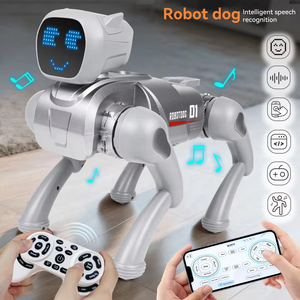
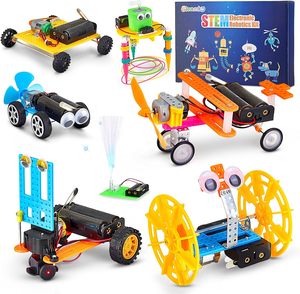
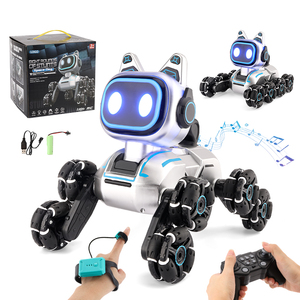
Explore our core technological building blocks, smart robotics, companion interfaces, and sensory processing engines designed for custom OEM/ODM deployment across Zurich, Geneva, Basel, and beyond.

Industrial Manufacturing Framework: Serving the Swiss Smart Kids Wearables Sector

The procurement landscape for juvenile smart wearables, positioning devices, and interactive voice companions within Switzerland represents one of the world's most exacting regulatory and engineering environments. Operating at the intersection of microelectronics, radio frequency propagation, biometric monitoring, and physical toy safety, Original Equipment Manufacturers (OEMs) and Original Design Manufacturers (ODMs) must adhere to rigorous criteria that exceed baseline European certifications.

As an engineering partner based in Shenzhen—the world's capital for micro-electromechanical systems (MEMS), acoustic sensors, and battery integration—our facility bridges cutting-edge industrial execution with stringent Swiss specifications. Swiss commercial distributors, telecommunications operators (including Swisscom, Sunrise, and Salt), and brand licensors demand zero-defect tolerance across four non-negotiable vectors: Telecommunication Interoperability, Total Data Privacy Sovereignty, Non-Toxic Mechanical Enclosures, and Extended Power Optimization.

Alpine Cartography & Hybrid Tri-Band Geolocation Architecture

Standard child wearables relying solely on generic GPS systems fail consistently across Switzerland’s topography. Urban canyons in Zurich or Basel and steep topological gradients in Valais, Graubünden, and the Bernese Oberland create severe multipath signal interference and dead zones. Our smart wearable manufacturing platform incorporates a synchronized, low-power hybrid locating array:

  • Multi-Constellation GNSS Engines: Concurrent tracking of GPS (L1/L5 dual-frequency), GLONASS, Galileo (essential for European sovereign precision), and BeiDou-3, decreasing cold-start time-to-first-fix (TTFF) to under 15 seconds.
  • Assisted Cellular (A-GPS & LTE Cat-M1/NB-IoT): Tailored firmware with pre-configured carrier band priorities (specifically Bands 3, 8, 20, and 28) ensuring low-power fallback connection even inside subterranean SBB train stations or reinforced concrete educational facilities.
  • Indoor Wi-Fi Triangulation & BLE Beacon Scanning: Sniffing local 802.11 b/g/n MAC signatures without active connection, translating indoor positioning within retail complexes and schools to an accuracy threshold under 5 meters.

Compliance Architecture: Swiss FADP (nFADP) & CE-RED Cyber Directives

Data privacy is paramount in Switzerland. The newly revised Swiss Federal Act on Data Protection (nFADP), effective September 2023, mirrors and in several aspects imposes heavier organizational liability than the EU GDPR. In smart kids' wearables equipped with two-way voice messaging, biometric sensors (heart rate, SpO2, skin temperature), and live cameras, the hardware design must eliminate vulnerabilities at the silicon level.

Our OEM firmware is built with an isolated cryptographic root-of-trust (RoT). Microcontroller chips utilize encrypted flash storage (AES-256) preventing cold-boot memory dumps. All telemetry sent from device to client applications runs through TLS 1.3 encrypted pipelines with mutual certificate authentication (mTLS). Audio data captured via our AI voice interaction modules is processed using edge speech recognition algorithms, ensuring that ambient audio is not continuously streamed to third-party servers without explicit wake-word trigger activation.

Targeted Swiss Use Cases & Tactical Deployment Scenarios

Engineered to adapt directly into the daily lives, educational habits, and outdoor routines across all Swiss Cantons.

Autonomous "Schulweg" Commuting

In Switzerland, children independently walk to kindergarten and primary school ("Schulweg"). Our wearables integrate designated polygon geofencing. If a pupil deviates from their recognized school corridor, immediate silent alerts trigger through the parents' native iOS/Android application, accompanied by ultra-reliable Fall-Detection algorithms configured to eliminate false positives.

Alpine Excursions & Sub-Zero Endurance

Swiss weather extremes demand rigorous thermal engineering. Our wearable lines utilize high-density Lithium-Polymer cells doped with low-temperature electrolytes, ensuring continued GPS reporting down to -20°C during winter skiing and mountain hiking. Housing enclosures carry true IP68/5ATM water resistance ratings verified via dual-chamber pressure testing.

Multilingual Swiss Interface (DE/FR/IT/RM)

Switzerland requires seamless cross-linguistic agility. We offer localized GUI and acoustic integration covering Swiss German dialect accommodation, Standard German, French, and Italian. Text-to-speech (TTS) engines and voice prompt audio files are baked into flash firmware, facilitating immediate regional channel distribution.

Strategic Market Trends Transforming Swiss Juvenile Electronics

Key technical shifts driving B2B procurement, supply chain decisions, and product roadmaps through 2026–2030.

Decoupling from Screen Dependency

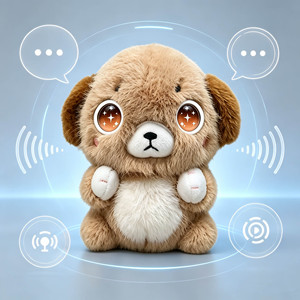
Swiss educators and health bodies voice serious concerns regarding premature smartphone adoption. The market is shifting toward screen-minimal or screen-free interaction models—such as haptic signals, bone-conduction audio, smart interactive plush housings, and ambient voice-first companions—reducing screen addiction while keeping safety protocols active.

Circular Economy & Right to Repair

In accordance with Swiss environmental expectations and emerging European Ecodesign Regulations (ESPR), smart devices must prioritize modularity. We engineer modular housings with accessible battery compartments, replaceable medical-grade silicone straps, and recyclable chassis components, maximizing lifespan and lowering consumer RMA ratios.

eSIM Integration & Multi-IMSI Provisioning

Physical SIM slots represent a major mechanical point of failure for water ingress and shock damage. Swiss brand owners are overwhelmingly adopting SMD-eSIM chips directly soldered onto the PCB (MFF2 package). Our production lines deliver pre-flashed connectivity profiles compatible with major European networks, driving down assembly size and logistics complexity.

Why Leading Global Importers Choose Our Shenzhen Manufacturing Infrastructure

Operated by Shenzhen Atp Intelligent Electronics Co., Ltd., our manufacturing identity is founded on solving the single most prevalent issue in smart consumer electronics: the failure of integration between soft materials and complex microelectronics.

Generic assembly factories outsource electronics boards to secondary vendors and stitch soft goods in secondary facilities, resulting in acoustic dampening, unshielded RF antennas, thermal build-up, and catastrophic failure under mechanical stress. At our integrated facility, our core engineering strengths include:

  • Integrated R&D Under One Roof: SMT high-speed circuit placement, cleanroom optical lens calibration, automated ultrasonic welding, and precision textile tailoring operate under unified ISO 9001:2015 quality oversight.
  • Bespoke Acoustic Cavity Tuning: In both smart plush interactive toys and wearable smartbands, microphone frequency response curves are calibrated to filter ambient classroom noise or wind interference, providing crystal-clear two-way SOS voice communication.
  • In-House RF & Anechoic Chamber Validation: We pre-certify antenna efficiency (TRP/TIS) for Swiss cellular frequencies (LTE-M / NB-IoT / GSM), eliminating long iteration delays during formal CE-RED, RoHS, and EN 301 489 laboratory signoffs.
  • Complete Intellectual Property (IP) Protection: From tooling design and PCB schematics to custom firmware flashing, our contractual framework guarantees strict non-disclosure protections for your brand's unique hardware signatures.

Procurement FAQ: What Swiss Importers & Brands Ask Us

Direct technical answers addressing minimum order volumes, regulatory certifications, battery safety, and production lead times.

Are your smart wearables and toys fully certified for the Swiss market?

Yes. All hardware produced for the Swiss Confederation complies with relevant European harmonized standards recognized by the Federal Office of Communications (OFCOM / BAKOM). This encompasses CE, RED (Radio Equipment Directive 2014/53/EU), EN 71 (Parts 1-3 for mechanical safety and flammability), EN 62115 (Electric Toy Safety), RoHS 2.0, and REACH SVHC restrictions. Full technical documentation and Declarations of Conformity (DoC) are provided with all shipping lots.

How do you handle battery safety compliance and air/sea customs freight?

Our battery systems use pure cobalt Lithium-Polymer cells featuring dual-MOS protection boards that shield against over-voltage, over-current, and thermal runaway. All battery packs carry valid UN 38.3 test certificates, complete Material Safety Data Sheets (MSDS), and IEC 62133 safety approvals, ensuring zero delays during air cargo transport into Zurich Airport (ZRH) or multimodal sea freight via Rotterdam/Basel.

Can you customize firmware to connect directly to our private Swiss cloud servers?

Absolutely. As an OEM/ODM provider, we provide flexible API and communication protocol layers (MQTT, HTTPS, WebSockets). Devices can be flashed at the factory level to communicate exclusively with your dedicated endpoints (hosted on AWS Switzerland, Google Cloud Zurich, or your proprietary data center in Geneva), fully complying with sovereign nFADP regulations without intermediate foreign routing.

What are your standard Minimum Order Quantities (MOQ) and sample lead times?

For custom industrial tooling and unique PCB architectures, initial pilot run MOQs generally start at 1,000 to 2,000 units. For white-label deployment utilizing our validated base platforms (such as our AI Voice Companion or Modular Tracking Boards), MOQs begin at 500 units. Rapid functional PCB prototypes and cosmetic 3D/CNC enclosures can be prepared within 10 to 14 business days.

Do your wearable components comply with hypersensitive skin safety standards?

Every element that contacts human skin undergoes bio-compatibility testing in accordance with ISO 10993 standards. Straps are molded from food-grade liquid silicone or hypoallergenic TPU, free of bisphenols (BPA), phthalates, and latex. Metallic case backs and charging pins utilize medical-grade 316L stainless steel with nickel-release limits strictly within EN 1811 tolerances.

Begin Your Custom Hardware Project with Shenzhen’s Leading OEM/ODM Partner

Consult with our senior hardware engineers to evaluate your Swiss project brief, discuss cellular network compatibility, review nFADP compliance roadmaps, and receive a competitive manufacturing estimate.

Send an Inquiry