B2B Whitepaper & Industrial Sourcing Guide

China Robot Toy Supplier Manufacturer & Factories in the Japan Market

Bridging Shenzhen's Precision Robotics & Electronic Plush Supply Chain with Japan's Stringent ST-2016/ST-2024 Safety, GITEKI Radio Wave Laws, and GIGA School STEM Standards.

Strategic Executive Brief

High-Precision Robotic OEM/ODM Solutions for Japanese Commercial Channels

Japan's robotics consumption represents one of the most demanding and sophisticated toy ecosystems globally. From consumer animatronic companions in aging communities to nationwide EdTech deployments following the Ministry of Education's (MEXT) GIGA School framework, Japanese procurement standards require micron-level injection molding, pristine Japanese acoustic datasets, and rigorous compliance benchmarks. Shenzhen Atp Intelligent Electronics Co., Ltd. (AItoyplays) provides turnkey hardware engineering, combining proprietary multi-axis servo mechanics, AI edge intelligence, and artisanal plush manufacturing tailored directly for Japanese distributors, retailers, and IP licensors.

99.85%
Japanese AQL Pass Rate
Surpassing Class-1 Japanese toy inspection protocols (Kenpin)
100%
TELEC & PSE Verified
Factory-level pre-certification for Japanese Giteki and safety codes
2.4GHz
Ultra-Low RF Interference
High-density classroom and apartment EMC compliance
18Days
Rapid Prototyping Cycle
From digital Gerber/CAD & pattern brief to physical golden sample
Precision Catalog for Japan

Verified Robot Toys & Embedded AI Hardware

Engineered for high durability, seamless Japanese firmware localization, and strict ST Safety Toy standard conformity.
MY ROBOT TIME LINE-CORE M HUMANOID BIPED STEM Teaching ROBOT
STEM Bipedal Robotics

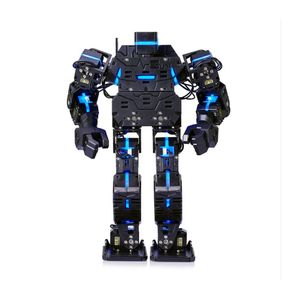
LINE-CORE M Humanoid Biped STEM Teaching Robot

Kinematics: 16 High-Torque Bus Servos Curriculum Fit: MEXT GIGA School Compatible Coding: Scratch 3.0, C++, Python
Go2 Pro AI Bionic Quadruped Robot Dog
Bionic AI Companions

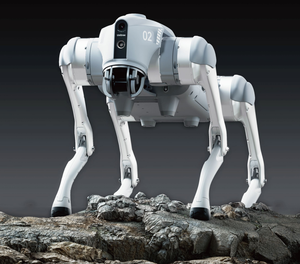
Go2 Pro Quadruped Robot Dog AI Large Model

Vision & Nav: Ultra-Wide 4D LiDAR + Depth Cam Interaction: Natural Japanese Voice LLM Structure: Aircraft Aluminum + High-Impact PC
STEM Solar Robot Toys DIY Building Science Toy
Renewable DIY Kits

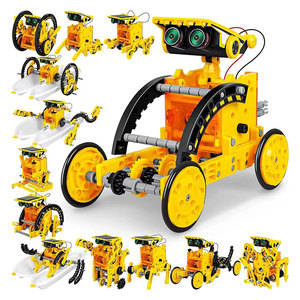
STEM Solar Robot DIY Building Science Toy Set

Configurations: 13-in-1 Solar Transformations Safety: ST Part 1-3 Non-Toxic ABS Packaging: Bilingual Japanese Assembly Guide
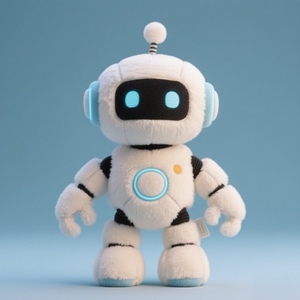
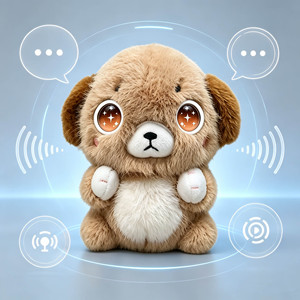
Factory Wholesale Robot AI Plush Toys Custom Robot Mascot Dolls
IP Licensing & Mascot Plush

Custom AI Robot Mascot Dolls & Smart Plush

Hardware: Internal Movement Core + BLE/Wi-Fi Fabric: OEKO-TEX Velboa + Anti-Allergenic Filling Customization: Japanese Character Precision Embroidery
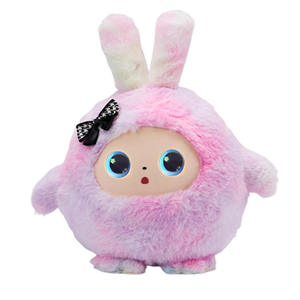
AI Interactive Plush Rabbit Doll Multilingual Smart Robot
Early Childhood EdTech

AI Interactive Plush Rabbit Multilingual Robot

Dialogue Engine: Offline Japanese Native Phonics Sensors: Capacitive Hug & Squeeze Detection Safety: Concealed Safety Zipper & Locked Enclosure
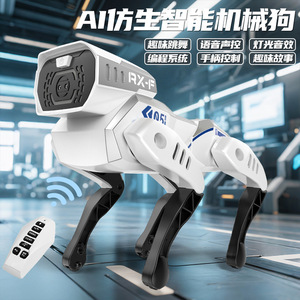
Interactive Smart Stunt RC Puppy Simulation Programmable Robot Dog
Programmable Consumer RC

Interactive Programmable RC Stunt Robot Dog

Transmission: 2.4GHz TELEC Giteki Certified Remote Features: Handstand, Acrobatic Rolls, Chime Audio Power: Li-ion Cell with Protected PSE Circuit
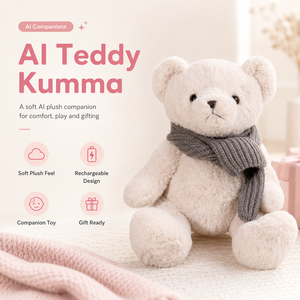
AI Teddy Bear Kumma F-201 GPT Powered Talking Plush Toy
Generative AI Companions

AI Kumma F-201 GPT-Powered Talking Plush Bear

AI Pipeline: Low-Latency Japanese Voice Synthesizer Privacy: APPI Compliant Local Storage Tactile: Ultra-Soft Japanese Minky Texture
Wholesale Smart AI Educational Robot Toy for Children
Smart Interactive Hardware

Smart AI Educational Robot Toy with Companion App

Connectivity: Wi-Fi Dual-Band + BLE 5.2 Display: Expression OLED Matrix Eye Module Safety: IEC 62115 & Food Sanitation Act Standard
Market Application Scenarios

Deployment Ecosystems: Where Chinese Robotic Manufacturing Wins in Japan

Navigating the Japanese market requires understanding that robotics is not viewed solely as an electronic toy category, but as an integral element of culture, education, and social infrastructure. The consumer Japanese landscape demands strict miniaturization, low acoustic noise levels suitable for compact residential environments (Danchi and Manshon apartments), and emotional resonance (known as Kokoro engineering). Our manufacturing plant in Shenzhen tailors production architectures across four core vertical applications in Japan:

1. MEXT GIGA School STEM Academies

Japan's compulsory programming education mandate under the GIGA School Initiative requires robust educational robots. Our biped and quadruped platforms interface seamlessly with Japanese Scratch 3.0 blocks and Python, surviving over 10,000 drop cycles without chassis failure.

2. "Iyashi" Healing Companions for the Silver Economy

With over 29% of Japan's population aged 65 or older, pet-simulation robots and conversational AI plush toys serve as non-pharmacological therapeutic tools. We engineer silent nylon planetary gearboxes to keep operating noise below 38dB, mirroring natural pet movement without industrial whir.

3. Character Licensing & IP Mascots

Japanese anime and corporate mascots (Yuru-chara) require exact 1:1 pantone reproduction, precise facial stitch geometry, and hidden electronic housings. Our integrated pattern masters develop custom drop-in motion boxes that preserve character aesthetic silhouettes without rigid bulges.

Bridging the "Soft-to-Hard" Manufacturing Divide in Interactive Toys

In typical Chinese manufacturing ecosystems, plush fabrication and PCB mechatronics operate in separate industrial siloes. Soft toy factories lack cleanroom ESD controls for high-speed SMT assembly, while electronic factories fail to comprehend the complex tensile behaviors, seam allowances, and needle-detection requirements of premium plush skinning. AItoyplays breaks this barrier by housing rapid electronic prototyping, servo injection, acoustic tuning, and seam craftsmanship under a single unified engineering pipeline in Shenzhen.

When developing for Japanese retail giants such as Bic Camera, Yodobashi Camera, Toys "R" Us Japan, or Aeon, this unified approach prevents the most common procurement failure: sound attenuation caused by synthetic polyfill stuffing and mechanical motor overheating within closed plush cavities.

Japanese Regulatory & Toy Compliance Architecture

Exporting to Japan does not follow Western CE or ASTM paths directly. Importers face severe penalties under the Electrical Appliance and Material Safety Law (DENAN) and the Radio Act if products lack direct certification. Every unit shipped from our Shenzhen factory floor is pre-engineered for direct qualification:

Certification / Law Governing Agency Target Component / Hazard AItoyplays Factory Implementation
ST Mark (ST-2016 / ST-2024) Japan Toy Association (JTA) Mechanical physics (Part 1), Flammability (Part 2), Chemical safety (Part 3) Food-grade phthalate-free ABS resin, flame-retardant plush batting, tensile-tested seams (>70N pull).
GITEKI / TELEC Mark Ministry of Internal Affairs (MIC) 2.4GHz Wi-Fi, Bluetooth Low Energy (BLE), Sub-GHz RF modules Pre-certified Japanese frequency table filtering; crystal oscillators calibrated to prevent channel drift.
PSE Mark (Circular/Diamond) METI (Economy, Trade & Industry) Lithium-ion batteries (>400Wh/L), Charging ICs, AC Adapters Built-in Seiko/Mitsumi Japanese battery protection ICs preventing thermal runaway; fire-rated battery compartments.
Food Sanitation Act (JFSL) Ministry of Health, Labour and Welfare Mouth-contact toxicity for infants and toddlers under 6 years Lead, cadmium, arsenic, and formaldehyde screening conducted via accredited third-party labs (SGS/TÜV/BOKEN).
APPI Data Compliance Personal Information Protection Commission Cloud voice interactions, user telemetry, child biometric storage Local Edge LLM inference without forced cloud uplinks; encrypted voice packets using TLS 1.3 to Japan AWS nodes.
Strategic Innovation

Next-Generation Trends Shaping Japan's Smart Toy Influx

Stay ahead of evolving consumer behavior in Tokyo, Osaka, and regional prefectures through our advanced R&D pipeline.

Native Japanese Acoustic Synthesis

Standard English-to-Japanese translated TTS engines sound metallic and robotic, alienating Japanese children. We integrate proprietary pitch-accent tuned neural voice chips with sub-300ms latency, enabling endearing conversational nuance (Aizuchi responses).

Zero-Cloud Offline AI Privacy Guard

Japanese parents exhibit extreme vigilance regarding camera feeds and room listening devices. Our latest T5-series toy chip architectures process face tracking and wake-word voice interaction locally on edge silicon, avoiding invasive server telemetry.

Modular "Drop-in" Movement Boxes

Japanese IP owners require quick seasonal refreshes. Our standardized AI Movement Boxes snap effortlessly into completely different outer plush skins without requiring recertification of motor brackets, batteries, or transmission electronics.

Manufacturing Superiority

Why Tier-1 Japanese Brands Trust AItoyplays

Operating at the convergence of Shenzhen’s electronic component cluster and ISO-certified toy manufacturing discipline.

Precision Tooling & Mold Integrity

We manage in-house CNC mold-making capable of maintaining ±0.02mm tolerance for robotic gears, joint links, and battery lock doors, preventing snap-off incidents during rough handling in Japanese homes.

Full-Spectrum Quality Control (Kenpin Ready)

Every production batch undergoes dual optical needle inspections, drop-tower impact tests, high-heat humidity aging, and continuous 72-hour robotic servo burn-in tests to ensure zero shelf-defects in Japanese department stores.

Bilingual Engineering & SCM Teams

Our dedicated project managers collaborate directly with Japanese quality assurance offices, providing detailed English/Japanese 2D/3D exploded drawings, BOM breakdowns, and transparent weekly progress dashboards.

Procurement Intelligence

Frequently Asked Questions by Japanese Toy Buyers

Real-world insights addressing logistics, safety protocols, MOQ policies, and technical customization for Japan.

Q1 How does your factory manage Japanese ST Mark (Safety Toy) testing?

We work directly with approved international testing institutes in Shenzhen and Hong Kong (including SGS, TÜV Rheinland, and BOKEN Japan-approved partners). Before production tooling begins, our engineers screen all raw plastics, color pigments, and electronic coatings against ST Part 3 chemical restrictions, ensuring 100% first-pass qualification when samples arrive at Japanese testing centers.

Q2 Can you supply wireless products already certified with the GITEKI (TELEC) radio mark?

Yes. Our standard wireless robotic motherboards and BLE/Wi-Fi movement modules utilize pre-certified chipsets carrying registered Japanese TELEC certification IDs. For completely custom PCB designs, our laboratory prepares complete schematic submissions, antenna gain evaluations, and handles full filing with Japanese registered certification bodies.

Q3 What are your standard Minimum Order Quantities (MOQs) for Japanese private labels?

For ODM projects based on our existing certified mechanical platforms (e.g., our bipedal robots, robot dogs, or AI movement modules), the standard entry MOQ starts at 500 to 1,000 units with custom Japanese packaging and silkscreen branding. For ground-up custom OEM plush and bespoke tooling, typical MOQs are 2,000 to 3,000 units depending on plastic injection complexity.

Q4 How do you address lithium battery safety under the Japanese PSE / DENAN Law?

Every lithium-ion battery integration conforms strictly to METI safety requirements. We use battery cells with energy densities under 400Wh/L where applicable, or incorporate full PSE circular certification with dual PTC/NTC temperature probes, short-circuit protection circuits, and flame-retardant structural isolations within the chassis.

Q5 Can you implement proprietary Japanese character voices and sound effects?

Absolutely. You can provide native Japanese voice actor audio files (.WAV/.MP3) for burned-in ROM storage, or we can license and integrate high-naturalness Japanese neural text-to-speech (TTS) voice libraries into our conversational AI models with full regional dialect and pitch accent tuning.

Q6 How do you prevent metal needle contamination in plush robotic toys?

We enforce a rigid dual-gate needle policy. First, all plush skins pass through a 9-point conveyor needle detection machine before mechanical core stuffing. After final assembly and closure sewing, every completed robot toy passes through an advanced magnetic sensor checkpoint calibrated to detect ferrous fragments down to 0.8mm, strictly adhering to Japanese retail Kenpin protocols.

Q7 What is the typical shipping lead time from Shenzhen to Japanese ports?

Shenzhen and Hong Kong offer fast sea freight routes to major Japanese sea gates. Transit to Tokyo or Yokohama takes 4 to 6 days; transit to Osaka or Kobe takes approximately 3 to 5 days. For urgent sample iterations or high-value air cargo shipments to Narita or Kansai International, door-to-door transit is completed within 48 to 72 hours via DHL/FedEx/SF Express.
Direct Factory Engineering Access

Launch Your Custom Robot Toy Program in Japan Today

Whether you need a turn-key GIGA-School STEM biped robot, an interactive companion plush for retail chains, or modular electronic sound & motion cores, our Shenzhen engineering facility provides the technical precision and Japanese compliance rigor your brand demands.

Direct responses within 12 business hours. NDA and Japanese B2B confidentiality guaranteed.