Consumer Electronics Toys Manufacturers & Factories for Germany
Engineering Whitepaper: Bridging Shenzhen Micro-Robotics, AI Vision, and Interactive Voice Modules with Strict German DIN EN 71, CE-RED, ElektroG, and EU AI Act Compliance.
100%
EU CE & DIN Compliance
EN 71-1/2/3, EN 62115 & RED Verified
<45dB
Acoustic Motor Standards
Silent gearboxes engineered for soft plush
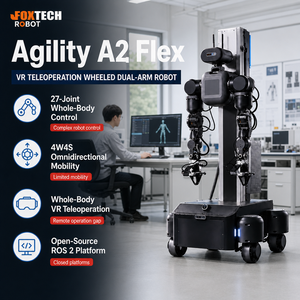
27-DOF
Advanced Kinematics
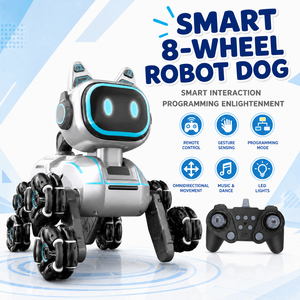
From omni STEM bases to humanoid dual-arm
0%
Unencrypted Voice Data
Strict GDPR & EU AI Act privacy compliance
Direct Factory Catalogue
Engineered Interactive & STEM Robotics for DACH Importers
A precision-manufactured lineup balancing embedded hardware reliability, pedagogical software modules, and emotional robotic companionship tailored for German consumer expectations.
Solving the Structural Bottleneck Between Soft Plush & Embedded Microelectronics
Most smart interactive toy projects sourced by Western buyers fail at the fragile boundary where soft-goods tailoring meets high-density circuit assemblies. Issues such as sound muffling caused by polyester fiber dampening, heat accumulation around compact lithium cells, wire fatigue at articulating joint stress points, and unshielded RF coils causing static interference frequently lead to warranty return spikes in the DACH retail sector.
Operated by Shenzhen Atp Intelligent Electronics Co., Ltd. (AItoyplays), our Shenzhen manufacturing facility solves these engineering frictions at the blueprint stage. By integrating electronic design automation (EDA), custom injection mold tooling, and computerized CNC textile cutting under one engineering roof, we ensure electrical modules and plush skins are co-developed in synchrony.
Phase 3Electronic Pre-compliance: In-house pre-scans for EMC, RED radio spurious emissions, and battery drop-impact resistance.
Phase 4Mass Production & Batch Traceability: Automated needle detection, pull-force gauge tests, and full electronic functional testing.
Market Integration
Localized Application Scenarios Across the DACH Region
Consumer electronics toys in Germany must satisfy sophisticated end-use contexts, extending beyond basic novelty into pedagogic learning, emotional therapy, and certified eco-conscious retail environments.
MINT-Oriented Primary & Gymnasium Curriculums
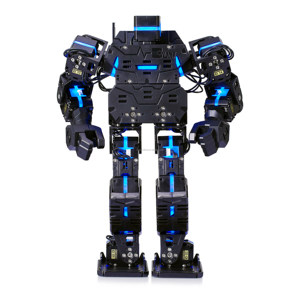
Germany's nationwide focus on MINT (Mathematik, Informatik, Naturwissenschaften und Technik) has generated sustained institutional demand for tactile robotics kits. Bipedal humanoids and omni-directional wheeled platforms serve as physical execution nodes for block-based coding (Scratch) and Python curricula in secondary schools across Baden-Württemberg, Bavaria, and North Rhine-Westphalia, requiring robust drop resistance and long-cycle modular battery longevity.
Snoezelen Rooms & Senior Companion Therapy
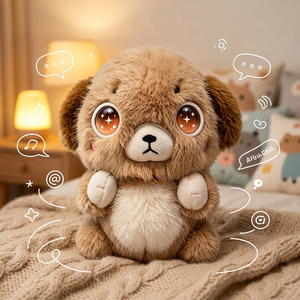
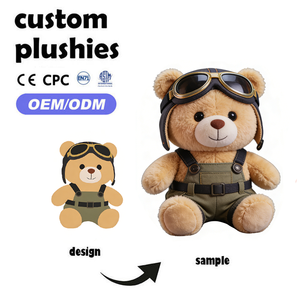
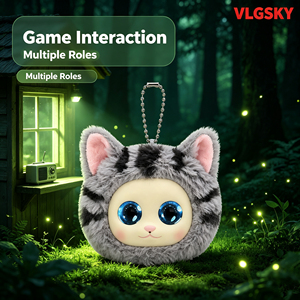
German elderly care residences (Seniorenheime) and pediatric occupational therapy centers increasingly implement therapeutic robotic pets. Our rhythmic breathing plush bears and interactive AI desk pets deliver somatic grounding without the hygiene complications of real animals. Washable hypoallergenic outer covers and mechanical motor systems operating below the DIN sensory threshold provide critical soothing input in dementia treatment pathways.
Traditional toy retail consortiums (e.g., VEDES, Idee+Spiel) demand electronic plush that withstand heavy hands-on showroom trial without software lockups. Using our durable 'Try-Me' trigger circuitry, ESD-shielded push modules, and high-clarity native German audio prompts, private-label brands achieve reliable shelf-appeal while complying with rigid retail packaging size and return-rate metrics.
Regulatory Engineering
German Regulatory Roadmap for Electronic & AI-Connected Toys
Importing into Germany requires zero-tolerance adherence to European Directives and German Federal Acts. We build compliance into every circuit board, textile selection, and software stack from Day 1.
Directive / Statute
Technical Scope & Testing Protocol
German Market Specifics
ATP Factory Control Standard
DIN EN 71 (Parts 1-3)
Mechanical hazard resistance, flammability, and migration of 19 toxic heavy elements.
Enforced strictly by local Gewerbeaufsichtsamt; zero tolerance for small parts detachments under 70N.
Macro Trends Reshaping the German Electronic Toy Industry
Analysis of shift factors guiding German buyer RFQs, inventory allocation, and technical product requirements for 2026 and beyond.
Edge AI Over Cloud
German parents reject toys that upload ambient room audio to cloud servers. Modern sourcing shifts toward embedded neural processing units (NPU) handling speech recognition and emotional responses entirely on-device, preserving privacy without sacrificing latency.
Cradle-to-Cradle Circularity
Under the EU Ecodesign Directive (ESPR), German buyers prioritize consumer electronic toys engineered with snap-fit disassembly. Products combining recycled rPET velour with solderless replaceable gear assemblies command premium retail shelf positions.
Subtle Multi-Sensory Motion
High-pitched whirring plastic gearboxes are heavily penalized in German review communities. Modern procurement mandates silent coreless motors with silicone vibration isolators that mimic biological breathing rhythms or smooth robotic kinematics.
Universal Type-C Adoption
Disposal alkaline battery models are systematically declining due to consumer pushback and battery recycling fees. Universal USB-C charging with low-draw trickle charging protocols has become a non-negotiable prerequisite across German major retail buyer guidelines.
Factory Credentials
Why Leading European Brands Partner with Shenzhen ATP
Combining the rapid-prototyping agility of the Shenzhen electronic ecosystem with strict European quality control standards.
01 / ENGINEERING INTEGRATION
In-House Mechatronics & Plush
We do not outsource electronics or pattern engineering. Our engineers design the printed circuit boards, micro-switch positions, and internal mounting scaffolds simultaneously with the textile skin, cutting prototype iterations from months to days.
02 / EUROPEAN REGULATORY RIGOR
Pre-Tested for DIN & CE Approval
We conduct regular functional checks with accredited labs (TÜV Rheinland, SGS, DEKRA). Every production batch undergoes EMC, RoHS 2.0 chemical analysis, pull-force seam assessments, and sound pressure level calibrations.
03 / SCALABLE MODULAR PLATFORMS
Drop-In Movement & Voice Boxes
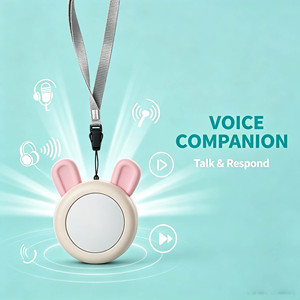
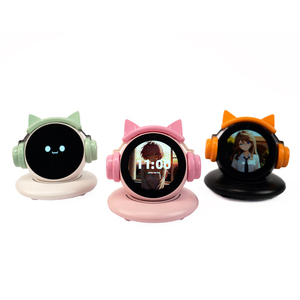
Brands looking to reduce tooling expenditures leverage our pre-engineered movement units and AI Smile Face platforms. Integrate certified interactive motion and speech capabilities into custom IP skins without opening new mechanical injection molds.
04 / B2B SUPPLY CHAIN TRANSPARENCY
German Sourcing Team Support
Direct technical communication with engineering project managers fluent in European technical documentation, complete Bill of Materials (BOM) disclosures, and full support with Stiftung EAR, LUCID registration, and customs clearance protocols.
Buyer Knowledge Base
Frequently Asked Questions by German Importers & Procurement Teams
Clear, direct answers regarding compliance documentation, minimum order quantities, edge AI privacy, and mass production workflows.
How do you guarantee GDPR (DSGVO) compliance for voice-enabled toys?
For the German market, our default hardware architecture utilizes localized edge-processing chipsets. Speech synthesis and recognition algorithms run entirely on embedded flash memory without sending voice streams or minor biometric identifiers to the cloud. In configurations requiring network connectivity, we build end-to-end TLS 1.3 encrypted data tunnels hosted on EU-based servers, compliant with Article 8 GDPR and strict German Federal Data Protection Act (BDSG) mandates.
What is the typical sampling timeline and MOQ for customized OEM programs?
Functional rapid prototypes with 3D-printed internal housings and custom-tailored plush skins are typically delivered within 10 to 14 business days. Mass production tooling for custom injection molds requires 25 to 30 days. Our standard Minimum Order Quantity (MOQ) for customized electronics and plush outer assemblies begins at 1,000 to 2,000 units, while standardized drop-in modular motion boxes can be procured starting at 500 units for pilot market runs.
Can you provide technical documentation and EU Declarations of Conformity?
Yes. Every OEM/ODM program includes a comprehensive Technical Construction File (TCF). We furnish test reports from recognized testing houses (TÜV, SGS, Intertek) covering EN 71-1/2/3, EN IEC 62115, RED, and RoHS. We provide the formal EU Declaration of Conformity (DoC) and assist your designated German Authorized Representative (Bevollmächtigter) with product safety dossiers required under EU 2019/1020.
How do you handle acoustic sound dampening through soft plush skins?
Sound passing through thick poly-fill stuffing and heavy plush fur often experiences severe high-frequency attenuation. Our acoustic engineering team calculates specific baffle chambers for each plush design. We use tuned acoustic foam, position mic arrays away from internal servo noise paths, and apply equalization curves to our sound processors to achieve clear vocal dialogue under 65dB(A), fully adhering to EN 71-1 acoustic limits.
Are battery systems compliant with the German Battery Act (BattG)?
All lithium-polymer and nickel-metal hydride battery packs we deploy hold certified UN 38.3, IEC 62133, and CE documentation. To comply with German and European battery recyclability initiatives, our housings feature secure, tool-accessible closures (e.g., countersunk safety screws) that allow certified waste treatment facilities or adult users to extract cells for separate disposal, as required by Stiftung EAR guidelines.
Can firmware and language voice chips be localized natively for German?
Yes. We have extensive experience loading German high-definition audio banks and offline NLP models recorded by native voice talents (Hochdeutsch). We accommodate custom accent adaptation, regional vocabulary options, or interactive dual-language learning modes (German/English), complete with flash memory partitioning designed for straightforward over-the-air (OTA) or USB-C firmware updates.
Initiate Your German B2B Sourcing Specification
Request our comprehensive technical catalogue, modular motion integration specs, and direct factory pricing. Our Shenzhen engineering team will evaluate your 3D CAD files, concept briefs, or regulatory target profiles within 24 business hours.