GPT-4o / Edge AI
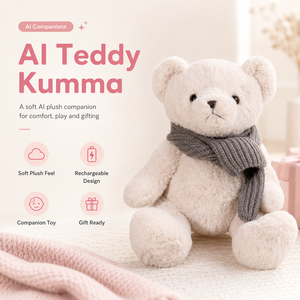
Ready Ship AI Teddy Bear Kumma F-201 GPT Powered Talking Plush Toy
- 35cm Height, Ultra-Soft Polyester Fiber
- Wi-Fi / BLE Cloud Conversational Agent
Engineered to bypass development bottlenecks. Fully certifiable hardware blueprints ready for custom private labeling, bespoke casing alterations, and custom LLM prompt engineering.
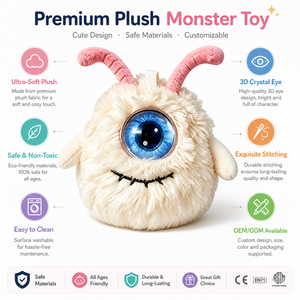
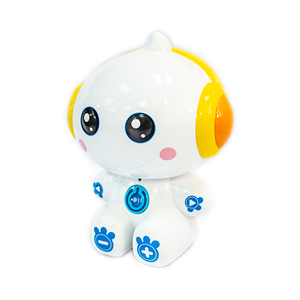

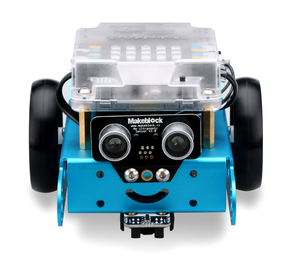
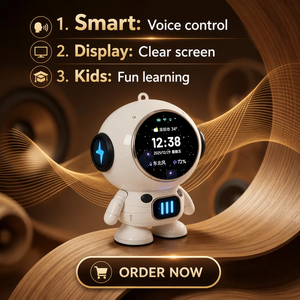
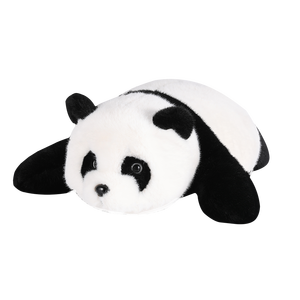
The global juvenile electronics and smart companion industry has reached an inflection point. The market is pivoting sharply away from legacy pre-recorded monolithic sound chips toward dynamic Large Language Model (LLM) interfaces, embedded Edge Neural Processing Units (NPUs), and multi-modal sensory feedback systems. For international procurement heads, category managers, and consumer electronics brand directors, procuring AI robot toys in this new era presents a distinct challenge: the historical gap between soft toy fabricators and precision microelectronics engineers.
Traditionally, conventional plush manufacturers outsourced PCB assembly to third-party consumer electronics workshops that lacked an understanding of juvenile drop testing, safety standards, or acoustic insulation. Conversely, rigid robotics assembly lines struggled with the tactile nuances, sewing seams, and thermal management required when encapsulating lithium-ion battery packs and continuous duty-cycle servo motors inside dense PP cotton plush shells. Shenzhen Atp Intelligent Electronics Co., Ltd. (operating the AItoyplays B2B manufacturing infrastructure) was established to eliminate this structural industry division.
By housing high-speed Surface Mount Technology (SMT) cleanrooms, robotic sonic welding, automated computerized sewing stations, and custom multi-axis CNC tooling in our Shenzhen industrial manufacturing ecosystem, we bridge the gap between silicon-level electronic performance and tactile consumer luxury.
Dynamic switching between local on-chip micro-models for zero-latency physical reactions and cloud-based Large Language Models (OpenAI, DeepSeek, Claude, Doubao) for rich conversations.
Custom-machined resonance chambers protect micro-speakers from plush stuffing dampening, preserving high vocal clarity while preventing interior echo from triggering false wake words.
Multi-layer circuit protection, PTC thermistors, and dual-layered polymer battery enclosures engineered to satisfy ASTM F963, EN 71, and IEC 62115 flammability and impact regulations.
B2B retail procurement managers and brand category strategists can no longer rely on conventional toy sourcing playbooks. The convergence of consumer electronics with traditional soft toys has introduced software lifecycles, firmware updates, and subscription business models to retail shelves. To safeguard capital expenditures and ensure robust margins, enterprise buyers must navigate five macro sourcing trends reshaping the smart toy landscape:
Forward-thinking brands are avoiding single-model dependency. Procurement specifications now mandate backend abstraction layers that allow runtime switching between OpenAI GPT-4o, Anthropic Claude, and cost-efficient engines like DeepSeek and Doubao. This mitigates geographic API throttling and lowers per-user conversation costs by up to 60% across European and North American markets.
Rather than redesigning character silhouettes for every seasonal release, retail toy buyers are leveraging standardized "AI Movement Boxes." These pre-certified mechatronic cores combine pan-tilt servos, haptic vibration coils, and mic arrays into a self-contained structural shell that slips inside existing plush exteriors—shortening time-to-market from 10 months down to 45 days.
With increasing regulatory scrutiny under COPPA 2.0 (USA), the EU Artificial Intelligence Act, and GDPR-K, corporate importers require edge-tokenized audio pipelines. Modern AI toys do not store raw audio recordings; voice input is processed on-the-fly into encrypted ephemeral text vectors, stripped of personally identifiable child data before transmitting to the cloud.
The market has moved beyond simple static plastic eyes. Next-generation ODM designs feature round AMOLED or vibrant IPS dynamic display sub-assemblies. These screens generate expressive, lifelike pupil dilations, emotional reactions, and responsive visual feedback synced to speech intonation, elevating user immersion and emotional bonding.
European and North American distribution chains now request GRS-certified (Global Recycled Standard) outer plush fur, coupled with modular internal chassis designed for non-destructive disassembly. This supports end-of-life battery removal and complies with emerging WEEE electronics recycling standards across tier-one retail channels.
Selecting the optimal balance between bill-of-materials (BOM) cost, operational software infrastructure, and safety margins is the most critical decision in any smart toy project. Below is an engineering evaluation across five distinct interactive tiers offered by our Shenzhen manufacturing facility:
| System Architecture Tier | Typical Trigger & Sensor Array | Silicon & Processing Core | Connectivity & Cloud Topology | Regulatory Testing Focus | Recommended Market Placement |
|---|---|---|---|---|---|
| Legacy Voice & Recording | Capacitive squeeze switches, micro-spring mechanical buttons | 8-bit / 16-bit OTP Sound Processing DSP | Autonomous Offline (Zero RF emission) | EN 71-1, ASTM F963-17 physical mechanical & heavy metals | High-volume mass promotional merchandise, budget retail shelves |
| Bio-Haptic & Touch Sensing | Multi-zone capacitive touch foils, reed sensor, accelerometers | 32-bit ARM Cortex-M0 MCU with PWM drivers | Optional BLE 5.0 for setup & localized calibration | IEC 62115, EMC Directive 2014/30/EU, RoHS 2.0 | Soothing nursery companions, infant bedtime sensory products |
| Programmable STEM Robotics | Infrared line followers, ultrasonic rangefinders, optical encoders | ESP32 Dual-Core or STM32 Microcontroller platform | Dual-Band Wi-Fi 2.4G & BLE 5.2 (Scratch / Python App) | FCC Part 15B/15C, RED (Radio Equipment Directive), CE | Educational STEM academies, youth coding hardware, hobbyist retail |
| Dynamic Expression AI Bots | Capacitive arrays, round IPS/AMOLED displays, dual I2S digital mics | Quad-core ARM Cortex-A35 / High-Performance RISC-V | Wi-Fi 802.11 b/g/n + WebSockets Cloud Connection | IEC 62368-1, Battery safety UN38.3, SAR RF Exposure | Tech lifestyle desktop companions, executive novelty gifts, high-tier retail |
| Full LLM Cloud Conversational | Beamforming dual-mic array, tactile haptic feedback, smart power management | Embedded Wi-Fi SoC + Local Edge NPU for offline wake-word | Direct TLS 1.3 Encrypted Socket to LLM Pipeline (OpenAI, DeepSeek) | COPPA 2.0, California SB-327 IoT Security, GDPR-K Data Sovereignty | Flagship interactive plush IP characters, institutional eldercare & therapy pets |
Navigating the transition from an early proof-of-concept prototype to an industrial production run of 100,000 units requires more than typical trade brokerage. It demands a vertically integrated manufacturing partner located at the core of the global electronics supply chain.
Direct factory-floor access to the world's most concentrated microelectronics, motor servos, lithium polymer pouch cells, and specialized synthetic fabric vendors across Guangdong Province.
Anechoic chambers and audio analyzers calibrate micro-speaker dampening, microphone gain curves, and Total Harmonic Distortion (THD) inside the plush enclosure, ensuring clean voice capture and playback.
Pre-built firmware middleware compatible with DeepSeek, OpenAI, Doubao, and Microsoft Azure Cognitive Services. Features dynamic content filtering to keep all dialogue age-appropriate and safe for children.
A disciplined, phase-gate engineering methodology designed to de-risk investments from concept through container-load shipping.
Character art conversion, 3D internal structural CAD layout, PCB form-factor definition, and initial Bill of Materials (BOM) cost breakdown.
3D SLA resin printing, hand-sewn plush pattern drafting, breadboard electronics integration, and acoustic resonance tuning.
Steel injection molds for module housings, SMT stencil fabrication, pilot run, and formal third-party lab testing (EN 71, FCC, ASTM).
Automated sewing, in-line robotic functional testing, pull testing, metal detection scanning, and final packaging for international freight.
Clear, direct answers to common engineering, compliance, software infrastructure, and logistical questions raised by overseas purchasing teams.