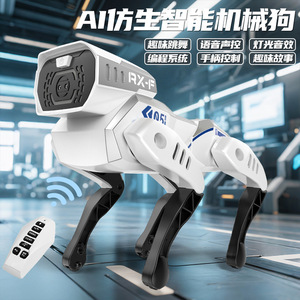
Featured OEM/ODM Robotic Quadruped & Smart Companion Systems
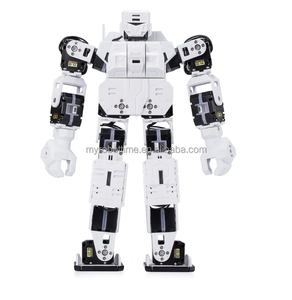
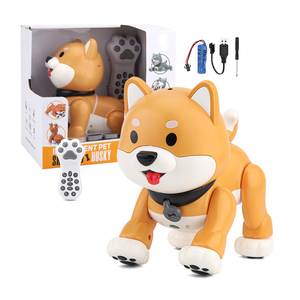
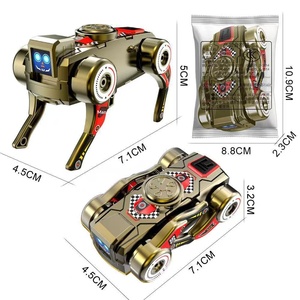
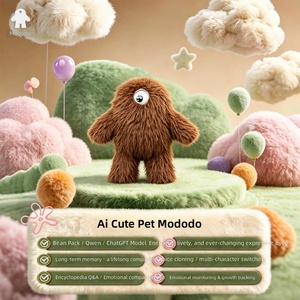
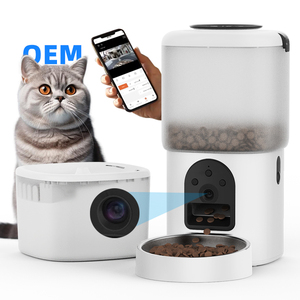
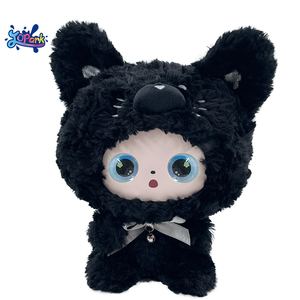
Explore production-ready architectures spanning autonomous multi-linkage stunt quadrupeds, AI-driven biped platforms, acoustic-response plush robotics, and interactive feeder companion units developed in Shenzhen.

Industry Whitepaper: Technical Architecture
Engineering the Modern Dancing Robot Dog: Kinematics, Audio Synchrony & Actuation
In the competitive landscape of intelligent consumer robotics and programmable interactive pets, the dancing robot dog has transitioned from a novelty mechanical novelty into a sophisticated cybernetic system. The core technological differentiator separating commercial toy-grade units from high-margin entertainment robotics lies in the harmonious integration of Inverse Kinematics (IK), micro-servo torque profiling, and real-time DSP-driven acoustic beat-matching. As a vertically integrated OEM/ODM manufacturing partner based in Shenzhen, Shenzhen Atp Intelligent Electronics Co., Ltd. (AItoyplays) architects these systems from silicon selection to injection tooling and precision mechanical alignment.
At the mechanical core, a dancing quadruped relies on high-torque coreless DC or brushless planetary gear servos positioned across strategic Degrees of Freedom (DoF). Standard entry-level units typically operate on 4 to 8 DoF, utilizing basic multi-bar linkage mechanisms driven by single-axis DC motors to simulate hopping and trot-stepping. However, export-grade consumer platforms designed for European, North American, and Japanese retail channels require independent 12-DoF articulation (3 axes per leg: abduction/adduction, hip flexion, and knee flexion). This degree of mechanical freedom empowers the robot dog to execute dynamic choreography, omnidirectional gait patterns, handstands, push-ups, and rhythmic stabilization with zero center-of-gravity slippage.
| Architecture Class | Actuator Configuration | MCU / DSP Pipeline | Choreography & Gait Generation | Target B2B Channel |
|---|---|---|---|---|
| Entry Retail Toy-Grade | 4–8 DC Linkage Servos | 8-bit RISC / 24MHz Clock | Fixed CAM mechanisms, pre-recorded audio-synced PWM loops | Mass promotional, claw machines, volume e-commerce |
| Advanced Programmable (Stunt) | 8–10 Precision Coreless Servos | 32-bit ARM Cortex-M4 + Audio DSP | Bezier curve trajectory planning, IMU gyro dynamic balance | Mid-to-high tier retail, IP licensing, consumer electronics |
| AI Embodied Companion | 12-DoF High-Torque Smart Servos | Dual-Core ESP32-S3 / Linux NPU Edge | Real-time Inverse Kinematics, LLM dialogue & vision tracking | STEM education, premium robotic pets, adult companion tech |
Achieving authentic rhythmic dance routines requires more than erratic limb twitching; it requires an active Dynamic Audio Choreography Algorithm. AItoyplays’ proprietary firmware integrates an acoustic beat-detection module that samples environmental audio or pre-stored MP3/WAV tracks via a high-sensitivity I2S microphone or internal DAC stream. The onboard micro-controller extracts tempo (BPM) and transient energy spikes within the 60Hz–250Hz bass register. In under 20 milliseconds, the kinematic motion engine recalculates joint angle interpolation arrays, adjusting movement velocity to lock foot-strike transients precisely on musical rhythm downbeats.
Strategic Sourcing Analysis
Future Procurement Trends in the B2B Robotic Quadruped Sector (2025–2030)
Global sourcing managers and brand directors must align their procurement roadmaps with several structural shifts currently reshaping consumer smart toys. Consumer expectations have outpaced simple infrared remote-control plastic shells. The next procurement cycle is governed by edge AI integration, modular hybrid mechanical designs, and heightened compliance standards.
1. Generative Voice & LLM Integration
Buyers are pivoting from static speech playback chips toward Wi-Fi/BLE-connected quadrupeds featuring embodied AI agents. By interfacing with cloud-based Large Language Models (LLMs), dancing robotic dogs can understand multimodal natural language prompts ("Dance like a disco star", "Act scared"), dynamically synthesizing original kinematic routines and expressive personality traits.
2. Hybrid Hard-Shell Plush Enclosures
Procurement teams are actively expanding into bio-mimetic "cuddle-tech"—combining rugged ABS/polycarbonate internal skeleton linkages with tailored ultra-soft plush skins. This bridges the uncanny valley, providing children and adult wellness demographics with mechanical stunt dynamics cushioned by comforting tactile appeal.
3. Strict Battery & Cybersecurity Compliance
Global border authorities and retail networks enforce rigorous compliance: UN38.3 lithium pouch cell safety, IEC 62133 drop-puncture resilience, EN 62115 electronic safety, and strict IoT data-privacy mandates (COPPA in the USA and GDPR Article 25 in the EU). Sourcing from vetted factories with pre-tested PCB layouts prevents customs embargoes.
R&D Evolution
Technological Evolution: From Stunt Motor Clutches to Embodied Edge Intelligence
The technological trajectory of mass-manufactured dancing robot dogs exhibits three evolutionary leaps. Understanding this arc empowers enterprise buyers to position their private-label collections accurately within their domestic target markets:
Phase 01
Mechanical Cam Era
Unidirectional gearing driven by a single central 130 DC motor. Cam linkages executed hard-coded leg flailing. High acoustic gear chatter, zero adaptability, high failure rates during physical stall conditions.
Phase 02
Independent PWM Servos
Adoption of individual 9g plastic/nylon gear micro-servos managed by discrete microcontrollers. Allowed multi-button RC choreography, pre-programmed songs, head tilting, barking, and primitive stunt flips.
Phase 03
IMU Dynamic Equilibrium
Integration of 6-axis MPU/IMU sensors directly on the mainboard. The firmware monitors pitch, roll, and angular yaw 100 times per second, compensating motor trim angles to prevent tipping during complex dance maneuvers.
Phase 04
Edge AI & Vision Sensing
Current state-of-the-art deployment: embedded camera modules capable of color blob tracking, facial gesture recognition, BLE mesh smartphone app choreography editors, and OTA firmware updates.
Manufacturing Authority
Why Top Global Brands Partner with Shenzhen Atp Intelligent Electronics Co., Ltd.
Most smart-toy development ventures fail during cross-disciplinary execution—specifically at the boundary where mechanical kinematics, electronics hardware, acoustic design, and plush soft-goods collide. If an electronics supplier lacks deep plush patterning knowledge, speakers end up muffled by dense PP polyester stuffing, and servo heat sinks create fire hazard risks. Conversely, traditional plush factories have zero comprehension of ESD protection, firmware debounce algorithms, or servo torque tolerances.
Operating from the industrial manufacturing core of Shenzhen, Guangdong, AItoyplays dissolves these barriers by unifying all engineering faculties under one ISO9001-certified operational umbrella.
Full Vertical In-House Tooling & SMT
We manage our own high-speed Yamaha SMT placement lines for motor drive PCBs, CNC mold tooling for precision ABS gear housings, and automated acoustic verification fixtures. We maintain strict control over electronic Bill of Materials (BOM) sourcing, protecting buyers against grey-market component substitution.
Acoustic Resonance & Thermal Baffling
Our mechanical engineers design internal speaker cavities with engineered acoustic air ducts to project high-fidelity music out through plush layers without distortion. Concurrently, servo heat sinking is routed away from internal rechargeable lithium packs to prevent thermal throttling.
Exhaustive B2B Lifecycle Stress Testing
Every OEM robot dog model undergoes stringent continuous cycle testing: 50,000 continuous leg-articulation cycles under 1.5x nominal load, 1-meter multi-angle drop tests on hardwood, salt-spray battery contact testing, and RF spectrum analyzer tests to ensure flawless FCC Part 15B and RED directive compliance.
Enterprise Sourcing Knowledge
Frequently Asked Questions (FAQ) for OEM/ODM Buyers
Critical mechanical, electrical, compliance, and logistic questions reviewed by brand sourcing managers and procurement directors prior to contract sign-off.
1. What are the primary failure points in dancing robot dogs, and how does your factory mitigate them?
The primary failure modes in mass-market quadruped toys are gear tooth stripping inside micro-servos due to physical external force (children forcing the limbs), motor burn-out from continuous stall current, and internal wire fatigue across moving joint axes. AItoyplays mitigates these issues through three engineering interventions: First, we implement proprietary mechanical slip-clutches (or high-tensile POM/metal gears) within the gearbox to absorb external shock impacts. Second, our MCU firmware incorporates active current-sensing: if a limb encounters a hard stall for >500ms, power is automatically lowered to safe holding current to eliminate thermal coil melt. Third, all flex wiring traversing joint articulation pivots uses multi-strand ultra-flexible silicone cabling rated for over 100,000 bending cycles.
2. Can we customize the musical repertoire, sound effects, and dance choreography for our brand?
Yes. For OEM programs with custom branding or licensed IP, we offer complete customization of the audio and kinematic motion table. You can provide your proprietary sound files (in 16-bit 44.1kHz WAV/MP3 format), custom voice acting in any target language, and designated dance styles. Our kinematics engineering team translates your choreographic storyboards into precise joint-angle timeline coordinate files via our internal motion-authoring suite, ensuring exclusive routines tailored to your target demographic.
3. What international safety testing and compliance certifications do your factories support?
Our products and manufacturing facilities comply with all major international statutory requirements. For the United States: ASTM F963, CPSIA (lead, phthalates), and FCC Part 15B/15C for 2.4GHz RF remote control. For the European Union: EN 71-1, 2, 3, EN 62115 (Electric Toys Safety), RoHS 2.0, REACH, and the Radio Equipment Directive (RED 2014/53/EU). For global lithium battery transportation: UN38.3 test summaries, 1.2m drop test documentation, and comprehensive MSDS reports are verified with third-party accredited laboratories such as SGS, TÜV Rheinland, and Intertek.
4. What is the typical Minimum Order Quantity (MOQ) and production lead time?
For ODM projects based on our existing tooling, drive mechanisms, and PCB layouts (with your custom brand silk-screening, custom audio preloading, and customized retail window box packaging), the standard MOQ starts at 1,000 units, with production lead times of 25 to 35 calendar days. For comprehensive OEM developments requiring entirely new industrial design (ID), custom plastic injection molds, and dedicated PCB layout redesigns, initial tooling and functional sampling generally requires 35 to 50 days, followed by mass production ramp-up at an MOQ of 3,000 to 5,000 units.
5. What battery architectures are utilized to handle high peak currents during dynamic stunt routines?
Dynamic dancing and stunt routines (such as quick vertical push-ups or continuous somersaults) generate significant transient current spikes that can cause low-quality batteries to sag in voltage, triggering unintended MCU brown-out resets. We employ high-discharge-rate (3C to 5C rated) cylindrical Lithium-Ion (18650/14500) or high-density Li-Polymer pouch battery packs equipped with integrated Battery Management Systems (BMS). The BMS circuitry safeguards against over-charge, over-discharge, short circuits, and thermal runaway, ensuring stable voltage delivery during rapid multi-motor acceleration bursts.
6. How do you protect buyer Intellectual Property (IP) and proprietary ID designs?
We operate under legally enforceable Non-Disclosure Agreements (NDAs) drafted in accordance with international and PRC trade jurisdiction before receiving customer design files. Dedicated tooling molds manufactured in our CNC tool shop remain the exclusive property of the commissioning buyer. We maintain strict internal physical and digital access partitions, ensuring that private brand CAD files, firmware source repositories, and packaging artwork are never shared, cross-utilized, or exhibited without explicit client authorization.
7. Can we request drop-in "AI Movement Boxes" to convert our existing plush characters into dancing pets?
Yes. Through our specialized AI Movement Box product division, we engineer pre-certified, drop-in mechanical core chassis units. These encapsulated electro-mechanical skeletons include the battery compartment, micro-servos, speaker chamber, and audio sensor board within an ultra-smooth, lightweight ABS housing. Your plush manufacturing lines can fit these chassis into pre-existing stuffed character skins with zero modifications to your primary textile patterns.
Launch Your OEM/ODM Dancing Robot Dog Project
Connect directly with our Shenzhen engineering and international project management team. Submit your target industrial design, required Degrees of Freedom (DoF), audio integration specifications, and target unit cost for an authoritative feasibility assessment and quotation.