Shenzhen Hub
Core Mechatronics Supply Chain
< 0.15mm
Pen Trajectory Repeatability
IEC & EN 71
Full Toy Safety Compliance
Turnkey ODM
Firmware to Plastic Molding
Featured AI Robotic & Interactive Learning Systems
Precision mechatronic configurations, AI voice-dialogue plush, STEM vision kits, and screen-free developmental platforms available for global brand licensing and OEM/ODM manufacturing.
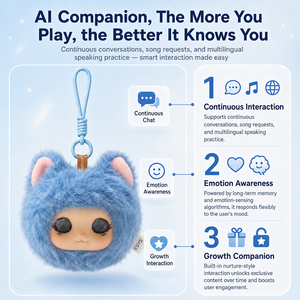
Custom Exquisite Interactive Robot Smart Talking Stuffed AI Plush Toy Various Expressions
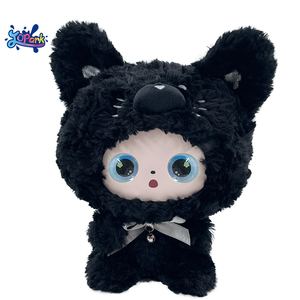
AI Interactive Plush Robot with Voice Control Storytelling STEM Learning for Kids
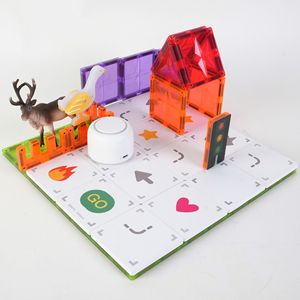
MNTL Interactive Coding Robot Toy for Kids Early Programming & Trajectory Execution
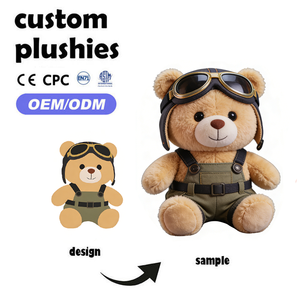
Brown Bear AI Intelligent Robot Plush Toy Voice & Emotional Companionship Platform
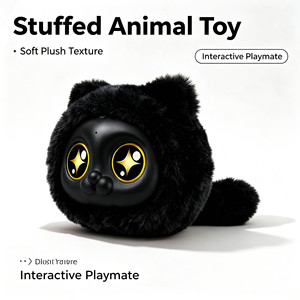
VLGSKY Desktop Robot Assistant Multilingual Dialogue Children Smart Learning Kit
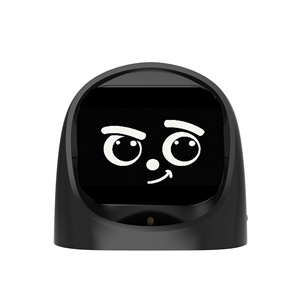
2026 AI Kids Companion Robot Pet Touchscreen Wi-Fi Facial Expression Robot
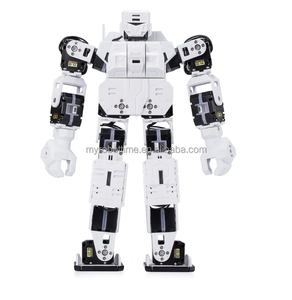
Line-core M AI Vision Humanoid Biped Robot Construction Educational Toy Kit
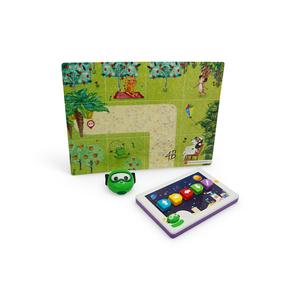
OEM Factory Coding Robot Toys for Kids STEM Wheeled Plotter Screen Free Remote Control
The AI Drawing Robot Manufacturing Landscape: Core Mechatronics Architecture
The market for educational drawing robots and interactive AI play companions has evolved from basic open-loop wheeled toys into micro-precision computer vision systems. Enterprise buyers sourcing from Tier-1 Chinese manufacturers require a deep understanding of the mechanical, mathematical, and algorithmic layers that separate consumer-grade novelty products from high-reliability educational robotics.
At the center of any modern AI drawing robot is the kinematics controller: transforming high-level visual inputs or algorithmic SVG vectors into precise pen-up/pen-down trajectories. Traditional drawing robots utilized basic hobby servo motors connected via nylon gears, which routinely experienced mechanical backlash greater than 1.2mm, causing skewed vector outputs and poor circle interpolation. Modern ODM manufacturing standards demand closed-loop stepper drivetrains or dual high-precision DC micro-motors equipped with optical magnetic encoders (yielding sub-0.15mm repeatability).
Planar Kinematics
Wheeled differential plotters vs. dual-arm SCARA mechanisms. SCARA layouts deliver rigid desk stability for fine art rendering, while differential wheeled platforms offer infinite canvas flexibility on floor surfaces.
Edge Optical Recognition
Screen-free learning models employ CMOS line scanners and QR/optical code sensors beneath the chassis. Children present modular physical cards, and the MCU compiles executable vector routines locally without tablet screens.
Pen-Lift Solenoid Dampening
The Z-axis mechanism dictates pen longevity and line continuity. Custom-designed electromagnetic micro-solenoids with silicone dampeners eliminate aggressive paper impact, extending marker nib life past 5,000 drawing cycles.
Kinematic Architectures in Production-Grade Educational Robots
Choosing the correct drive mechanism impacts retail unit pricing, tooling amortization, BOM costs, and packaging dimensions. The matrix below contrasts the three dominant production architectures manufactured by leading Shenzhen robotics suppliers.
| Architecture | Actuator Configuration | Precision & Repeatability | Canvas Constraints | Typical FOB Price (10k pcs) | Recommended Market Tier |
|---|---|---|---|---|---|
| Wheeled Two-Wheel Differential | Dual Stepper Motors (1.8° Step Angle) + Micro Z-Solenoid | ±0.35 mm (Subject to surface wheel traction) | Infinite (Floor / Roll paper) | $9.80 – $13.50 | Entry Retail STEM Mass Market Toy Brands |
| Dual-Arm 2D SCARA / Cartesian | Twin High-Torque Brushless Servos / Steppers + Linkage | ±0.10 mm (Rigid base calibration) | Constrained to A4 / A5 Drawing Area | $18.50 – $26.00 | Preschool & EdTech Precision Lettering |
| Omnidirectional Mecanum / Optical Track | 3x or 4x Coreless DC Motors + Optical Mouse Sensor Drift Compensator | ±0.18 mm (Real-time closed-loop optical feedback) | Semi-Infinite (A3 – A1 Flat Surface) | $24.00 – $34.00 | High-Tier Coding Kits IP Licensing / Advanced STEM |
*Note: Data derived from Shenzhen Atp Intelligent Electronics Co., Ltd. manufacturing QA batch testing logs across 150,000+ shipped units.
Turnkey Manufacturing: Bridging Toy Soft Goods and Micro-Electronics
Operated by Shenzhen Atp Intelligent Electronics Co., Ltd. (AItoyplays), our production campus in Shenzhen integrates precision electronic PCB fabrication, surface-mount technology (SMT), acoustic module calibration, plastic tooling, and cleanroom plush assembly under one roof.
Most failed smart toy ventures encounter fatal defects at the structural boundary where rigid electronic modules interact with soft goods or mechanical chassis. A drawing robot or interactive plush companion experiences dropping, dropping torques, fiber dust ingestion into gear teeth, and heat dissipation challenges within confined plastic enclosures. We solve these challenges at the CAD stage before cutting tooling steel:
In-House High-Speed SMT
Multi-line Yamaha SMT pick-and-place lines ensuring 0201 component placement accuracy for miniaturized MCU, Wi-Fi 6, Bluetooth 5.3, and motor driver daughterboards.
Acoustic & Motor Anechoic Testing
Every gear train is validated in soundproof chambers to guarantee operational noise beneath 42 dB(A), preventing interference with on-board ASR voice recognition microphones.
Certified Toy Lab Pre-Testing
On-site physical testing equipment for seam pull strength (90N tensile), drop testing (1.5m onto hardwood), torque testing, flammability, and ESD electrostatic protection up to 15kV.
Procurement Trajectories (2026–2030): The Rise of Multimodal Edge-AI and Tangible Learning
Strategic buyers are restructuring their catalog roadmaps to align with four critical technological shifts sweeping the smart robotic toy vertical over the next three to five years.
Edge Vision-Language Models (VLM)
Micro neural processing units (NPUs) operating under 0.5W will allow drawing robots to interpret a child's hand-drawn doodles in real time, vocalizing context-aware praise and suggesting evolutionary drawing strokes without transmitting user data to the cloud.
Voice-to-Vector Generative Drawing
Integration of lightweight onboard generative transformers. A child says: "Draw an astronaut riding a dolphin," and the local kinematics parser synthesizes smooth Bezier splines directly into motor coordinate pulses in less than 800 milliseconds.
Screen-Free Neurodiversity Focus
Parental backlash against blue-light tablet screens has shifted global procurement budgets toward tactile, audio-first, and paper-based drawing bots. Products explicitly branded as "100% Screen-Free Early STEM" generate 28% higher sell-through rates across North America and Europe.
Circular PCR Plastics & Bio-Plush
Tier-1 retail conglomerates (Target, Walmart, Smyths) mandate Post-Consumer Recycled (PCR) ABS enclosures and GRS-certified recycled plush skins. Sourcing factories must provide documented supply-chain traceability for all polymeric compounds.
Global Regulatory Framework: Toy Safety, Electronics & Data Privacy
Sourcing AI-driven electronics intended for minor users introduces multifaceted regulatory compliance hazards. An oversight in lithium-ion circuit topology or acoustic decibel output will trigger customs impoundment or mandatory CPSC/RAPEX recall actions. Shenzhen Atp Intelligent Electronics adheres to a three-tier compliance architecture during engineering:
Physical & Chemical Safety
Compliance with EN 71 Parts 1, 2, 3 (Europe), ASTM F963 (USA), and CPSIA. Stringent heavy metal screening, phthalate testing below 100ppm, and torque/tension mechanical drop tests for zero small-parts choking hazards.
Electrical & Battery Standards
IEC / EN 62115 for electric toy safety. Battery bay enclosures secured with captive screws, NTC thermal cut-off resistors, redundant short-circuit protection ICs, and UN38.3 + MSDS certification for international air/sea freight logistics.
Radio, IoT & Child Privacy
FCC ID & RED Directive for wireless transceivers. Strict compliance with COPPA (US) and GDPR-K (EU). Zero permanent storage of biometric voiceprint data; hardware microphone kill switches for complete child privacy reassurance.
The B2B Procurement Lifecycle: From Industrial ID to Mass Delivery
Achieving predictable mass manufacturing of electromechanical smart robots requires strict milestone gates. Below is our standard 16-week OEM/ODM development protocol utilized with international brand partners.
Industrial Design & DFM
Receipt of client concept sketch, CAD surface modeling, structural draft angle validation, DFM (Design for Manufacturing) review, and preliminary BOM pricing audit.
EVT Functional Prototype
CNC milled plastic housing, quick-turn SMT motherboard development, motor gear backlash tuning, and preliminary vector software integration for physical validation.
Tooling & DVT Pilot Run
Injection steel cutting (NAK80 or S136 cavity steel), PCB panelization, acoustic frequency response checks, 500-unit pilot production run, and third-party laboratory safety pre-scans.
PVT, Mass Run & QA
Gold Master sign-off, automated optical inspection (AOI), 100% trajectory drawing stroke verification on automated test rigs, blister/gift box packing, and export container loading.
Frequently Asked Questions on Sourcing AI Drawing Robots
Direct technical answers to common queries submitted by retail merchandising directors, EdTech brand procurement managers, and electronic toy distributors.
What is the minimum order quantity (MOQ) for custom OEM drawing robot projects?
How does the factory prevent mechanical gear backlash and maintain vector precision over time?
Can our engineering team flash proprietary firmware or customized Python/Scratch APIs?
How do you guarantee lithium battery safety in children's electronic toys?
What are the differences between screen-free optical card reading vs. App-controlled drawing robots?
What documentation and testing reports are supplied with production shipments?
Ready to Engineer Your Next-Gen AI Robotics Product?
Connect directly with Shenzhen Atp Intelligent Electronics Co., Ltd. engineering specialists. Request CAD dimensional drawings, schedule a live factory tour, or review comprehensive BOM cost structures for your private-label educational robotics program.