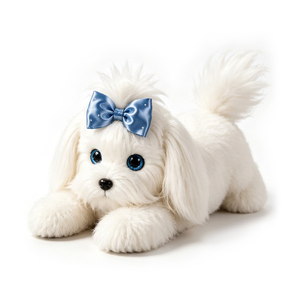
Precision-Engineered Smart Robot Toy Assemblies
Featured interactive platforms and OEM module configurations optimized for early childhood education, STEM curriculum integration, and emotional companion retail channels across Australasia.
100%
AS/NZS ISO 8124 Part 1-3 & IEC 62115 Compliance
<45ms
Ultra-Low BLE Transmission Latency for Robotic Servos
6+
Embedded Sensor Modules (Voice, Touch, Gyro, IR, Light)
15-22d
Rapid Prototype-to-Sample Lead Time for OEM Programs
Strategic Analysis
Top 10 Bluetooth Robot Toy Suppliers for the New Zealand Market
A comprehensive procurement audit cross-referencing RF performance, firmware localization, battery safety regulations, and supply chain viability for New Zealand retailers and educational consortia.
Procuring connected electronic robot toys for the New Zealand territory requires an intricate understanding of local trade dynamics, stringent electrical appliance requirements, and specialized distribution ecosystems spanning Auckland, Wellington, and Christchurch. Unlike commoditized low-tech plush or passive battery-operated cars, Bluetooth Robot Toys (incorporating BLE 5.0–5.4 protocols, dual-mode Wi-Fi/Bluetooth chipsets, and AI microcontrollers) sit directly at the convergence of radio spectrum regulations governed by Radio Spectrum Management (RSM) New Zealand, toy physical safety standards administered by the Commerce Commission, and children's privacy mandates.
Below is the vetted industry breakdown of the primary global manufacturing facilities, contract exporters, and specialized R&D hubs serving major retail chains like The Warehouse, Farmers, Toyworld, and regional STEM suppliers across Aotearoa:
1. AItoyplays (Shenzhen Atp Intelligent Electronics)
Headquarters: Shenzhen, China.
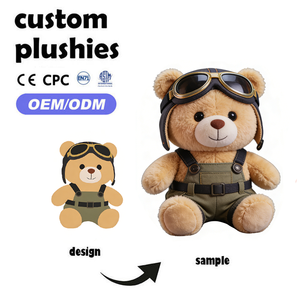
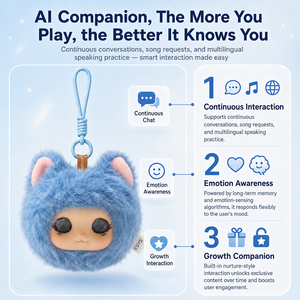
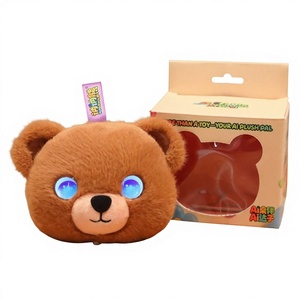
Core Competency: End-to-end integration of soft-sculpt plush architecture with intelligent robotic movement boxes, programmable BLE micro-servos, and multi-sensor voice recognition. Premier provider of private-label smart robotic companions tailored for early childhood education and bespoke brand licensing across Oceania.
2. Makeblock Educational Division
Headquarters: Shenzhen, China.
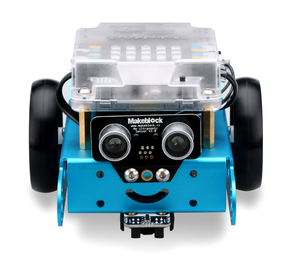
Core Competency: Modular programmable robots such as the mBot series. Highly regarded among New Zealand intermediate schools and high schools for Scratch and Python coding integration via robust dual Bluetooth dongle and mobile pairing modules.
3. Wonder Workshop Global Export Hub
Headquarters: San Mateo, CA / Export Facility: Dongguan.
Core Competency: Dash & Dot smart robotic companions. Focuses on preschool-to-primary coding interactions with resilient ABS structural enclosures, voice localization, and Bluetooth beacon tracking.
4. Sphero Interactive Robotics
Headquarters: Boulder, CO / Asia Operations: Hong Kong.
Core Competency: Spherical, gyroscopic BLE robots built for rugged indoor/outdoor physical testing. Outstanding firmware update stability and cross-platform tablet application support.
5. Ubtech Robotics Corp
Headquarters: Shenzhen, China.
Core Competency: Multi-axis humanoid robotic kits featuring high-torque digital bus servos, graphical programming interfaces, and complex kinematic motion algorithms.
6. Rastar Group Electronics
Headquarters: Shantou, China.
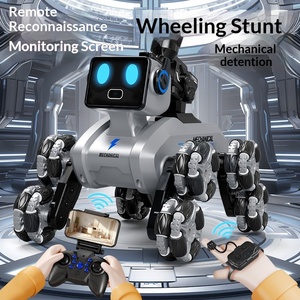
Core Competency: Large-scale production of scale-model RC mechanical dogs and robotic cars with dual Bluetooth remote controls, infrared gesture sensing, and competitive BOM economics.
7. Robosen Robotics Inc.
Headquarters: Shenzhen, China.
Core Competency: Advanced bipedal auto-converting robotics driven by customized servo joints, real-time voice activation, and high-fidelity Bluetooth telemetry control.
8. Guangdong Alpha Animation & Culture
Headquarters: Guangzhou, China.
Core Competency: Mass consumer licensed IP smart companion toys with Bluetooth interactive synchronization, tailored for volume-driven department store holiday rollouts.
9. VTech Electronics Australasia Supply Network
Headquarters: Hong Kong / Melbourne Logistics Hub.
Core Competency: Proprietary early-learner Bluetooth electronics, sensory baby companions, and institutional infant interactive soft toys meeting Australasian compliance benchmarks.
10. WowWee Group OEM Division
Headquarters: Hong Kong.
Core Competency: Disruptive consumer robotics, biomechanical robotic pets, and Bluetooth multi-device mesh gaming toys with established distributor corridors in Auckland and Sydney.
Procurement Matrix
Engineering Specification & New Zealand Compliance Evaluation
A granular side-by-side benchmark comparing hardware configurations, RF certifications, and mechanical safety parameters across the primary robotic categories.
| Robot Architecture | RF Module & Range | Battery Chemistry & Standards | AS/NZS Safety Verification | Target Retail / Educational Sector |
|---|---|---|---|---|
| AI Smart Companion Plush Robot | BLE 5.2 + 2.4GHz Wi-Fi Dual Band (15m+) | Enclosed Li-Po 3.7V (IEC 62133-2 Certified) | AS/NZS ISO 8124.1 (No small parts under 36 mo), 8124.2 Flammability | Premium Gift Shops, Early Learning Centres, Special Needs Therapy |
| Biomechanical Quadruped (Robot Dog) | BLE 5.0 w/ Nordic nRF52 Series (20m) | Modular Rechargeable Li-Ion (UN38.3 Safe Transport) | AS/NZS ISO 8124.3 Heavy Metals Migration, IEC 62115 Pinch Point Safety | Mass Retail (The Warehouse, Farmers), Department Stores, Toy Specialists |
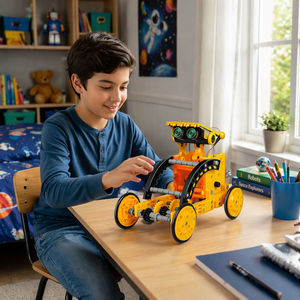
| Modular Programmable STEM Kit | Bluetooth 4.2 / BLE Master-Slave (10m) | 4x AA NiMH or Li-Po Shield w/ Dual Overcharge IC | AS/NZS 62115:2018 (Electric Toy Safety), RCM Low Power Transceiver | Intermediate Schools, MoE Digital Technologies Curriculum, Coding Academies |
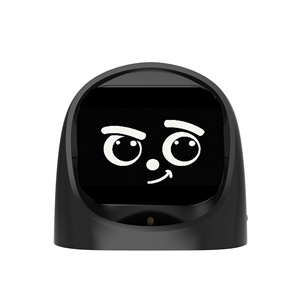
| Expressive Desktop AI Screen Robot | BLE 5.3 + Dual-band Wi-Fi Mesh | Type-C Direct PD w/ Internal Polymer Buffer | AS/NZS CISPR 32:2015 EMC Standards, New Zealand RSM Radio Compliance | Consumer Tech Boutiques, High-end Specialty E-Commerce, Novelty Gizmos |
| Smart Vinyl-Plush Blind Box Robot | BLE Low-Energy Beacon / NFC Tap | Lithium Coin Cell CR2032 (Locked Screw Housing) | Mandatory Button Battery Standard AS/NZS 60065 Annex HH / Product Safety Regs | Pop Culture Stores, Collectible Toy Concessionaires, Airport Transit Retail |
Territory Localization
High-Yield Application Scenarios Across Aotearoa
Aligning interactive features and connectivity configurations with the domestic cultural landscape, geographical conditions, and pedagogical framework.
1. Ministry of Education (MoE) Digital Curriculum Integration
Under the New Zealand 'Digital Technologies & Hangarau Matihiko' curriculum guidelines, primary and intermediate educators are moving away from passive screen time toward physical computing. Bluetooth robot toys that seamlessly bridge Scratch block-coding and tactile robotics allow learners in rural regional schools (from Northland down to Otago) to execute algorithmic sequences without requiring expensive, dedicated computer laboratory suites.
2. Te Reo Māori Bilingual Companion Programs
There is an escalating consumer push across major New Zealand retail chains for educational toys that support early bilingual acquisition. By leveraging custom-programmable flash sound chips and Bluetooth app synchronization, OEM toy platforms can deliver authentic Māori phonetics, waiata (songs), and conversational vocabulary prompts, transforming standard international companion dolls into culturally localized market leaders.
3. Extreme Environmental Durability & Coastal Resilience
Kiwi lifestyle revolves around indoor-outdoor balance. Toys are regularly transported between coastal bach homes, rugged outdoor campsites, and carpeted indoor play areas. Bluetooth mechanical units require moisture-resistant conformal coatings across PCB assemblies, enclosed gearboxes to prevent sand ingress, and corrosion-resistant nickel-plated charging contacts to withstand maritime atmospheric conditions.
Macro Trends
Emerging Market Dynamics in New Zealand's Toy Ecosystem
Three pivotal supply chain and consumer behavior shifts reshaping the Australasian smart toy procurement sector.
Stricter Cloud-Edge Privacy Protocols
Following heightened scrutiny from the Office of the Privacy Commissioner (OPC) regarding the Children's Online Privacy Code, Kiwi parents actively reject smart toys requiring invasive cloud logins. Procurement demands have shifted dramatically toward 'Local-First' offline voice recognition engines, where Bluetooth functions solely as a direct-device control protocol without routing microphone audio to overseas third-party servers.
Circular Economy & Sustainable Materials
New Zealand's clean-green national ethos has permeated commercial toy procurement. Importers are systematically requesting GRS-certified (Global Recycled Standard) recycled plush outer fabrics, bio-based PLA chassis for robotic components, and complete phase-outs of single-use PVC plastic packaging in favor of FSC-certified unbleached kraft corrugate boxes.
The Explosive Rise of 'Kidult' Companion Toys
Data from the New Zealand Toy Association indicates that adult and young adult demographics represent the fastest-growing slice of interactive plush and robot sales. Desk companion robots featuring retro-futuristic vinyl faces, responsive OLED emotional eye displays, and micro-movements serve as stress-relief artifacts in urban corporate settings throughout Auckland CBD and Wellington.
Factory Direct Strength
Why AItoyplays is the Strategic OEM Partner for Australasian Importers
Operated by Shenzhen Atp Intelligent Electronics Co., Ltd., we eradicate the technical friction between soft goods manufacturing and advanced consumer electronics.
Unified Soft Goods & Hardware R&D
Most smart-toy development falters when soft toy sewing factories cannot handle PCB interference, or when electronics shops design bulky, unyielding plastic boxes that ruin cuddly plush tactile profiles. Our Shenzhen engineering hub designs internal skeletal housings, acoustic resonance chambers, wiring harnesses, and fabric patterns simultaneously from Day 1.
Pre-Verified Regulatory Readiness
We actively formulate testing protocols directly with accredited laboratories (SGS, Intertek, TÜV Rheinland) before entering mass production. Every batch destined for Port of Tauranga or Ports of Auckland arrives fully backed by testing documentation covering AS/NZS ISO 8124, IEC 62115, RCM radio conformance, and RoHS restricted hazardous substances.
Turnkey ODM Platforms or Modular Supplies
Whether you require complete retail-packaged units branded for your private label or seek to procure standalone smart sound modules, mechanical breathing movement boxes, or high-torque micro servomotors to drop into your domestic manufacturing setup, our production lines scale seamlessly from pilot batches (500 units) to multi-container replenishment orders.
Buyer FAQ
Frequently Asked Questions: Sourcing Bluetooth Robots for New Zealand
Direct answers to regulatory, financial, logistics, and technical questions encountered by procurement managers handling Australasia.
What specific radio certifications are required to clear New Zealand customs for Bluetooth toys?
Under Radio Spectrum Management (RSM) New Zealand and the joint ACMA/NZ arrangements, low-power short-range devices operating on the 2.4 GHz ISM band (such as Bluetooth LE) must comply with the General User Radio Licence (GURL). Importers must hold a Supplier Code Number (SCN) or affiliate with an RCM (Regulatory Compliance Mark) compliance folder demonstrating conformity with AS/NZS 4268 or equivalent ETSI EN 300 328 test standards.
How does New Zealand regulate button batteries embedded in compact robotic toys or keychains?
The New Zealand Commerce Commission strictly enforces the Product Safety Standards (Children's Toys) and mandatory safety requirements for button batteries. Any toy containing coin cell batteries (such as CR2032 in small robot keychains) must possess a secured, child-resistant battery compartment that can only be opened with a screwdriver or a minimum two-stage dual-independent physical action. Strict drop, impact, and torque tests apply.
Can you customize mechanical gestures and mobile companion apps for iOS and Android in New Zealand?
Yes. We deliver full-stack ODM application software services. We provide white-label APK and iOS application source builds, localize in-app typography for Australasian English, and configure BLE bonding handshakes. Furthermore, servo movement routines, dance choreographies, and emotional eye sequences can be custom-mapped to the buyer’s character personality brief.
What are the standard freight shipping timelines and shipping lines from Shenzhen to New Zealand ports?
Ocean transit time from Yantian or Chiwan Port (Shenzhen) directly to Auckland or Tauranga averages approximately 14 to 20 days via major shipping carriers (ANL, Maersk, COSCO, PIL). Air freight charters handling high-priority promotional holiday batches land at Auckland International Airport (AKL) within 3 to 5 business days, fully supported by our UN38.3 lithium battery air transport documentation.
Launch Your Custom Bluetooth Robot Line in New Zealand
Consult with our senior hardware engineers and toy product directors to audit your functional brief, review BOM feasibility, or request golden production samples.
Inquire Now